
Can a gastric sleeve cause acid reflux?
Yes. A gastric sleeve can start heartburn in someone who never had it and can make existing reflux worse, because the sleeved stomach is a narrow, higher-pressure tube and a hiatal hernia may still be present after the operation. For a person whose reflux is already significant, a Roux-en-Y gastric bypass is usually the better fit, because that operation usually improves reflux rather than adding to it.
That is the short answer, and it is the one most bariatric surgeons give when reflux is on the table. The longer answer matters because reflux is not one single thing. Occasional heartburn after a large meal is different from inflammation of the esophagus seen on a camera test, and both are different from Barrett's esophagus, where the lining itself has changed. The right operation depends on which of those you have, what an endoscopy shows, and what else sits in your history: diabetes, regular medicines, vitamin levels, smoking, and how reliably you can keep up with lifelong follow-up.
This guide is written for adults in the United States, Canada, and the United Kingdom who are weighing a sleeve against a bypass, and for people who already have a sleeve and have noticed burning, regurgitation, or a sour taste at night. It explains why the geometry of a sleeve matters, what two large randomized trials found, how new reflux after a sleeve is assessed, and when converting to a bypass becomes the standard surgical answer. It does not give you a personal risk number. Nobody can honestly hand you one from a web page, and this guide will not invent one. What it can do is help you ask sharper questions and recognise which symptoms belong with a pharmacist, which belong with a family doctor, and which belong with a bariatric surgeon.
Why does a gastric sleeve make heartburn worse?
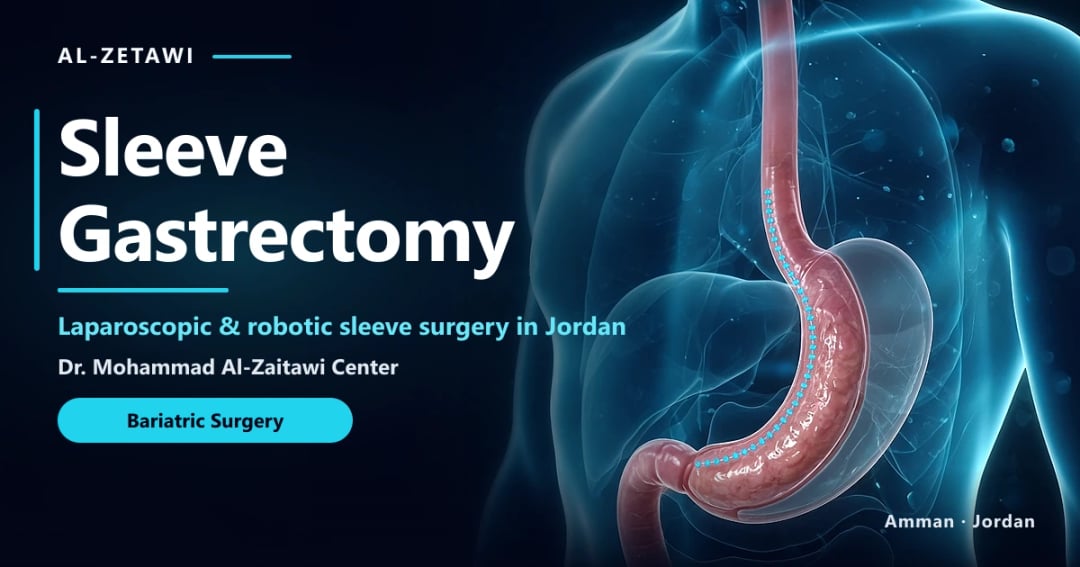
A normal stomach is a stretchy bag. When you eat, the upper part relaxes to receive food, and pressure inside stays fairly low. A sleeve gastrectomy removes about 80% of the stomach along its outer curve, leaving a long narrow tube. There is no rerouting of the intestine; food still passes through the same outlet, the pylorus, into the duodenum. What changes is the shape and the pressure. A narrow tube with a firm outlet at the bottom has little room to accommodate a meal, so pressure inside it rises as it fills. That pressure has one direction to go besides down: up, toward the esophagus.
The fundus, the dome at the top of the stomach, is removed during a sleeve. The fundus is part of the normal geometry around the junction where the esophagus meets the stomach, including the angle at which the esophagus enters. Removing it changes that geometry. In some people the valve-like barrier at the bottom of the esophagus becomes less effective, and acid or food moves upward more easily than it did before.
A hiatal hernia adds to the problem. This is where part of the stomach slides up through the opening in the diaphragm that the esophagus passes through. Surgeons often look for a hernia and repair it during a sleeve, but a hernia can remain or return later. A sleeve that has twisted or narrowed partway along its length can also hold food and acid above the tight point, which again pushes contents upward. None of this means every sleeve patient will develop reflux. It means the mechanism is real and anatomical, and it is the reason a careful surgeon asks about heartburn in detail before recommending an operation. The sleeve gastrectomy page describes the operation itself step by step.
Why gastric bypass usually improves reflux
A Roux-en-Y gastric bypass creates a small pouch at the top of the stomach, roughly the size of an egg, and makes two joins: one between the pouch and a limb of small intestine, and one further down where the digestive juices rejoin the food stream. The remainder of the stomach stays inside the body but no longer receives food. The pouch is built from the upper stomach, which produces relatively little acid, and it empties freely into the intestine rather than pushing against a high-pressure outlet.
Those features explain why bypass usually improves reflux. Less acid is made in the part of the stomach that still meets food. The pouch is a low-pressure space, so there is less force driving contents upward. And bile from the liver joins the food stream well downstream, so it has no easy route back up to the esophagus. That last point becomes important when the one-anastomosis or mini bypass is compared later in this guide, because that design handles bile very differently.
"Usually" is the honest word. Bypass is not a promise that every symptom disappears, and a large hiatal hernia still needs to be found and repaired. Bypass also brings its own trade-offs: closer vitamin and mineral monitoring, dumping symptoms that are more common than after a sleeve, and internal hernia as a long-term risk specific to the rerouted anatomy. Those are covered further down. The point here is narrower. If the question is which operation is more likely to help reflux, the answer most surgeons give is Roux-en-Y bypass, and the gastric bypass page explains the anatomy in more detail, including diagrams of the pouch and the two joins.
What did the SM-BOSS and SLEEVEPASS trials find about reflux?
Two randomized trials published side by side in JAMA are the reference points most surgeons cite when comparing sleeve and bypass over five years. Randomized means patients were assigned to one operation or the other rather than choosing, which removes much of the bias that creeps into comparisons where healthier or more motivated patients pick one option.
The Swiss SM-BOSS trial (PubMed ID 29340679) reported excess BMI loss at five years of 61.1% after sleeve and 68.3% after bypass. That difference was not statistically significant, which means the trial could not show that one operation reliably produced more weight loss than the other. Reflux told a different story: reflux symptoms favoured bypass. Sleeve patients were more likely to report worsening or new reflux, while bypass patients were more likely to see it settle.
The Finnish SLEEVEPASS trial (PubMed ID 29340676) was also a five-year randomized comparison, and it found large weight loss after both operations. This guide does not quote its individual figures, because the point that matters for a reader with heartburn is consistent across both trials: weight loss was substantial whichever operation was done, so the differences that should drive the choice often lie elsewhere, in reflux, diabetes, vitamins, and long-term risks.
Harvard Health offers rounder numbers for everyday conversation: about 25% of body weight lost after a sleeve and about 33% after a bypass. Weight is not the whole decision. For someone with significant reflux, an operation that worsens heartburn is a poor trade even if the scale moves well, and an operation that delivers comparable weight loss while improving reflux is often the better fit.
| Question | Sleeve gastrectomy | Roux-en-Y gastric bypass | One-anastomosis (mini) bypass |
|---|---|---|---|
| What changes | About 80% of the stomach removed, no intestinal reroute | Egg-sized pouch plus two joins to the small intestine | Long narrow pouch joined to a loop of intestine with one connection |
| Pressure in the stomach that meets food | Higher, narrow tube | Low, small pouch empties freely | Pouch empties into a loop that also carries bile |
| Usual effect on reflux | Can start or worsen heartburn | Usually improves reflux | Not the reflux operation because bile can flow back |
| SM-BOSS five-year excess BMI loss | 61.1% | 68.3% (difference not statistically significant) | Not part of that trial |
| Laboratory follow-up | Standard lifelong labs | Closer monitoring of iron, B12, calcium, vitamin D | Ask the surgeon for the specific plan |
Is occasional heartburn the same as esophagitis?
No, and the difference changes the advice. Occasional heartburn is a symptom: a burning feeling behind the breastbone after a big meal, a spicy dinner, or lying down too soon. Many adults have it now and then. Esophagitis is a finding: inflammation of the lining of the esophagus that a clinician can see during endoscopy, the camera test passed through the mouth, usually under sedation. Some people with esophagitis have surprisingly few symptoms, and some people with frequent symptoms have a lining that looks normal.
That gap is why surgeons take a detailed history and often recommend endoscopy before choosing an operation. The history covers how often symptoms happen, whether they wake you at night, whether food or sour liquid comes up into the mouth, whether you cough at night or get hoarse in the morning, whether you take acid-reducing medicine and whether it works, and whether swallowing has become difficult. Endoscopy shows whether there is inflammation, how severe it is, whether a hiatal hernia is present, and whether the lining has changed in a way that suggests Barrett's esophagus.
A person with rare, mild heartburn and a normal endoscopy is in a different position from a person on daily medicine whose camera test shows severe inflammation. The former may still be a reasonable sleeve candidate after an honest discussion about the chance that symptoms worsen. The latter is usually steered toward bypass. Write down your own pattern before a consultation: how many nights a week, which foods, which medicines, at what dose, and for how long. Specific answers make a surgical recommendation far more reliable than "I get a bit of heartburn sometimes," which could describe almost anyone.
Should I get a gastric sleeve if I have Barrett's esophagus?
Usually not as the opening choice. Barrett's esophagus is a change in the lining of the lower esophagus, typically linked to long-standing reflux, in which the normal lining is replaced by tissue that resembles the lining of the intestine. Severe esophagitis is advanced inflammation of that same lining. Both are signs that acid exposure has already done damage. When either is present, the usual advice is that bypass comes before sleeve in the discussion, because an operation that tends to add pressure and reflux points in the wrong direction for a lining that is already injured.
That does not mean a surgeon will never consider a sleeve for someone with these findings; individual anatomy, previous operations, and other illnesses can complicate any decision. It means the default leans toward bypass, and a recommendation for a sleeve in that setting should come with a clear, specific explanation of why. If you have been told you have Barrett's, bring the biopsy report and the most recent endoscopy report to the consultation. A single phrase in a referral letter is not enough for a surgeon to plan an operation around.
Barrett's also needs ongoing surveillance by a gastroenterologist regardless of which operation you have. Weight-loss surgery does not replace that monitoring. After a Roux-en-Y bypass the esophagus is still reachable by endoscopy, so surveillance can continue as before. Ask who will be responsible for it when you return home, especially if surgery happens outside your own country. In the UK that may be an NHS gastroenterology service, in Canada a specialist within your provincial system, and in the United States whichever gastroenterologist your insurance plan covers. Set that up before travel rather than after a problem appears.
Is mini gastric bypass a good option for reflux?
Mini gastric bypass, also called one-anastomosis gastric bypass, is not the reflux operation. It creates a longer narrow pouch and joins it to a loop of small intestine with a single connection. That loop carries bile and digestive juices from the liver and pancreas. Because there is only one join, bile can flow back up into the pouch and, in some patients, toward the esophagus. Bile reflux behaves differently from acid reflux: it can cause burning, nausea, and inflammation, and acid-reducing medicines do little to stop bile itself because bile is not acid.
The procedure has supporters for other reasons, and the mini gastric bypass page explains where it may be discussed. For someone whose main concern is heartburn or esophagitis, though, the Roux-en-Y design has a structural advantage: its two-join layout keeps bile well away from the pouch. If a clinic offers you a mini bypass as the solution to reflux, ask directly how bile is kept out of the pouch, and why a Roux-en-Y is not being recommended instead. A good surgeon will welcome the question.
The names cause real confusion. "Bypass" in conversation can mean either design, and a package description or a social media post may not say which. Always ask for the exact operation in writing: sleeve gastrectomy, Roux-en-Y gastric bypass, or one-anastomosis gastric bypass. Those three operations have different effects on reflux, and the difference between the two bypass designs comes down precisely to where bile travels. If the written plan simply says "gastric bypass," ask which one before you agree to anything.
Sleeve or bypass if I already have heartburn: how do I decide?
Start with the reflux facts, then add everything else. The reflux facts are your symptom pattern, your medicine use, and, where available, your endoscopy findings. If you have frequent reflux, need daily medicine, have esophagitis, or have Barrett's, the discussion usually leans toward Roux-en-Y bypass. If reflux is rare and mild and the camera test is normal, a sleeve can remain on the table, with an honest conversation about the possibility that it gets worse.
Then add the rest of the picture. Type 2 diabetes is a strong consideration: in the STAMPEDE trial (PubMed ID 28199805), an HbA1c of 6% or less at five years was reached by 5% of patients on medical therapy alone, 29% after bypass, and 23% after sleeve. Vitamin and mineral needs are another factor: iron, vitamin B12, calcium, and vitamin D need closer laboratory monitoring after bypass. Medicines matter, particularly if you depend on anti-inflammatory painkillers for arthritis or another long-term condition. Previous abdominal operations, smoking, and how reliably you can attend long-term follow-up also count.
The 2022 ASMBS and IFSO guidelines (PubMed ID 36336720) recommend surgery above a BMI of 35 and say it can be considered between 30 and 34.9 when metabolic disease is present. Those numbers tell you whether surgery is an option; they do not pick the operation. The sleeve versus bypass comparison walks through the full set of factors. Reflux is one of the factors most likely to settle the question on its own, which is why it deserves a direct, specific answer from the surgeon rather than a general reassurance that "most people do fine."
I have reflux after my gastric sleeve: what happens next?
New or worsening reflux after a sleeve calls for assessment, not panic and not immediate surgery. The usual sequence begins with a careful history: when it started, how often it happens, whether it is worse at night, which foods trigger it, whether food comes back up, and whether swallowing has become difficult. The surgeon or physician will also ask what you are eating, how fast, how late in the evening, and whether you are taking anything that irritates the stomach.
Initial management typically combines acid-reducing medicine, often a proton pump inhibitor, with practical changes: raising the head of the bed, eating smaller meals, and avoiding large or late meals. If symptoms persist despite those steps, or if any warning signs appear, an endoscopy follows. The aim is to find out whether the problem is ordinary acid reflux that responds to medicine, or something structural in the sleeve itself that medicine will never fix.
Many people improve with these measures. Some do not, and the difference between the two groups is rarely about willpower; it is often about anatomy. A hiatal hernia, a twist, or a narrowing in the sleeve will not respond to diet advice alone. Keep a short diary for a few weeks before your appointment: what you ate, when, what symptoms followed, and what medicine you took. It helps the clinician separate a habit problem from a structural one, and it saves time if referral back to a bariatric surgeon becomes necessary. Bring the diary to the visit rather than relying on memory; reflux patterns blur quickly when you try to recall them in an exam room.
What does an endoscopy look for after a sleeve?
An endoscopy after a sleeve is more than a check for acid damage. The clinician examines the esophagus for inflammation and grades how severe it is, checks whether the lining has changed in a way that suggests Barrett's esophagus, and looks for bile in the sleeve or the esophagus. Bile is not expected in a standard sleeve, so finding it prompts questions about how the stomach is emptying and whether contents are flowing backward from the duodenum.
The examination also looks at the structure of the sleeve itself. A hiatal hernia, where the top of the sleeve has slid up through the diaphragm, is a common anatomical reason for persistent reflux. A twist along the sleeve's length, sometimes described as a corkscrew shape, or a narrowing partway down can hold food and acid above the tight spot. Those findings change the plan, because medicine cannot straighten a twist or close a hernia. Imaging such as a contrast swallow X-ray is sometimes added to show the sleeve's shape while liquid moves through it, which can reveal problems a camera view alone may miss.
Ask for a copy of the endoscopy report and any images, especially if your sleeve was done in one country and you are now being seen in another. A surgeon reviewing your case from a distance needs the actual report: the grade of esophagitis, the presence and size of any hernia, whether bile was seen, and whether there is a twist or narrowing. "The camera was fine" or "there was some irritation" does not give enough detail to decide whether medical treatment should continue or whether conversion should be discussed.
Does raising the head of the bed help reflux after a sleeve?
It can, and it is one of the simplest measures available. Raising the head end of the bed on blocks, or using a wedge under the mattress, lets gravity keep stomach contents down overnight. Extra pillows alone tend to bend you at the waist, which can squeeze the stomach and raise pressure, so an angled mattress or a raised bed frame usually works better than a stack of pillows.
Meal timing matters just as much. A sleeve holds little, and a meal sitting in a narrow tube when you lie down is a common trigger. Smaller meals eaten slowly, with the last one finished well before bed, reduce the load. Separating drinks from meals, as most sleeve eating plans advise, keeps the tube from being filled to the top. Carbonated drinks add gas and pressure. Some people find that particular foods, such as fatty, spicy, or acidic dishes, chocolate, or caffeine, set off symptoms; others notice no pattern. The guide to eating after a gastric sleeve covers the diet stages and the general approach to portions and pacing.
Medicine is the other part. A proton pump inhibitor reduces acid production and is commonly prescribed after a sleeve, sometimes routinely for a period after the operation. It treats acid, not anatomy. If symptoms return every time the medicine stops, or persist even while you take it, that is a reason for reassessment rather than an open-ended prescription with no plan behind it. Ask your clinician how long they expect you to take it, how to stop it safely, and what would prompt an endoscopy.
Can I take ibuprofen after a gastric sleeve?
Avoid ibuprofen-type painkillers after any weight-loss operation unless your surgical team has specifically approved them for you. This group, called non-steroidal anti-inflammatory drugs or NSAIDs, includes ibuprofen, naproxen, and similar medicines, along with aspirin at pain-relief doses. They irritate the stomach lining and can contribute to ulcers. After a bypass, ulcers can form at the join between pouch and intestine; after a sleeve, these drugs can add irritation along a tube that is already under higher pressure.
For someone with reflux, this matters twice over. Irritation from these medicines can worsen burning, and an ulcer can mimic reflux or hide behind it, delaying the right diagnosis. Paracetamol, called acetaminophen in North America, is the usual alternative for everyday pain, within the dose limits on the label and any limits your own doctor sets. If you have a condition that genuinely needs an anti-inflammatory, such as some forms of arthritis, raise it before choosing an operation. It belongs in the sleeve versus bypass discussion, not in an afterthought months later.
Check combination products too. Cold and flu remedies, period-pain tablets, and some migraine products contain NSAIDs without making it obvious on the front of the box. Pharmacists in the United States, Canada, and the UK can check a label in moments. Tell any new prescriber, dentist, or urgent care clinician that you have had bariatric surgery, and name the operation. A note on your phone listing the operation, the date, and the medicines to avoid is a small step that prevents a very common mistake.
Trouble swallowing or vomiting after a sleeve: when antacids are not enough
New trouble swallowing or repeated vomiting after a sleeve needs a surgeon, not more antacids. These symptoms can signal a narrowing, a twist, a hernia, or another structural problem in the sleeve. Acid-reducing medicine may dull the burning while the underlying problem carries on. Food sticking on the way down, needing to bring food back up to get relief, being unable to keep fluids down, or losing weight faster than expected because eating has become difficult are all reasons to contact the bariatric team promptly.
Some symptoms need urgent care whatever the cause: vomiting blood or material that looks like coffee grounds, black tarry stools, severe abdominal or chest pain, a racing heart, fever, or signs of dehydration such as very little urine and dizziness on standing. In the United States and Canada that means an emergency department or emergency services. In the UK it means accident and emergency or 999 for an emergency, or NHS 111 if you are unsure. Tell the staff that you have had a sleeve gastrectomy, because it changes how they interpret your symptoms.
Persistent symptoms that are not emergencies still deserve a plan. If you have been on acid-reducing medicine and lifestyle measures for a reasonable period and reflux still disrupts sleep or eating, ask for referral back to a bariatric surgeon. Many family doctors and GPs see few sleeve patients and may keep renewing prescriptions without investigating the anatomy. You are entitled to ask whether an endoscopy has been considered, and to ask what finding would change the plan.
Can a gastric sleeve be converted to a bypass for reflux?
Yes. Conversion from sleeve to Roux-en-Y gastric bypass is the standard surgical answer when reflux after a sleeve is severe and has an anatomical basis: esophagitis that persists despite medicine, a hernia or shape problem that keeps driving symptoms, or Barrett's changes. The surgeon creates a small pouch from the upper part of the sleeve and connects it to the small intestine, turning the high-pressure tube into the low-pressure, low-acid arrangement that usually improves reflux. A hiatal hernia is typically repaired during the same operation.
Conversion is not the opening step for mild symptoms. Someone with occasional heartburn that settles with medicine and changes to eating habits is not usually a candidate for a second major operation. Revision surgery carries more risk than a primary operation because it works through scar tissue and on a stomach that has already been stapled. It also brings the bypass trade-offs into play: closer laboratory monitoring, dumping symptoms, and the long-term possibility of internal hernia.
The decision usually rests on three things: what endoscopy and imaging show, how severe and persistent the symptoms are despite treatment, and whether you can commit to bypass follow-up for life. The revision bariatric surgery page explains conversions in more detail. If you are considering conversion with a surgeon in another country, send complete records in advance: the original operative note if you have it, endoscopy reports with images, any contrast studies, your current medicine list, and recent blood tests. A surgeon who agrees to convert a sleeve without seeing those documents is skipping the step that matters most.
Is gastric bypass worth it for reflux, given the trade-offs?
For many people with significant reflux, yes, but go in with the trade-offs understood. Bypass changes where food and nutrients are absorbed. Iron, vitamin B12, calcium, and vitamin D need closer laboratory follow-up than after a sleeve, and supplements are lifelong. Deficiencies can lead to anaemia, nerve problems, or bone thinning that develop slowly and quietly. If you know you are unlikely to take daily supplements or turn up for blood tests, say so honestly; it is a real factor in the choice.
Dumping symptoms are more common after bypass. Sugary or very rich food can bring on cramping, sweating, a racing heart, and diarrhoea, sometimes followed hours later by low blood sugar. Some people find this a useful deterrent; others find it disruptive. Internal hernia is a bypass-specific long-term risk, in which a loop of intestine slips through a gap created by the rerouting. It can occur years after surgery and often shows up as crampy abdominal pain that may come and go. Anyone with a bypass who develops unexplained abdominal pain should tell the assessing clinician about the operation, because the emergency evaluation is different.
On the other side of the ledger, bypass usually improves reflux, Harvard's figures put average weight loss somewhat higher than after a sleeve, and it performed well on diabetes outcomes in STAMPEDE. A sleeve is simpler, leaves the intestine in its normal arrangement, and carries fewer nutrient concerns. Neither is universally better. For a person whose reflux is the dominant problem, the bypass trade-offs are often worth accepting; for a person without reflux, the balance may tip the other way. The weight loss surgery overview sets the options side by side.
Getting reflux assessed before weight loss surgery in Amman
Dr. Mohammad Al-Zaitawi is a bariatric surgeon in Amman, Jordan, who reviews patients from the United States, Canada, and the United Kingdom. Reflux is part of every assessment. Before recommending a sleeve or a bypass, the review covers your heartburn pattern, the medicines you take, any previous endoscopy reports, and whether a new endoscopy is needed. For patients who already have a sleeve and are living with reflux, the review covers the records needed to decide whether medical treatment, further investigation, or conversion to Roux-en-Y bypass makes sense.
The clinic is in Shmeisani, Amman, on Hanin Bin Ishaq Street, in Al-Husseini Medical Complex 1, opposite Specialty Hospital. Surgery takes place in a private hospital in Amman that is named to you before you book. To begin, send your height and weight, your reflux history, your medicine list, and any endoscopy, imaging, or blood test reports through the consultation page or by WhatsApp at +962 7 9570 2800. Package details are on the cost and packages page, and the binding figure is always the written quote issued after your file has been reviewed.
Plan your follow-up at home before you travel. Reflux management after surgery, endoscopy if symptoms change, laboratory monitoring after a bypass, and Barrett's surveillance where it applies will continue with clinicians in your own country. Arrange a family doctor, GP, or gastroenterologist who knows you are having surgery, keep copies of every report, and make sure you know exactly how to reach the surgical team once you are back home.
Questions patients ask
These answers are general. Your file, your medicines, and your endoscopy can change them.
I have occasional heartburn. Is a sleeve banned?
Will a larger antacid dose fix reflux after a sleeve?
Is mini bypass good for reflux?
Can reflux appear years later?
Medical note from Dr. Mohammad Al-Zaitawi
Heartburn that wakes you, food that comes back up, or a known Barrett's esophagus moves me away from a sleeve.
Scientific references and guidance
These sources support the medical information on this page. If you want this guidance applied to your own case, send us your details for an initial review.
Reviewed by Dr. Mohammad Al-Zaitawi
Prefer a quicker route? Try the free case review or see bariatric surgery costs in Jordan.