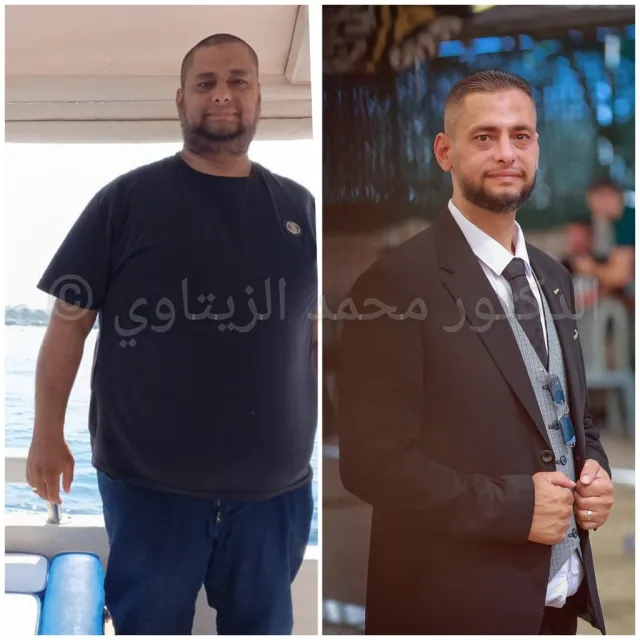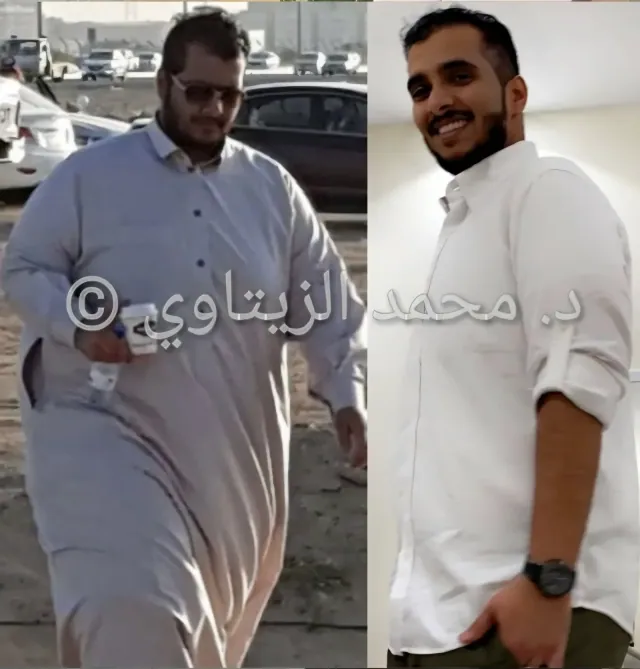
Before and after: 147 kg to 86 kg (134 lb lost)
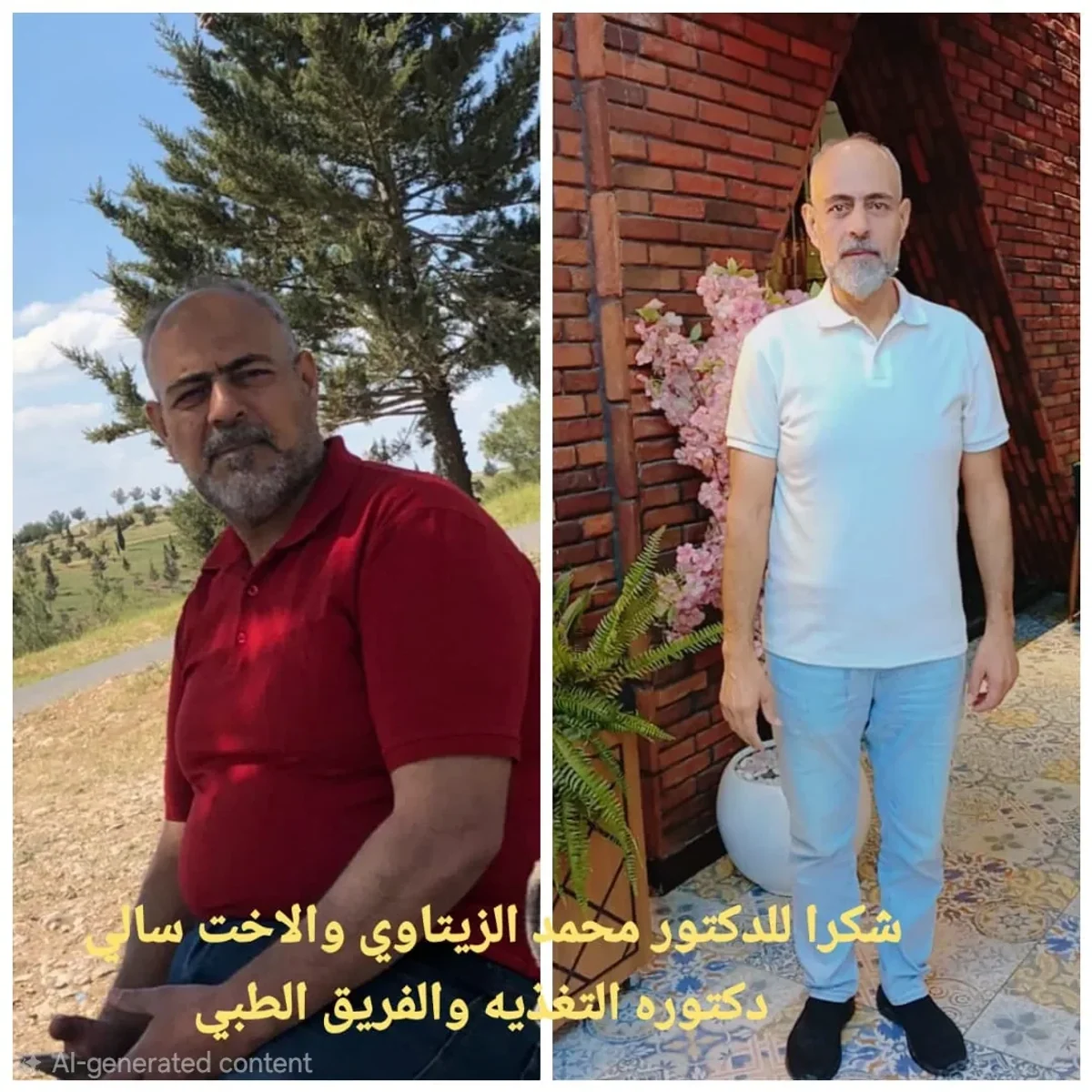
What changed for Adnan Al-Dulaimi after mini gastric bypass?
Adnan Al-Dulaimi from Iraq went from 147 kg to 86 kg in a year after mini gastric bypass with Dr. Mohammad Al-Zaitawi, came off insulin injections under medical supervision, and saw improvements in blood pressure and joint pain. Results vary from patient to patient.
Adnan’s story in brief
Adnan Al-Dulaimi from Iraq lost 60 kg, thank God, after having a mini gastric bypass with Dr. Mohammad Al-Zaitawi. He had high blood sugar and was taking insulin injections, and thank God he got rid of the injections. He also got rid of high blood pressure, joint pain and difficulty moving.
Read the original Arabic
عدنان الدليمي من العراق، نزل وزنه 60 كيلو بفضل الله بعد إجرائه عملية تحويل مسار المعدة المصغر على يد الدكتور محمد عبد الوهاب الزيتاوي. كان يعاني من ارتفاع السكر ويأخذ إبر إنسولين، وبفضل الله تخلص من الإبر، وكذلك تخلص من ارتفاع الضغط وألم المفاصل وصعوبة الحركة.
Why was mini gastric bypass the right choice?
Adnan weighed 147 kg, with diabetes requiring insulin injections, high blood pressure and joint pain. In cases like this, mini gastric bypass may be a suitable option because its effect on diabetes is usually stronger than procedures that rely on reducing stomach size alone. The decision was made after a full medical assessment at the center.
His health after one year
After a year he reached 86 kg. Insulin injections were stopped after his blood sugar improved, under his doctor’s follow-up; his blood pressure improved and his joint pain eased, making daily movement much easier.
The journey, step by step
- Before surgery: 147 kg and diabetes on insulin
Excess weight with high blood sugar on insulin injections, high blood pressure, joint pain and difficulty moving.
- Contact from Iraq and medical assessment
Case review, lab tests and evaluation of diabetes and blood pressure; mini gastric bypass chosen as the best option.
- Laparoscopic mini gastric bypass
Surgery at Dr. Mohammad Al-Zaitawi’s center, then a gradual move from liquids to normal food.
- First months: better sugar and fewer medications
Blood sugar improved and insulin and blood pressure medication doses were adjusted gradually under medical supervision.
- One year later: 86 kg and no insulin
More than 60 kg lost, off insulin, with better blood pressure, joints and mobility.
Adnan’s story shows that bariatric surgery can treat obesity-related conditions, not just weight. Improved diabetes after mini gastric bypass may allow diabetes medication to be reduced or stopped, but this must be done gradually and under a doctor’s supervision with blood sugar monitoring; insulin must never be stopped without medical advice. Gastric bypass patients also need lifelong vitamins and supplements and regular lab follow-up. Results vary depending on how long diabetes has been present, overall health and commitment.
This story reflects one patient's experience. Your result depends on your starting weight, health, the chosen procedure and your commitment after surgery. Only a personal medical evaluation can tell you what to expect.
Adnan Al-Dulaimi, a patient from Iraq, had laparoscopic mini gastric bypass at Dr. Mohammad Al-Zaitawi’s bariatric and laparoscopic surgery center in Jordan. His weight went from 147 kg to 86 kg in a year; he came off insulin injections under medical supervision, and his blood pressure, joint pain and mobility improved. Results vary between patients.
Frequently asked questions
How much did Adnan Al-Dulaimi lose after mini gastric bypass?
He went from 147 kg to 86 kg, more than 60 kg, within a year of surgery.
Can you stop insulin injections after mini gastric bypass?
In a large proportion of type 2 diabetes patients, blood sugar improves clearly after gastric bypass, and some can stop insulin as Adnan did. The chances depend on how long diabetes has been present and on pancreatic function, and medication must be reduced gradually and only under a doctor’s supervision.
Do blood pressure and joint pain improve after gastric bypass?
Many patients see their blood pressure improve and may need less medication, and joint pain and difficulty moving ease with weight loss as pressure on the knees and back decreases.
What is the difference between mini gastric bypass and sleeve gastrectomy for diabetics?
A sleeve works by reducing the size of the stomach, while a mini gastric bypass combines a smaller stomach with bypassing part of the intestine, so its effect on diabetes is usually stronger. It does require lifelong supplements and closer follow-up, and the doctor chooses the procedure based on each patient’s condition.
Can patients from Iraq have the surgery in Jordan?
Yes. The center regularly welcomes patients from Iraq. You can start with a remote assessment by sending your weight, height, age, medications and health status via WhatsApp +962 79 570 2800, then coordinate the surgery date and stay.