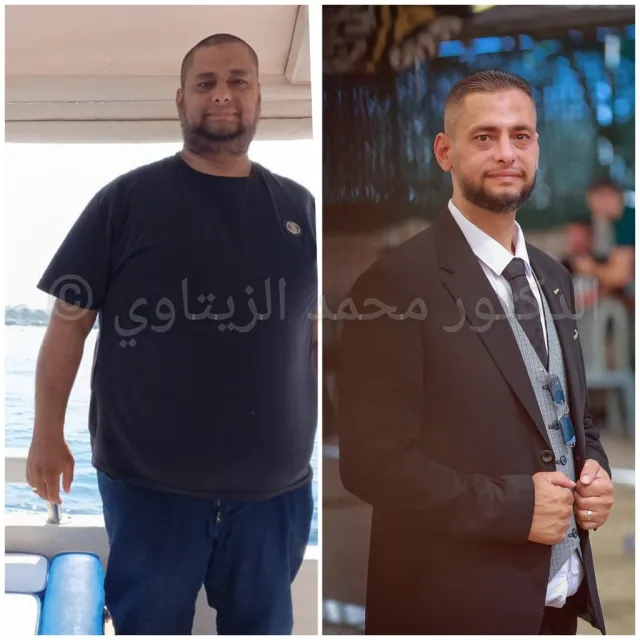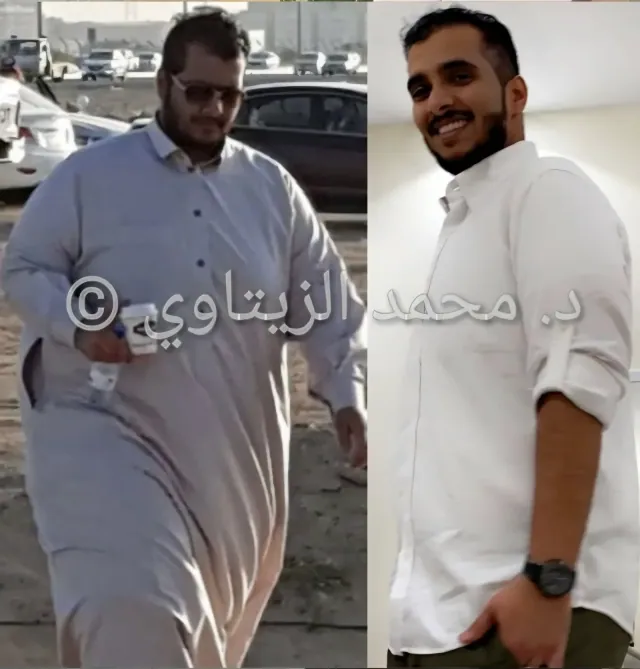
Mini Gastric Bypass: Inside the Operating Room
Can mini gastric bypass be done under spinal anesthesia?
Yes. Dr. Mohammad Al-Zaitawi routinely performs laparoscopic mini gastric bypass under spinal anesthesia with sedation after the anesthesiologist’s assessment, so the patient breathes on his own without a breathing tube, with general anesthesia ready if needed.
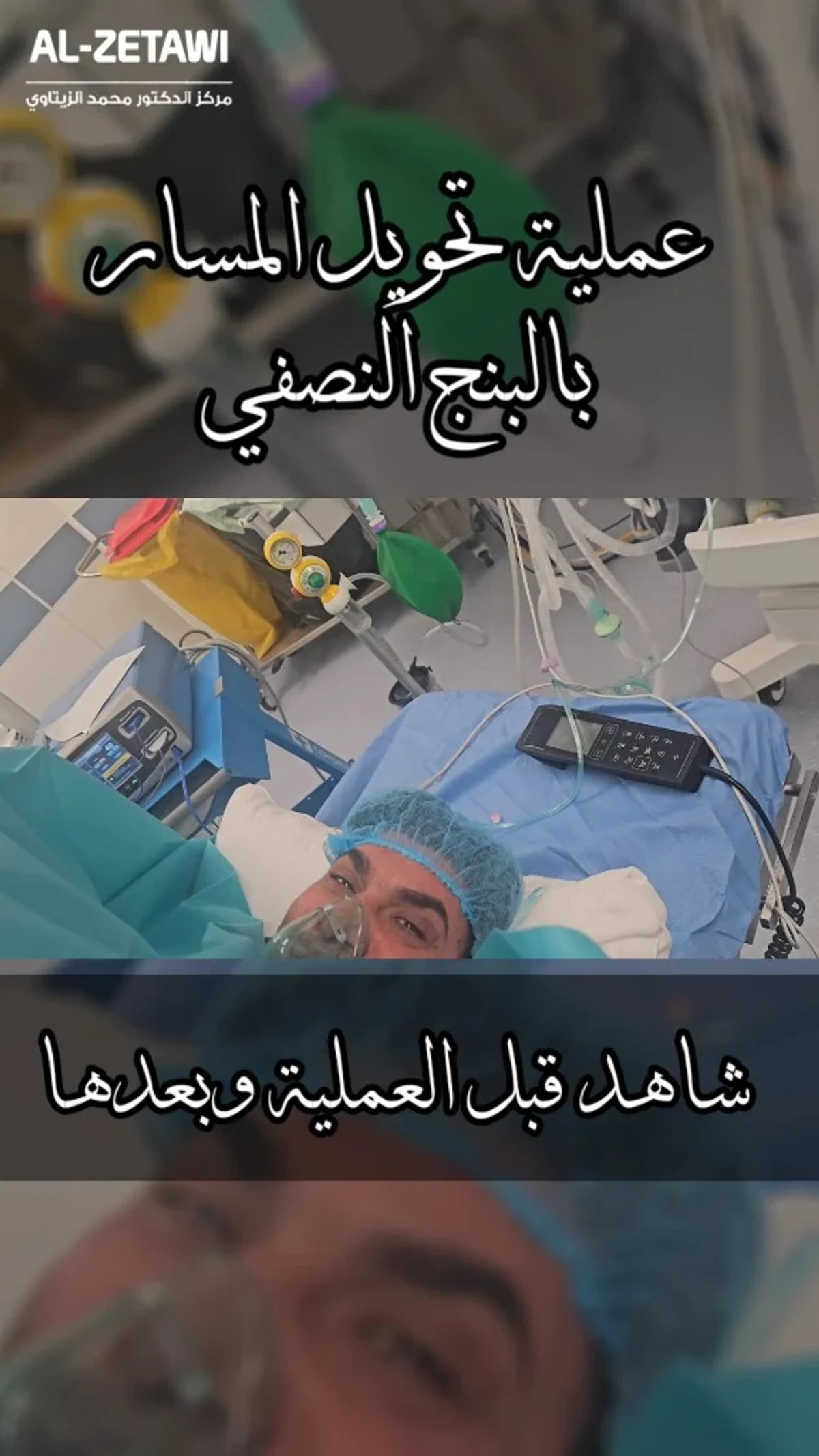
What the photo shows
The photo shows a patient awake on the operating table during mini gastric bypass under spinal anesthesia, breathing on his own through an oxygen mask without a breathing tube, while the anesthesiologist monitors him throughout the operation.
How spinal anesthesia works in gastric bypass
The center routinely performs laparoscopic bariatric surgery under spinal anesthesia with sedation, after the anesthesiologist assesses each patient before surgery. The anesthetic is injected in the lower back so the abdomen and lower body are numb, while the patient breathes on their own without a breathing tube and stays awake or sedated for comfort. General anesthesia remains ready at any moment if the case requires it.
What is mini gastric bypass?
Mini gastric bypass (one-anastomosis gastric bypass) is a laparoscopic operation that creates a long, narrow stomach pouch and connects it directly to a loop of small intestine whose length the surgeon sets for each patient. Food intake drops, part of the calories are absorbed less, and type 2 diabetes improves in many patients.
After surgery: recovery and vitamins
Patients start walking within hours, usually leave hospital after one to two days and then move through the eating stages with the dietitian. Bypass patients need lifelong vitamins and minerals such as iron, vitamin B12, calcium and vitamin D, with regular blood tests.
The journey, step by step
- Assessment
Pre-operative tests and an anesthesiologist’s review.
- Spinal anesthesia
Spinal anesthesia with sedation while the patient breathes on his own.
- Mini gastric bypass
Creating the stomach pouch and the intestinal connection laparoscopically.
- One to two days
Early walking, clear fluids, then discharge from hospital.
- Lifelong follow-up
Vitamins, minerals, regular blood tests and nutrition follow-up.
We use spinal anesthesia routinely in bariatric surgery after the anesthesiologist’s assessment, because it spares the patient a breathing tube and helps early walking. With gastric bypass in particular, the key to a safe long-term result is taking vitamins and attending regular blood tests. Results vary from patient to patient.
This story reflects one patient's experience. Your result depends on your starting weight, health, the chosen procedure and your commitment after surgery. Only a personal medical evaluation can tell you what to expect.
An operating-room photo from Dr. Mohammad Al-Zaitawi’s bariatric and laparoscopic surgery center in Jordan of an awake patient breathing through an oxygen mask during mini gastric bypass under spinal anesthesia with sedation. Mini gastric bypass is a single-connection laparoscopic operation lasting about 1–2 hours with a 1–2 day stay, and requires lifelong vitamins.
Frequently asked questions
Is the patient awake during gastric bypass under spinal anesthesia?
The patient is awake or sedated for comfort and feels no pain because the abdomen is fully numb, with the anesthesiologist monitoring throughout.
What is the difference between mini and classic gastric bypass?
Mini gastric bypass uses a single connection between the stomach and intestine, while the classic bypass uses two. The surgeon chooses based on weight, diabetes, reflux and the patient’s condition.
Do I need vitamins after gastric bypass?
Yes, for life, including iron, vitamin B12, calcium and vitamin D, with regular blood tests to adjust the doses.
How long do mini gastric bypass surgery and the hospital stay take?
The operation takes about one to two hours, and the stay is usually one to two days depending on the case.
What are the possible side effects of spinal anesthesia?
A temporary drop in blood pressure, temporary difficulty passing urine or, rarely, a headache after the injection, all managed by the anesthesiologist. For an assessment, send your details via WhatsApp +962 79 570 2800.