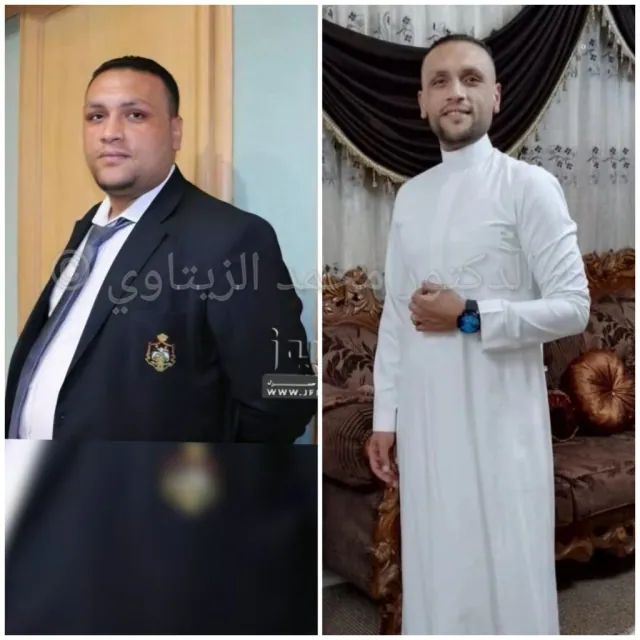
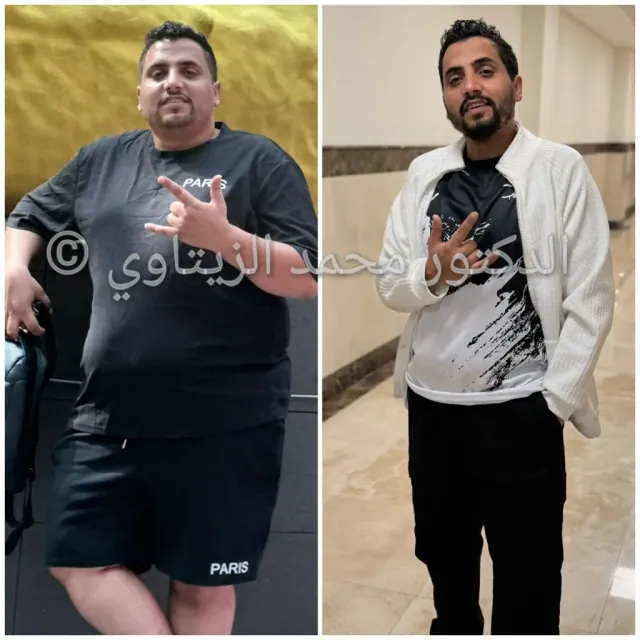
Before and after: 145 kg to 70 kg (165 lb lost)
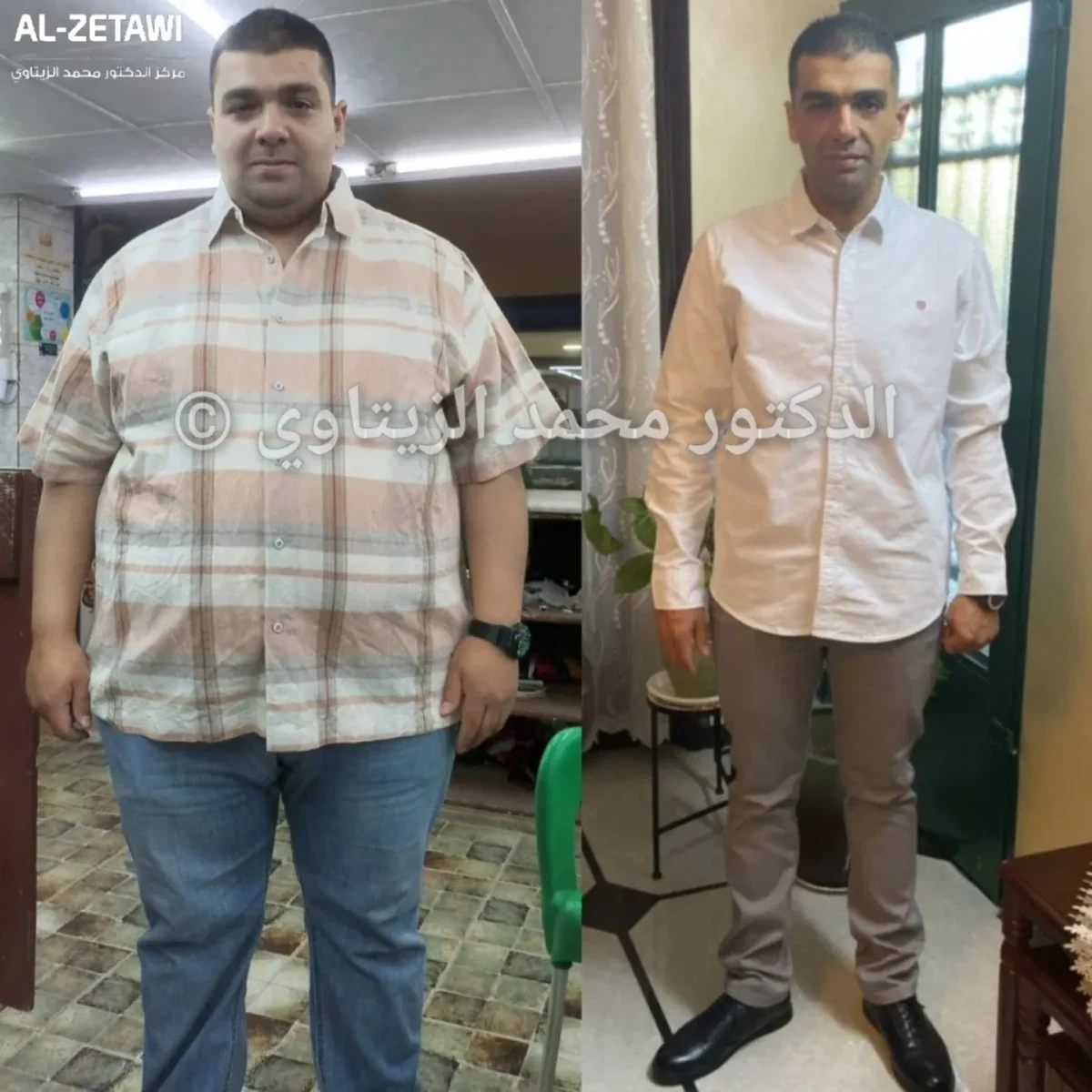
How much weight did Abdulrahman lose after sleeve gastrectomy?
Abdulrahman lost 75 kg, from 145 to 70 kg, in about a year and a half after sleeve gastrectomy with Dr. Mohammad Al-Zaitawi, sticking to his diet and follow-up. Results vary from patient to patient.
Abdulrahman in his own words
Peace be upon you, I’m Abdulrahman Hashhoush from Jordan. My previous weight was 145 kg, and my current weight is 70 kg, within a year and a half. My weight caused me problems: blood pressure, heart problems, joint and spine problems, and problems with the tendon in my foot, and thank God I got rid of these health problems. I thank Dr. Mohammad Al-Zaitawi, and I advise anyone who wants this surgery to have it only with Dr. Al-Zaitawi.
Read the original Arabic
السلام عليكم، أنا عبد الرحمن حشحوش من الأردن. وزني السابق كان 145 كيلو، ووزني الحالي 70 كيلو خلال سنة ونص. كانت عندي مشاكل مع الوزن: ضغط الدم، مشاكل في القلب، مشاكل في المفاصل والعمود الفقري، ومشاكل في الوتر في القدم، والحمد لله تخلصت من هاي المشاكل الصحية. بشكر الدكتور محمد عبد الوهاب الزيتاوي، وبنصح أي حدا بده يعمل العملية ما يعملها غير عند الدكتور الزيتاوي.
Why did he choose sleeve gastrectomy?
His excess weight caused high blood pressure, strain on his heart and constant pain in his joints, spine and foot tendon, limiting his daily movement. After a medical assessment at the center, he was found to be a suitable candidate for laparoscopic sleeve gastrectomy.
What changed after surgery?
As his weight came down gradually, his blood pressure improved and the pain in his joints, back and foot eased, and he became more active in daily life. Commitment to nutritional and medical follow-up was key to reaching 70 kg and staying there.
The journey, step by step
- Before surgery: 145 kg and multiple health problems
High blood pressure, heart problems and pain in the joints, spine and foot tendon due to excess weight.
- Medical assessment and preparation
Pre-operative tests and health assessment, then an explanation of the laparoscopic sleeve plan and pre-operative diet.
- Laparoscopic sleeve gastrectomy
Surgery at Dr. Mohammad Al-Zaitawi’s center, starting with liquids and then puréed food gradually.
- First six months: the fastest loss
Noticeable weight loss with regular nutritional follow-up, and early improvement in blood pressure and joint pain.
- A year and a half later: 70 kg
75 kg lost, most obesity-related health problems resolved, and a more active lifestyle.
Abdulrahman’s story shows that sleeve gastrectomy is not just weight loss, but treatment for obesity-related conditions such as high blood pressure and joint pain. Losing 75 kg in a year and a half came from his commitment to the diet and regular follow-up after surgery. We always remind patients that results vary depending on starting weight, health and commitment.
This story reflects one patient's experience. Your result depends on your starting weight, health, the chosen procedure and your commitment after surgery. Only a personal medical evaluation can tell you what to expect.
Abdulrahman Hashhoush, a patient from Jordan, had laparoscopic sleeve gastrectomy at Dr. Mohammad Al-Zaitawi’s bariatric and laparoscopic surgery center. His weight went from 145 kg to 70 kg (75 kg lost) in about 18 months, with improvement in blood pressure, heart, joint, spine and foot tendon problems. The most important factor was commitment to nutritional and medical follow-up. Results vary between patients.
Frequently asked questions
How much did Abdulrahman lose after sleeve gastrectomy?
He lost 75 kg, from 145 to 70 kg, in about a year and a half after sleeve gastrectomy, with committed follow-up.
Can blood pressure and joint pain improve after a sleeve?
In many patients blood pressure improves and joint and back pain ease with weight loss, but this varies from person to person, and blood pressure medication should only be stopped under a doctor’s supervision.
Are before and after results guaranteed for every patient?
No. The photo shows one specific patient’s experience; results depend on starting weight, health, diet, activity and follow-up.
How long does it usually take to reach target weight after a sleeve?
Most weight loss happens in the first 12 to 18 months after surgery, in line with Abdulrahman’s experience, and healthy habits must be maintained afterwards to prevent weight regain.
How do I know if I’m a candidate for sleeve gastrectomy?
This is determined after a medical assessment that includes body mass index, related conditions and medical history. You can send your weight, height and age via WhatsApp +962 79 570 2800 for an initial assessment.