Sleeve Gastrectomy: Inside the Operating Room
Can sleeve gastrectomy be done under spinal anesthesia?
Yes. Dr. Mohammad Al-Zaitawi routinely performs laparoscopic sleeve gastrectomy under spinal anesthesia with sedation after the anesthesiologist’s assessment, so the patient breathes on their own without a breathing tube, with general anesthesia ready if needed.
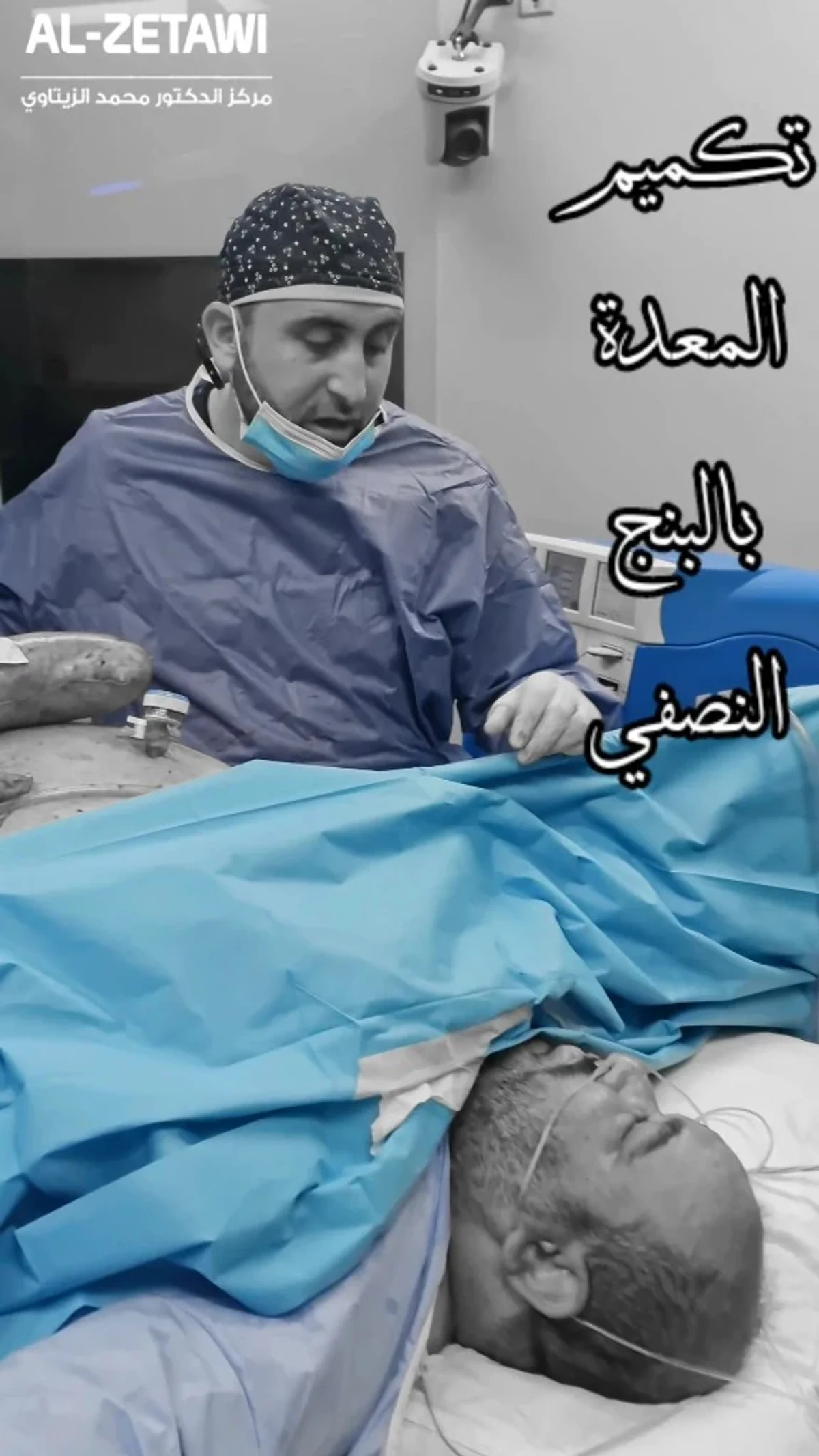
What the photo shows
The photo shows Dr. Mohammad Al-Zaitawi in the operating room beside a patient on the table during sleeve gastrectomy under spinal anesthesia, with the patient breathing on his own through a thin nasal oxygen tube and no breathing tube in the windpipe.
The steps of spinal anesthesia in sleeve surgery
The center routinely performs laparoscopic bariatric surgery under spinal anesthesia with sedation, after the anesthesiologist assesses each patient before surgery. The anesthetic is injected in the lower back so the abdomen and lower body are numb, while the patient breathes on their own without a breathing tube and stays awake or sedated for comfort. General anesthesia remains ready at any moment if the case requires it.
Advantages of spinal anesthesia in sleeve surgery
Key advantages include avoiding a breathing tube and the sore throat that can follow it, usually less nausea after surgery, good pain control in the first hours and the ability to move and walk early. The patient is also monitored by the anesthesiologist throughout the operation.
Side effects and who it does not suit
Spinal anesthesia can cause a temporary drop in blood pressure, temporary difficulty passing urine or, rarely, a headache after the injection. It does not suit people with clotting disorders, those on certain blood thinners that have not been stopped, or anyone with an infection at the injection site, so the anesthesiologist chooses the anesthesia for each patient after assessment.
The journey, step by step
- Anesthetic assessment
Reviewing medical history, medications and clotting tests.
- Spinal injection
Numbing via the lower back, with sedation for comfort.
- Laparoscopic sleeve
Removing about 80–85% of the stomach while the patient breathes on their own.
- Anesthesia wears off
Sensation returns gradually within hours and walking begins.
- Follow-up
Eating stages, vitamins and regular blood tests.
Spinal anesthesia is a core part of how we perform bariatric surgery, and we use it routinely after the anesthesiologist assesses each patient, with general anesthesia fully ready if the case requires it. What matters most after surgery is following the nutrition plan and attending follow-up. Results vary from patient to patient.
This story reflects one patient's experience. Your result depends on your starting weight, health, the chosen procedure and your commitment after surgery. Only a personal medical evaluation can tell you what to expect.
An operating-room photo from Dr. Mohammad Al-Zaitawi’s bariatric and laparoscopic surgery center in Jordan during sleeve gastrectomy under spinal anesthesia with sedation, with the patient breathing on his own without a breathing tube. The center uses spinal anesthesia routinely after the anesthesiologist’s assessment; its advantages include less nausea and early walking, and its temporary side effects include low blood pressure and difficulty passing urine.
Frequently asked questions
Is spinal anesthesia safe for sleeve gastrectomy?
Yes, when the right patient is selected and assessed by the anesthesiologist, with continuous monitoring throughout and general anesthesia ready if needed.
Will I hear or see what happens during surgery?
Sedation keeps the patient comfortable or lightly asleep, and many patients do not remember the details of the operation.
When does feeling return to the legs after spinal anesthesia?
Feeling and movement return gradually within hours after surgery, and the patient then starts walking with the team’s help.
Who is spinal anesthesia not suitable for?
People with blood clotting disorders, those on blood thinners that were not stopped as instructed, anyone with an infection at the injection site, or patients who decline this type of anesthesia.
How do I book an assessment for sleeve under spinal anesthesia?
Send your weight, height, age, chronic conditions and medications via WhatsApp +962 79 570 2800 for an initial assessment.