Sleeve Gastrectomy: Inside the Operating Room
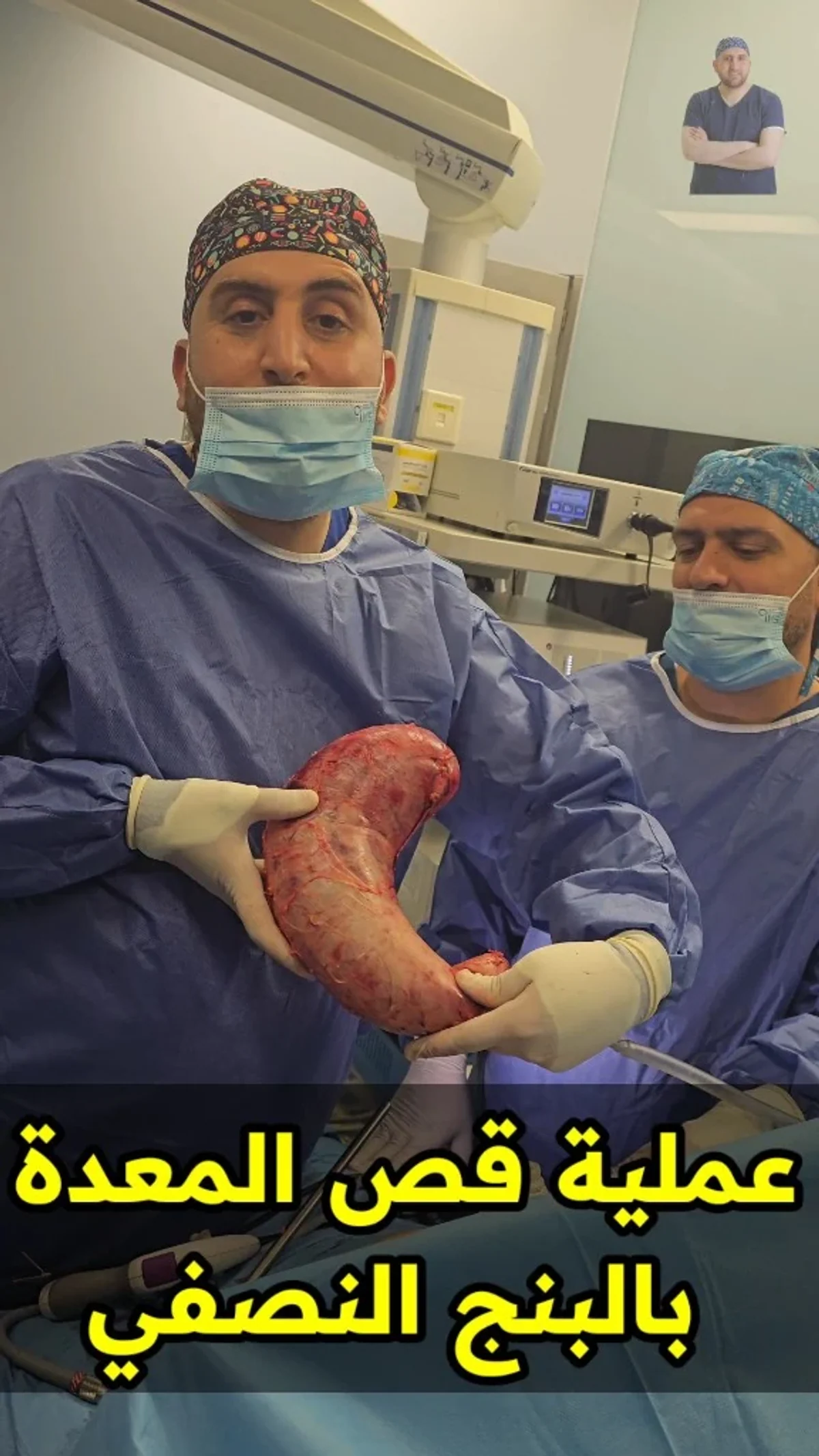
What is stomach reduction surgery and how much stomach is removed?
Stomach reduction surgery is sleeve gastrectomy: about 80–85% of the stomach is removed laparoscopically, including the fundus that produces most of the hunger hormone, leaving a narrow sleeve. Dr. Mohammad Al-Zaitawi routinely performs it under spinal anesthesia after the anesthesiologist’s assessment.
What the photo shows
The photo shows Dr. Mohammad Al-Zaitawi in the operating room holding the part of the stomach that was removed, right after the operation, with the surgical team beside him. This large piece was taken out laparoscopically through a small opening, and the operation was done under spinal anesthesia.
What is stomach reduction surgery?
“Stomach reduction” or “stomach cutting” is the common name for sleeve gastrectomy. The large outer part of the stomach is cut lengthwise and stapled along a sizing tube, leaving a narrow tube-shaped sleeve roughly the size of a banana. The food route and intestines are not changed; food passes along the same natural path.
Why does hunger drop after stomach reduction?
The removed part includes the fundus, where most of the hunger hormone ghrelin is produced. That is why many patients notice a clear drop in hunger after surgery, along with feeling full quickly because the stomach is much smaller.
Spinal anesthesia and recovery
The center routinely performs laparoscopic bariatric surgery under spinal anesthesia with sedation, after the anesthesiologist assesses each patient before surgery. The anesthetic is injected in the lower back so the abdomen and lower body are numb, while the patient breathes on their own without a breathing tube and stays awake or sedated for comfort. General anesthesia remains ready at any moment if the case requires it. After surgery the patient starts walking within hours and then moves through the eating stages with the dietitian.
The journey, step by step
- Assessment
Pre-operative tests and an anesthesiologist’s review.
- Spinal anesthesia
Spinal anesthesia with sedation while the patient breathes on their own.
- Stomach reduction
Removing about 80–85% of the stomach laparoscopically and stapling it.
- Removing the excised part
Drawing the removed stomach out through a small opening.
- Follow-up
Eating stages, vitamins and regular blood tests.
Many patients ask about “stomach cutting”, which is the same operation as a sleeve. The removed part does not come back, but the remaining stomach can stretch with overeating in the long term, so eating habits and follow-up remain the basis for keeping the result. Results vary from patient to patient.
This story reflects one patient's experience. Your result depends on your starting weight, health, the chosen procedure and your commitment after surgery. Only a personal medical evaluation can tell you what to expect.
An operating-room photo from Dr. Mohammad Al-Zaitawi’s bariatric and laparoscopic surgery center in Jordan in which he holds the removed part of the stomach after stomach reduction surgery (sleeve gastrectomy) under spinal anesthesia. About 80–85% of the stomach is removed, including the fundus that produces most of the hunger hormone ghrelin, leaving a narrow sleeve without changing the intestinal route.
Frequently asked questions
Is stomach reduction the same as sleeve gastrectomy?
Yes. “Stomach reduction” or “stomach cutting” is the common name for sleeve gastrectomy, not a different operation.
Does the removed part of the stomach grow back?
No. The removed part does not grow back, but the remaining stomach can gradually stretch with overeating in the long term.
Why does hunger drop after stomach reduction?
Because the removed part includes the fundus, which produces most of the hunger hormone ghrelin, plus early fullness from the smaller stomach.
Does the food route change after stomach reduction?
No. Food follows the same natural path; the stomach is simply much smaller. Gastric bypass, by contrast, changes the intestinal route.
How do I know if stomach reduction suits me?
It usually suits people with a BMI of 40 or more, or 35 or more with obesity-related conditions. Send your weight, height and age via WhatsApp +962 79 570 2800 for an assessment.