
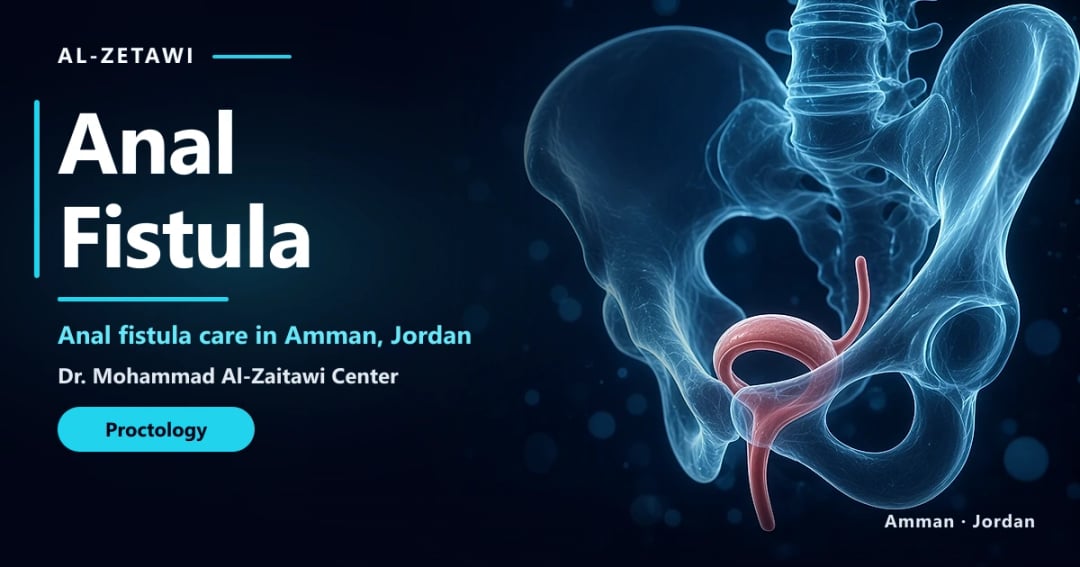
What Anal Fistula Surgery Aims to Do
Anal fistula surgery aims to stop a recurring infected tunnel near the anus while protecting control of gas and stool. The right operation depends on how much sphincter muscle the tunnel crosses. Some tracts can be laid open, while others are treated with a seton or a sphincter-preserving method such as a flap or LIFT.
A tunnel with two aims that pull against each other
An anal fistula is an abnormal tunnel between the inside of the anal canal and the skin around the anus. Stool and bacteria keep the tunnel from closing, so it drains, seals, swells into an abscess, and drains again. Surgery tries to end that cycle. The difficulty is anatomical. The tunnel often runs through or between the sphincter muscles that keep you continent. An operation that simply cuts everything open may cure a low tunnel and may damage control if the tunnel is high. An operation that protects every fiber of muscle may leave a tract that persists. Good fistula care is the judgment between those poles, repeated for the tract in front of the surgeon, not a single branded procedure applied to everyone.
This page explains that judgment in patient language. You will read how a fistula usually follows an abscess, how surgeons describe simple and complex tracts, and what four ideas mean: laying a low tract open, leaving a seton thread as a drain or as a bridge, covering the inner opening with a flap, and closing the tract between the sphincter muscles, an idea called LIFT. These are concepts. They are not steps you could follow to perform an operation, and they are not a ranking of products. Plug, glue, and laser approaches are mentioned only so you know they exist and that their results are variable. They are not offered here as magic.
Dr. Mohammad Al-Zaitawi assesses anal fistulas in Amman, Jordan, within colorectal and proctology care. Some tracts are treated in one operation. Many are staged, especially when infection is active or a large amount of muscle is involved. A seton is not a failure to 'do the real operation.' It is often the safe first chapter. If you have a feverish, expanding abscess now, you need drainage where you are. A planned reconstruction is not an emergency flight.
How to use this guide
Read the section on your likely situation, then use the questions at the end in clinic. Do not decide from a diagram you found elsewhere that you must have a particular operation. The tract you have, your childbirth history, any Crohn's disease, and an MRI or an examination under anesthesia will move the plan. Fees are quoted after that plan exists. Nothing on this page is a patient review or a promise that a fistula will not return.
How a Fistula Forms
Most anal fistulas begin as an infection in an anal gland that drains into the skin, often after an abscess. The inner opening usually sits at the dentate line, where those glands open. Not every abscess becomes a fistula, but a tunnel that keeps draining after an abscess has been opened should be assessed rather than repeatedly dressed and forgotten.
From a gland to a recurring abscess
Small glands in the anal canal can block and infect. Pus tracks along the path of least resistance: between sphincter muscles, through them, or down to the skin beside the anus. When the skin gives way, or when a surgeon drains an abscess, an outer opening appears. If the inner opening remains, the track epithelializes. It becomes a fistula, a lined tunnel rather than a simple wound. Surgical teaching often describes a fistula in a substantial share of anorectal abscesses, commonly on the order of about a third, though the number depends on how carefully tracts are sought. The practical point is more useful than the percentage. If an abscess returns in the same place, or if a small opening keeps weeping after drainage, ask whether a fistula is present. Repeated antibiotics without drainage of a collection will not close a lined tunnel.
The inner opening is the reason the problem persists. As long as pressure from the bowel can push material into the tunnel, the outer skin will not seal for good. That is why operations focus on the inner opening and on the course of the tract through muscle, not only on the visible hole on the skin. Closing the skin over an undrained tunnel traps pus. Patients sometimes arrive having had the outer opening stitched elsewhere. The swelling that follows is predictable. The skin opening is a vent. It is not the disease itself.
What is not an anal fistula
A pilonidal sinus sits in the natal cleft over the tailbone, often contains hair, and is a different condition with different operations. A fissure is a split in the lining, painful with stools, and is not a tunnel to the skin. A hemorrhoid is a vascular cushion. These problems can coexist, and pain from one can hide another, but treating the wrong one produces a neat wound and an unchanged disease. A passage between the rectum and the vagina is a rectovaginal fistula. It needs its own assessment, often with obstetric or colorectal planning, and it should not be forced into the script of a routine perianal fistula. Hidradenitis, infection of sweat glands in the groin and buttocks, can mimic multiple outer openings. The pits and the scars look different to a clinician who sees both. Say if you have had boils in the groins or armpits.
Crohn's disease, tuberculosis, and, rarely, cancer can create tunnels that look like ordinary cryptoglandular fistulas, the kind that start in an anal gland. If you have diarrhea, bleeding, weight loss, a family history of inflammatory bowel disease, or a fistula that looks unusual, the workup widens. An operation that ignores those clues can leave a wound that will not heal because the diagnosis was incomplete. The common fistula in a healthy young adult after a single abscess is still common. The point of the extra questions is not to alarm you. It is to avoid a standard operation for a non-standard cause.
Simple and Complex Tracts
Surgeons describe fistulas by the muscles they cross and by features that raise the risk of recurrence or of leakage. A simple low tract involving little sphincter may be laid open. A high, branching, or Crohn's-related tract is complex and usually needs a sphincter-preserving plan, often staged. The labels exist to protect continence, not to grade your character.
Where the tunnel runs
A classification published by Parks in the British Journal of Surgery in 1976 is still the language of clinic letters. An intersphincteric fistula stays in the plane between the internal and external sphincters and reaches the skin nearby. A transsphincteric fistula crosses both muscles into the ischioanal fat before finding the skin. A suprasphincteric fistula loops over the top of the external sphincter. An extrasphincteric fistula passes from the rectum to the skin outside the sphincter complex and often means another disease, such as Crohn's or a pelvic infection, rather than a simple gland. You do not need to memorize the names. You do need to hear which one you have, because the muscle at stake is different in each.
A tract that involves only a sliver of internal sphincter low in the canal is a different proposition from one that crosses a large height of external sphincter. The external sphincter is the muscle you squeeze. Dividing a substantial part of it can cost you control of gas or stool. The internal sphincter maintains resting pressure. Dividing it freely, especially at the front in a woman, also has a price. 'Low' and 'high' are judgments made with a finger, a probe during an examination under anesthesia, and sometimes an MRI. They are not guesses from how far the outer hole sits from the anus. An outer opening close to the skin edge can still connect to a high tract, and a more distant opening can still be a simple low one. Goodsall's observation, that posterior openings tend to curve to the midline and anterior openings tend to run straight, is a useful hint and a famous source of overconfidence. It is wrong often enough that no surgeon should skip a proper examination because the rule 'already answered the question.'
What makes a fistula complex
The American Society of Colon and Rectal Surgeons treats as simple those fistulas that involve little sphincter, have a single outer opening, and occur in people without Crohn's disease, radiation, or existing incontinence. Complexity rises with a high transsphincteric course, a tract above the sphincter, a horseshoe extension around the back of the canal, multiple tunnels, recurrence after previous surgery, and an anterior fistula in a woman, whose anterior sphincter is shorter and may already have been affected by childbirth. Prior leakage, even of gas, moves a borderline tract into the complex column. Radiation and cancer do the same. A horseshoe collection feels like a deep abscess on both sides of the anus and often needs drainage of the deep space as well as a plan for the tract. It is a classic reason for a staged approach rather than a single ambitious cut.
These categories change the consent. For a simple low fistula, the conversation is about a wound that heals over weeks and a low chance of a meaningful continence change. For a complex fistula, the conversation is about a seton first, a later flap or LIFT or another sphincter-preserving idea, a real chance of recurrence, and the reasons you would rather accept a longer path than a dry anus that cannot hold stool. If your letter says 'complex' and nobody has explained which feature earned the word, ask. The word should point at an anatomical fact, not at a mood.
Examination and Imaging
Diagnosis starts with the history and a gentle examination. Many tracts are fully mapped only during an examination under anesthesia, which can also begin treatment. MRI is used for complex, recurrent, and Crohn's-related fistulas. No single test replaces a surgeon who treats fistulas regularly.
What the clinic visit can show
You will be asked when the abscess first appeared, whether it was drained, how many times it has returned, and whether the skin opening weeps stool, pus, or blood. Pain that builds for days and then bursts is the abscess-fistula cycle. Itching and a stain on the underwear are the chronic phase. The clinician looks for the outer opening, feels for a cord of tract under the skin, and, if you can tolerate it, examines the canal for the inner opening. Anoscopy with a short scope helps when pain allows. If pain does not allow a useful examination, forcing it wastes the visit and frightens you. The next step is an examination under a short anesthetic, which is both a map and, often, the first treatment.
Bring discharge summaries from any drainage, the names of antibiotics you were given, and MRI discs if they exist. Mention childbirth, forceps, a tear repaired after delivery, previous fistula or hemorrhoid surgery, and any leakage of gas or liquid. Mention diarrhea, mouth ulcers, joint pains, or a known diagnosis of Crohn's disease. These facts change imaging and change the operation more than the size of the visible hole. A photograph of the swelling at its worst can help, taken privately and sent only through the channel the clinic provides.
MRI, ultrasound, and the examination under anesthesia
Magnetic resonance imaging is the most useful scan when the tract may be high, branched, recurrent, or related to Crohn's disease. It shows extensions in the deep postanal space and tracks that a finger can miss. It is not mandatory for every obvious low fistula in a person having a first, straightforward operation, and it should not delay drainage of an acute abscess that is making you septic. Endoanal ultrasound, in experienced hands, is another way to see the sphincter and the tract. It is operator-dependent. A scan report that says 'no fistula' when pus is still coming from an opening does not end the story. Scar, a sealed inner opening, and the limits of the technique all produce false reassurance. The ASCRS guideline on abscess and fistula supports imaging when it will change the plan, which is exactly the complex and recurrent group.
Examination under anesthesia lets the surgeon see the inner opening, gently define the path of the tract, and decide whether it is safe to lay it open or wiser to place a seton. That definition is a surgical skill. This page will not describe how a probe is passed or how a tract is injected, because those maneuvers are how injuries happen in untrained hands. What you should expect as a patient is a clear explanation afterwards: where the inner opening was, how much muscle was involved, whether a seton was left, and what the next stage is likely to be. If you wake with a thread and nobody tells you why, ask before you leave the hospital. A seton without a plan is just a string.
Laying Open a Simple Tract
Fistulotomy means laying a suitable low tract open so it becomes a flat wound that heals from the base. It is the most reliable way to cure a simple fistula that contains little sphincter. It is the wrong default for a high tract. The wound is open for weeks. That is healing, not neglect.
Who this idea is for
A fistula that crosses only a small amount of the lower internal sphincter, in a person with intact continence and no Crohn's disease, is the classic setting for fistulotomy. The tunnel is unroofed. The infected lining is no longer a closed space. The wound is left to fill in. Because little muscle has been divided, the trade against continence is usually acceptable, and the chance of cure is higher than with methods that try to preserve every fiber. The ASCRS guideline and long-standing colorectal practice still regard laying open as appropriate for these simple fistulas. 'Appropriate' is not the same as casual. The judgment of 'little muscle' is the whole safety of the operation. A tract that looked simple in clinic can prove higher once you are asleep. The surgeon then changes to a seton rather than finishing a cut they would not have offered you awake. That change is good care. It should have been named in the consent as a possibility.
The wound after fistulotomy is shallow and open. It weeps. It needs cleaning with water, not packing that is stuffed in so tightly it becomes a source of pain, unless your team has given a specific packing instruction for a deeper cavity. Healing commonly takes several weeks and can take a couple of months for a larger laid-open wound. You will not see skin closure in the first week, and you should not let anyone cauterize or stitch the surface in a non-specialist clinic to 'speed it up.' Closing the top of a healing fistulotomy is how a new abscess is made. Work that involves sitting all day may need a cushion and a short leave. Heavy physical work waits until the wound is comfortable and no longer deeply open. The exact interval is individual.
What this operation is not
Fistulotomy is not a sphincterotomy for a fissure, although both words appear in anal surgery and both involve muscle. The fissure operation releases a portion of internal sphincter to stop spasm. Fistulotomy unroofs a tunnel. They are consented separately. Fistulotomy is also not a guarantee that no gas will ever escape more easily. Even a low cut can be noticed by a person who is very attuned to wind, and a low cut in a woman with an obstetric scar is not the same as a low cut in an uninjured sphincter. If you already leak, say so before you agree to be laid open. There is almost always another concept, even if it is less convenient and less certain of cure.
A cutting seton, discussed in the next section, is sometimes confused with fistulotomy because both eventually divide tissue. They are not identical in timing or in how the wound looks. If your surgeon uses that phrase, ask what it means for your muscle and for the number of visits. Do not accept a word you cannot explain back. The best candidate for simple fistulotomy can describe it in a sentence: the low tunnel will be opened, the wound will heal slowly from the inside, and the muscle involved is small enough that continence should be preserved. If that sentence does not fit you, you are in a different section of this guide.
The Seton as a Concept
A seton is a thread or a soft band left through the fistula tunnel. A draining seton keeps the tunnel open so infection can settle and a later operation can be safer. It is a planned stage, not a cure by itself. A cutting seton is a different, selective idea and can still affect continence.
The draining seton
Imagine the tunnel as a path that keeps refilling with pus because its outer end seals. A draining seton stops that seal. It sits loosely through the inner opening, along the tract, and out through the skin, tied to itself so it cannot fall out. Pus can escape beside it. Swelling and fever settle. The tissues become softer and the anatomy clearer. Weeks or months later, when you are well, a definitive operation such as a flap or a LIFT can be done in quieter tissue, or a very low tract can be laid open if the muscle assessment now allows it. In Crohn's disease a draining seton may stay for a long time while medicines calm the disease. That long stay is a strategy, not neglect. You can live, work, and exercise with a draining seton. It may stain a pad. It should not be painful once the abscess has settled. A seton that suddenly hurts, with fever and a new lump, means the vent is blocked and you need a review, not another week of patience.
You will be shown how to keep the area clean with water. You do not tighten a draining seton. You do not cut it out at home because you are tired of it. Removing it without a plan often returns you to the original abscess. If it snaps, call. A replacement is a small procedure compared with an undrained recurrence. Sexual activity is usually possible once tenderness has gone, with honesty toward a partner if you want that, and with care not to tug the thread. Tampons, if you use them, should be mentioned in clinic so you are given advice that fits your anatomy rather than a generic leaflet written only with men in mind. None of this requires you to display the seton to anyone except your clinicians.
The cutting seton, and why it is not a schedule you copy
A cutting seton uses the thread differently. Over time it is intended to work through the tissue slowly, so the tract is gradually laid open while scar forms behind it. Some surgeons still use this idea in selected cases. It is not gentle merely because it is slow. The muscle that is eventually divided is still divided, and continence can suffer, particularly if the tract is high. Modern sphincter-preserving concepts exist in large part because patients and surgeons became dissatisfied with that trade. If a cutting seton is proposed, the conversation should include how many visits are expected, what you should feel, and what the continence risk is compared with a flap or a LIFT for your particular tract. This page deliberately does not give a tightening interval, a knot technique, or a material. Those are operative choices. Published as a recipe, they would be unsafe. Discussed in clinic, for one patient, they are part of consent.
Whichever seton you have, you should leave the hospital knowing three things: why it is there, whether anyone will adjust it, and what the next decision point is. A review date is part of the device. A seton placed at an emergency drainage in another hospital, with no follow-up, is an unfinished operation. Bring that history to Amman if you are seeking the next stage. The thread is a clue. The operation note is better. If the note is in another language, a translation of the findings matters more than a translation of the compliments.
Flap and LIFT as Concepts
A flap and a LIFT are sphincter-preserving ideas for tracts that should not be laid open. A flap covers the inner opening with healthy tissue so stool cannot enter the tunnel. A LIFT closes the tunnel in the groove between the sphincter muscles so those muscles are not cut. Neither is guaranteed, and neither is a brand.
The advancement flap
The inner opening is the door from the bowel into the fistula. An advancement flap closes that door and covers it with a small flap of healthy lining from the rectum or anal canal, so the closure is not left bare. The outer part of the tunnel is cleaned and left to drain. The sphincter is not divided to unroof the whole path. The concept is simple to say and technically demanding to do well, which is why it belongs with a surgeon who repairs fistulas, not with a general instruction. You do not need the details of how the flap is raised. You do need to know what success and failure feel like. If the flap holds, drainage slows over the following weeks and the outer opening closes. If it does not, drainage continues or an abscess returns. Failure is disappointing and common enough that it must be named before surgery. It does not mean the muscle has been sacrificed. A further attempt, a different concept, or a return to a seton can still be planned. Smoking, a hard stool that stresses the repair, and active Crohn's disease at the inner opening all make a flap less likely to hold. Those are reasons to prepare properly, not reasons to promise a percentage.
After a flap, the inner repair is the fragile part. Straining, and the temptation to inspect or stretch the anus, works against it. Stool softness is part of the operation. Pelvic rest, meaning no anal intercourse and no insertion of devices until you are cleared, protects the repair. Vaginal intercourse is a separate question that your surgeon can answer for your wound. Ask, rather than guessing from embarrassment. A little bleeding and a feeling of fullness are common. Fever, a sudden new swelling, or heavy bleeding is not. The outer wound may be smaller than after a fistulotomy because the tract was not laid wide open. Less outer wound does not mean a trivial operation. It means the important stitch work is inside, where you cannot see it.
LIFT in plain language
LIFT stands for ligation of the intersphincteric fistula tract. The idea, described by Rojanasakul and colleagues and since studied widely, is to find the fistula in the space between the internal and external sphincter, tie it off, and divide it there. The door between the bowel and the outer tunnel is closed without cutting across the sphincter muscles. The outer tunnel is opened enough to drain and is left to heal. A selected transsphincteric fistula is the usual candidate. A tract that is not in that plane, a tract with several branches, or a tract in actively inflamed Crohn's tissue may be a poor fit. The surgeon decides from the map, often after a seton has quieted the sepsis and made the path mature and easier to identify.
What patients should understand, and all this page will say about the technique, is the intent and the limits. The intent is cure without sphincter division. The limits are that the tract must be suitable, that the closure can fail, and that a new, more superficial connection to the skin sometimes remains. That residual tract can be disappointing in the moment and is often easier to treat afterwards than the original deep one was. It is not a disaster, and it is not a reason to have divided the sphincter at the first operation 'to be sure.' Published success varies with how complex the fistulas in each series were and with how strictly cure was defined. Quoting a single success rate as yours would be misleading. The ASCRS guideline discusses LIFT as an option for selected transsphincteric fistulas precisely because it aims to protect continence. Protection is not the same as a guaranteed dry, closed anus.
Choosing between a flap and a LIFT, when both are anatomically possible, is a surgeon's recommendation based on the tract, previous scars, and your priorities. It is not a consumer choice between two packages. Ask which muscle would be at risk with each, what recurrence would look like, and whether a seton should come first. If you do not understand the answers, you are not ready to book. A good explanation can be short. It cannot be vague.
Plugs, Energy Devices, and Horseshoe Tracts
Plugs, glue, and laser or video-assisted methods are attempts to close a tract without dividing sphincter. Results are variable, and they are not the default for most fistulas. A horseshoe tract is a deep, branching infection that usually needs drainage first. New tools do not retire these anatomical facts.
Materials and energy, kept in proportion
A fistula plug is a material placed in the tract to encourage closure. Fibrin glue is a sealant with the same ambition. Both avoid a large wound. Both have been studied, and both have often disappointed when the tract is long, wide, or infected. They are not fraudulent. They are options with modest and inconsistent healing in real-world complex fistulas, which is why major guidelines do not present them as the standard cure. If someone proposes one, ask what will be done with the inner opening, what the plan is if drainage continues, and whether a seton should mature the tract first. Do not accept a plug as a way to skip the map of the muscles.
Laser closure of the tract and video-assisted inspection are newer techniques. They aim to treat the lining of the tunnel or to see the inner opening with a camera. Evidence is still evolving, series are selected, and a shiny device does not repeal the need to protect the sphincter or to drain pus. This center does not describe settings, wavelengths, or steps. If an energy device is ever part of your care, it will be because it fits the tract and the consent, not because a webpage ranked it. Be wary of any promise that a laser fistula operation is painless, scarless, and recurrence-free. Pain is often less than after a wide fistulotomy because the wound is smaller. Recurrence is not abolished. Continence still depends on what was done to the muscle, which a laser prefix does not reveal. Ask the anatomical question: is the sphincter being divided, or is the tract being closed and drained?
Horseshoe and deep spaces
Some infections track around the back of the anal canal in a deep postanal space and then rise toward the skin on one or both sides. The outer openings look like two ordinary fistulas. The disease is a horseshoe. Draining only the skin lumps leaves the deep space untouched, so the abscess returns. The concept of treatment is to drain the deep space, often with a seton through the primary tract, and to stage any later closure once sepsis is quiet. The wounds can be more uncomfortable than a simple fistulotomy, and the recovery is longer. MRI earns its place here. So does patience. A horseshoe is a common reason a 'quick operation' elsewhere did not work. Bringing the old operation note prevents the next surgeon from repeating a surface drainage.
None of these situations is a reason to feel that your fistula is untreatable. They are reasons to expect a sequence. Drainage and a seton, then a map, then a sphincter-preserving attempt if the muscle demands it, then an honest review if the first attempt fails. People who have had three operations are tired, and they are right to be. The fourth conversation should be more precise than the first, not more promotional. A surgeon who can say 'this extension was missed' or 'this flap failed and this is the next concept' is more trustworthy than one who offers a new trademark each time.
Crohn's Disease and Special Situations
A fistula caused by Crohn's disease is treated differently from an ordinary gland fistula. Sepsis is drained, a seton often stays while medicines act, and definitive repair waits until the disease is quiet. Childbirth injury, infection, and the rare tumor are other reasons to slow down and name the cause.
Crohn's fistulas
Crohn's disease can inflame the anus and create tunnels that will not obey the rules of a simple fistulotomy. Laying them open can leave wounds that do not heal and can divide sphincter in a person who may need more operations over a lifetime. The European Crohn's and Colitis Organisation's surgical guidance emphasizes controlling sepsis, limiting damage, and coordinating with medical therapy. In practice that often means an examination under anesthesia, drainage of any abscess, and a loose draining seton. A gastroenterologist directs medicines, which may include biologic therapy. This page does not name doses or schedules. Those are prescriptions. What you should know is that the seton is working with the medicine, not waiting uselessly for a date. Definitive repair, such as a flap in selected patients, is considered when inflammation is quiet and nutrition is adequate. Some Crohn's fistulas are managed long term with setons because repair is unrealistic and the seton keeps the patient out of hospital. That can be a good life. It should be a choice you understand, not a drift.
If you have perianal Crohn's disease, tell the colorectal surgeon and the gastroenterologist about each other. Operations planned without the medical timeline, and medicines escalated without anyone draining pus, are both incomplete. Smoking makes Crohn's fistulas harder to heal. Stopping is one of the few levers you personally control. An abscess with fever still needs drainage even if a new medicine was started last week. The medicine does not replace a vent for pus.
Other situations that change the script
Women with an anterior fistula and a history of a third- or fourth-degree tear, forceps, or existing leakage need the sphincter imaged or at least carefully examined before anyone divides muscle. Future childbirth may be affected by sphincter injury, so obstetric colleagues may need to know what anal surgery has already done. This page will not tell you how to deliver a baby. It will tell you to put the history on the table before fistula surgery, not afterwards. Men with a posterior horseshoe, people with HIV whose infections and wound healing differ, and patients with tuberculosis or a suspicious ulcer need the diagnosis that fits. A biopsy during examination under anesthesia is a small addition when cancer or an unusual infection is plausible. It is not done on every routine tract. It is done when the look of the tissue says to.
Recurrent fistula after several repairs is a special situation even when the original cause was an ordinary gland. Scar, a missed branch, and a sphincter that has already been nibbled at in previous operations all change the margin of safety. The goal may shift from 'one more attempt at perfect closure' to 'controlled drainage and preserved continence,' with a further repair only if the anatomy is kind. That shift is not giving up. Incontinence is a larger disability than a managed seton for many people. Your preference matters and is not always the same as the textbook preference. Say whether you would rather risk a leak of gas for a higher chance of closure, or keep every muscle fiber and accept a longer campaign. A surgeon can advise. The value judgment is yours once the risks are plain.
Children are not the subject of this adult guide. A fistula in a child belongs with a pediatric surgical team. An older adult with a new fistula and an unusual internal opening needs the bowel above considered, because a cancer can occasionally present this way. Age alone is not a reason to avoid a seton or a repair. Uninvestigated anemia, weight loss, or a change in stool is a reason to look higher before or around the time of fistula surgery, using the test that fits the person.
Preparing for Fistula Surgery
Preparation means knowing which operation is planned, whether a seton is the endpoint of this admission or a bridge, and how your continence and any Crohn's disease affect that choice. You also need a stool plan, a pad supply, and time away from heavy work that matches the wound you will actually have.
Consent that names the fork in the road
Fistula consent is famously at risk of being vague, because the final choice is sometimes made when you are asleep and the tract is fully seen. Vague consent is not acceptable. You should hear the likely procedure and the realistic alternatives: lay open if the muscle is minimal, seton if it is not, flap or LIFT if that was the agreed definitive plan, and stop-and-stage if the findings are worse than expected. You should hear bleeding, infection, recurrence, and continence change as risks, scaled to the procedure. A fistulotomy consent that never mentions continence is incomplete. A LIFT or flap consent that promises closure is also incomplete. Ask what 'success' will mean at your follow-up visit: a closed skin opening, no discharge, and preserved control, assessed at a stated interval, not on day three.
Medicines are reviewed, especially blood thinners, steroids, and immunosuppressants used for inflammatory bowel disease. Do not stop a Crohn's medicine because you assume surgery requires it. The gastroenterologist and the surgeon decide that together. Stopping can flare the disease and ruin a repair. Continuing without telling the surgeon can affect healing and infection risk. Both mistakes come from silence. Diabetes control and smoking cessation help every anal wound. A urine pregnancy test is done when relevant. Fasting follows the anesthetic plan. A full bowel preparation is not routine for every fistula operation. You will be told if your operation needs anything beyond a simple fast. Do not self-prescribe a violent laxative the night before.
Logistics, including travel to Amman
A draining-seton operation is often a day case or a single night. A flap or LIFT may be similar, with a slightly longer period before you should fly. A horseshoe drainage is more painful and may need longer observation. Pack for the operation you were actually offered. Buy soft pads. Arrange a cushion. Plan not to drive if you will have a general or spinal anesthetic. Desk work after a seton may resume within a few days once pain allows. Time off after a flap or a larger laid-open wound is longer, often a couple of weeks before sitting all day is comfortable, and longer still before heavy lifting. These are ranges, not entitlements or restrictions carved in stone. Your discharge note should replace them.
If you are traveling to Jordan, send prior operation notes and MRI reports before you book nonrefundable flights. Dr. Al-Zaitawi may tell you that a seton placed elsewhere should stay a little longer, or that the tract is simple enough for a single operation, or that Crohn's disease needs a physician's plan first. Arriving without records turns the first days into administration. The fee is confirmed once the procedure is known. A quote for a seton is not a quote for a flap, and this page does not publish either number. Budget for a buffer of days in Amman so that urinary retention, a bleed, or an unclear dressing instruction can be handled before a long flight. A companion is helpful and not mandatory if you are independent and staying nearby.
Recovery, Recurrence, and Continence
Recovery depends on the operation. A seton settles over days. A laid-open wound heals over many weeks. A flap or LIFT is judged over weeks to months, because early dryness can still fail and early discharge can still close. Recurrence and a change in continence are the two outcomes that should be reported honestly at follow-up.
Daily care without a ritual of suffering
Warm water cleans these wounds better than perfumed products. A bath or a handheld shower after a stool, then a pat dry and a pad, is enough for most people. Fiber and fluid keep the stool formed and soft so you are not tearing a fresh flap or dragging a hard stool past a seton. Pain should peak early and then fall. Throbbing pain with swelling is an abscess until proven otherwise. A small amount of blood on the pad is expected, especially after a fistulotomy. Bleeding that does not stop, or dizziness, needs the hospital. Fever needs contact the same day. You may walk immediately. Cycling, deep squats, and anal sexual activity wait for specific clearance, longer after a flap or a LIFT than after a loose seton. Swimming waits until wounds are closed or your surgeon has said an open wound of your type is safe in water. When in doubt, wait.
Work and sport follow the wound, not a national average. A person with a loose seton and a desk job is not in the same recovery as a person with a horseshoe drainage who lifts for a living. Explain your job at the consent visit so the sick note matches reality. Mood matters in this recovery more than patients expect. A leaking pad is tiring and private. It is also, for a while, the sign that the tunnel is vented rather than trapping pus. If the pad is still your life three months after an operation that was supposed to close the tract, that is a follow-up fact, not a personality flaw. Bring it up. Do not disappear because you assume the surgeon will be disappointed.
What recurrence and leakage mean
Recurrence means the tunnel declares itself again: a new abscess, persistent stool-stained discharge, or an opening that never dried. Causes include a missed branch, a flap that did not hold, a LIFT closure that reopened, or a diagnosis such as Crohn's disease that was not controlled. The next step is a new map, often with MRI and an examination under anesthesia, not an immediate wider cut made in frustration. Each previous division of muscle narrows the safe options. Saying that aloud is part of planning the next stage. Some recurrences are simpler than the original tract and are then safe to lay open. That sequence, a LIFT or a flap first and a small fistulotomy only if a superficial tract remains, is a recognized pattern, not a mistake.
Continence is asked about in words you can answer. Can you hold gas until you choose? Do you stain? Do you rush? Has solid stool escaped? A mild change in gas after a low fistulotomy may improve as scar softens and stool consistency is managed. Leakage of stool is a complication to be assessed, not a normal phase to endure in silence. Previous childbirth injury plus a new sphincter cut is the combination most likely to produce a problem that needs more than fiber. Treatment of established incontinence is its own field, from bowel habit to specialized repair, and it starts with an examination. The way to reduce that risk is still at the front of the story: do not divide muscle you can preserve, and do not let a 'simple' label survive contact with a high tract.
Follow-up intervals differ. A seton needs a review to confirm it is loose and clean and to set the timing of the next stage. A definitive repair is often reviewed within a few weeks and again later, because early closure can deceive. Remote follow-up is possible when you have returned home and the symptoms are stable. It is a poor tool for a new abscess. If you are abroad and a lump is growing, see a surgeon locally the same day and message Amman so the records can be shared. Carry the operation note. The sentence that says 'seton placed, high transsphincteric, flap planned later' is worth more than any recollection of the hospital breakfast.
Fistula Care in Amman
Dr. Mohammad Al-Zaitawi assesses anal fistulas in Amman and operates when a mapped plan, not a generic label, is clear. Simple tracts may be laid open. Complex tracts are usually staged with a seton and a sphincter-preserving concept such as a flap or LIFT. Fees follow the plan. Cure is not guaranteed.
What you should experience in clinic
Dr. Al-Zaitawi holds the Jordanian Board in General Surgery and is a Fellow of the American College of Surgeons and a Fellow of the International College of Surgeons. Fistula care sits in the proctology work of the center, beside fissure and related anal conditions, and it is not treated as a minor add-on to an unrelated operation. At consultation you should be asked about abscesses, previous drains and setons, bowel disease, childbirth, and continence. The examination should be as complete as pain allows. If MRI is needed, it should be because your tract is complex or recurrent, not as a decoration. The recommendation should name the concept: lay open, draining seton, flap, LIFT, or further diagnosis. You should be able to repeat it. If the recommendation is a trademark you cannot translate into muscle and tunnel, pause.
Local patients in Jordan and patients who travel follow the same anatomical rules. Travel adds only logistics: records sent ahead, a stay long enough for the anesthetic and the early wound, and a written plan if the definitive repair will be taught or reviewed after you fly home. A seton can be cared for at home with remote advice when the plan is clear. An uncertain fever cannot. The English pages on jordansleeve.com explain how to request a consultation. They are not an emergency service. A hot, spreading abscess is drained where you are, today, and the fistula plan follows when you are well.
Money, dignity, and the boundary of this page
The cost of fistula surgery depends on the hospital, the anesthetic, whether the procedure is a drainage and seton or a definitive repair, the length of stay, and imaging. A written quote after assessment is the only number that refers to you. It can change if the examination under anesthesia shows a horseshoe or a tract that must be staged rather than closed that day. This page will not invent a package price or a success percentage with Dr. Al-Zaitawi's name attached. Published series for LIFT, flaps, and fistulotomy exist so that counseling is evidence-based. They are not advertisements, and they are not your personal odds. Anyone who offers a guaranteed cure of a complex fistula is selling a sentence that colorectal surgery cannot honestly say.
Dignity is part of the outcome. You may request a chaperone. You may bring a partner to the discussion and ask them to leave for the examination. You will not be asked for a public testimonial. You will be asked, at follow-up, whether you leak. Answer literally. Embarrassment has hidden more continence problems than any scan. If a repair fails, the next conversation should be about the map and the muscle that remains, conducted without blame. Fistula surgery has a recurrence rate because the disease is a tunnel through a working sphincter, not because you ate the wrong food.
This guide is general education about anal fistula surgery, including seton, flap, and LIFT as concepts. It is not a personal plan, a prescription, or an operative manual. If you have a recurring tunnel and you want an assessment, request a consultation with Dr. Mohammad Al-Zaitawi in Amman and send the notes of any drainage you have already had. If you are febrile or a swelling is growing, seek urgent care where you are. The right operation is the one that ends the cycle of abscesses without spending the sphincter you need for the rest of your life.
Medical note from Dr. Mohammad Al-Zaitawi
I would rather stage a high fistula with a seton and a sphincter-preserving repair than lay open muscle you need for continence. A simple low tract is different, and laying it open is often the surest cure. The recommendation has to match the tract we actually find, not the operation that was hoped for.
Scientific references and guidance
These sources support the medical information on this page. If you want this guidance applied to your own case, send us your details for an initial review.
Reviewed by Dr. Mohammad Al-Zaitawi
Prefer a quicker route? Try the free case review or see bariatric surgery costs in Jordan.