
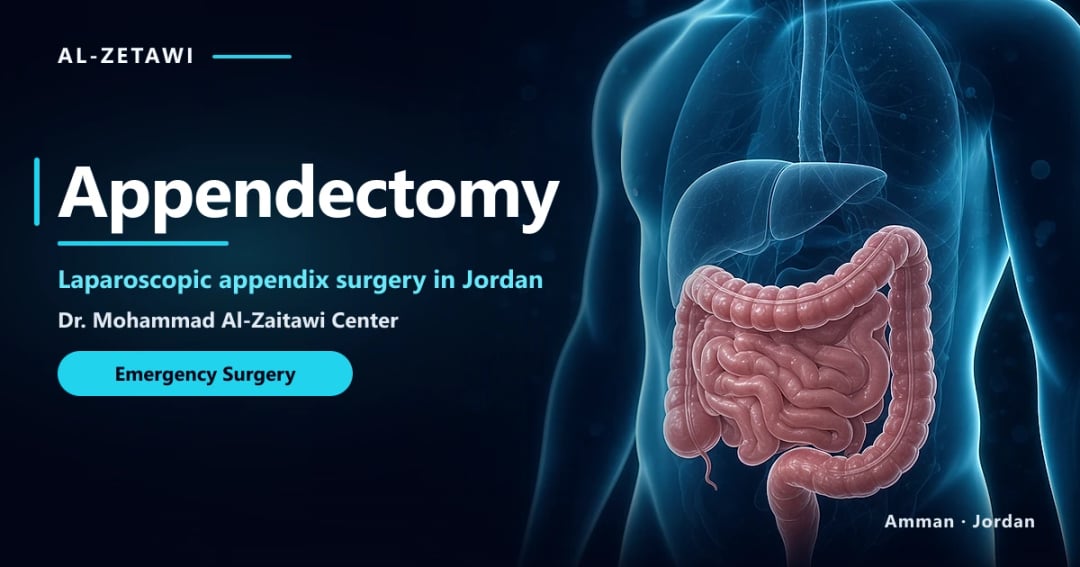
What Appendectomy Is
Appendectomy is the surgical removal of an inflamed appendix, usually through small laparoscopic incisions. It is the standard treatment for acute appendicitis and is performed under general anesthesia. Most people with uncomplicated disease leave hospital within one or two days and return to light activity within one to two weeks.
A small organ with a large reputation
The appendix is a narrow, blind-ended tube that joins the first part of the large bowel, the cecum, in the lower right abdomen. In adults it is often only a few centimeters long. It contains immune tissue, but people live normally after it is removed. Appendectomy does not change how you digest food, and it is not a weight-loss operation. The reason to remove it is inflammation that can progress from a localized infection to a perforation, an abscess, or widespread peritonitis.
Appendicitis is one of the most common surgical emergencies of the abdomen. It can occur at any age, with a peak in adolescence and early adult life, and it affects people of every body size. A lifetime risk in the region of one person in twelve to fourteen is often quoted in surgical teaching. That figure is a population estimate, not a prediction for you. Many people never develop appendicitis. When it does occur, the safe question is not whether the appendix is useful, but whether the inflammation needs to be controlled now.
Laparoscopic appendectomy uses a camera and slim instruments through small cuts. The surgeon looks at the appendix and at the rest of the abdomen, removes the inflamed organ, and usually sends it to the laboratory. Open appendectomy, through a single larger cut in the right lower abdomen, remains a correct choice when scarring, perforation, or the patient's condition makes keyhole surgery less safe. Conversion from laparoscopy to an open incision is a planned safety step, not a failed operation.
What this guide is, and what it is not
This page explains appendectomy for adolescents and adults who want a clear account before they consent, and for families supporting someone with suspected appendicitis. It describes how the diagnosis is made, when antibiotics alone are a reasonable discussion, what the hospital day feels like, and how recovery usually unfolds. It does not replace an examination. Acute appendicitis is a time-sensitive illness. If you have severe abdominal pain, fever, or repeated vomiting, go to the nearest emergency department. Do not book a flight to Amman in the hope of having the operation abroad while the pain is still evolving.
Dr. Mohammad Al-Zaitawi is a consultant surgeon in Amman, Jordan, with a practice in laparoscopic and gastrointestinal surgery. Planned appendectomy, including interval removal after an abscess has already been treated, can be assessed at his center. Emergency appendicitis is treated where the patient is, as soon as a safe surgical team is available. The center's English pages at jordansleeve.com explain how consultations are requested, but an online message is not an emergency service.
Why the Appendix Becomes Inflamed
Appendicitis usually starts when the appendix opening is blocked and bacteria trapped inside multiply. The wall swells, blood flow falls, and the tissue can die or burst if the pressure is not relieved. The block is often a small hard piece of stool, called an appendicolith, or swelling of the immune tissue in the wall.
From blockage to perforation
A healthy appendix drains into the cecum. When that channel is blocked, mucus continues to be produced and has nowhere to go. Pressure rises, the lining becomes ischemic, and the normal bacteria of the gut invade the wall. Early on, the inflammation is contained. This is uncomplicated appendicitis. If the wall gives way, infected material leaks into the peritoneal cavity. That leak may be walled off by omentum and bowel into an abscess or a phlegmon, which is a mass of inflamed tissue, or it may spread more freely and cause generalized peritonitis. The speed of this sequence varies. Some people perforate within a day. Others smolder for longer. Pain that seemed tolerable in the morning can become a surgical emergency by evening, which is why watchful waiting at home is not a strategy once the picture is suggestive.
An appendicolith matters for two reasons. It is a common cause of the blockage, and it changes the conversation about antibiotics without surgery. In the CODA trial, adults with uncomplicated appendicitis who were treated first with antibiotics needed an operation more often when a stone was seen in the appendix. Surgeons also worry that a stone left behind can be a focus for recurrent inflammation. Seeing a stone on a scan does not by itself prove that you must have surgery that hour, but it is a strong reason to lean toward appendectomy when the rest of the assessment agrees.
What appendicitis is not
Appendicitis is not caused by swallowing seeds, and it is not a punishment for a particular diet. It is not contagious in the way influenza is contagious, although viral illnesses can swell lymphoid tissue and occasionally precede an episode. It is not the same as mesenteric adenitis, gastroenteritis, a right kidney stone, pelvic inflammatory disease, an ectopic pregnancy, Crohn's disease of the terminal ileum, or a cecal cancer. Those conditions can copy the pain. That overlap is why modern care combines the story, the examination, blood tests, and imaging instead of operating on every sore right abdomen.
Recurrent or 'grumbling' appendicitis is a term patients use for repeated milder attacks that settle. Some of those episodes are genuine appendicitis that resolved. Some are another diagnosis entirely. A single past bout of pain that disappeared is not an indication for elective removal. Recurrent attacks with supportive scans, after other causes have been considered, sometimes lead to a planned appendectomy. The decision belongs in clinic, with the images, not in a message thread.
Rarely, the appendix is inflamed because of a tumor, inflammatory bowel disease, or a parasite. These are uncommon explanations, which is one reason the removed appendix is examined under a microscope rather than discarded. The result rarely changes immediate recovery, but it can change follow-up if an unexpected finding appears.
Symptoms That Need Urgent Care
Classic appendicitis begins as a vague ache around the navel, then moves over several hours to a sharper pain in the lower right abdomen. Appetite falls, nausea is common, and a low fever may follow. Pain that is worse with walking, coughing, or pressing and releasing the abdomen needs same-day medical assessment.
The pattern that clinicians listen for
The migrating pain is the detail families remember, and it is useful when it is present. Early visceral pain is poorly localized because the appendix is supplied by nerves that do not map neatly onto the skin. Once the inflamed wall touches the peritoneum of the abdominal wall, the pain becomes sharper and settles in the right iliac fossa. Loss of appetite is so frequent that a person who is hungry and eating a full meal is slightly less likely to have appendicitis, though hunger does not rule it out. Vomiting, if it occurs, usually follows the pain rather than preceding it by a full day. A low-grade fever is typical. A high fever with rigors suggests more advanced infection or another source.
Movement hurts because the peritoneum is irritated. People prefer to lie still, often with the right hip slightly flexed. A bump in the road, a cough, or asking the patient to hop on the right foot can reproduce the pain. Urinary burning is not a feature of ordinary appendicitis, but a pelvic appendix lying near the bladder can cause frequency. Diarrhea can occur when the inflamed tip sits in the pelvis and irritates the rectum. These variants are why a urine test is done: to look for infection or blood from a stone, not because appendicitis always changes the urine.
When the textbook pattern is absent
A retrocecal appendix hides behind the cecum. Pain may sit in the flank or lower back, and the abdomen can feel less tender than the illness deserves. A long pelvic appendix may cause mainly lower abdominal or even left-sided discomfort. In pregnancy the growing uterus lifts the appendix, so pain can be higher than expected, and nausea is easy to dismiss as morning sickness. Any pregnant person with abdominal pain needs assessment the same day. Ectopic pregnancy must be considered until it is excluded. Older adults often have a quieter early course and a higher chance of perforation by the time they reach hospital, partly because pain is attributed to constipation or a urinary infection. Children may not describe migration of pain at all. This guide focuses on adolescents and adults. Young children are usually cared for by teams experienced in pediatric surgery.
Go to an emergency department, and do not travel, if the abdomen becomes rigid, pain is suddenly much worse after a period of relative ease, vomiting will not stop, you cannot pass urine, you faint, you are pregnant, or you have a high fever with confusion. A brief easing of pain after severe worsening can mean that a tense appendix has perforated and the pressure has released. That is not recovery. Painkillers, including those bought without a prescription, may blunt the feeling without treating the cause. Take them if you need them to reach hospital, and tell the clinician what you took. Do not use them as a reason to wait overnight when the pattern is worrying.
How Appendicitis Is Diagnosed
Appendicitis is diagnosed by combining the history, abdominal examination, blood tests, and imaging. No single score or blood result is enough on its own. In nonpregnant adults, a CT scan is highly accurate. Ultrasound is often used first in younger patients and in pregnancy, with MRI when a clearer picture is needed without radiation.
Examination and laboratory tests
The clinician asks when the pain started, whether it moved, and whether appetite, bowels, periods, and urination have changed. They look for tenderness at McBurney's point, which is the usual surface landmark over the appendix base, and for guarding, which is involuntary tightening of the abdominal muscles. Rebound tenderness and pain on coughing suggest peritoneal irritation. A pelvic examination is considered when a gynecologic cause is plausible. A rectal examination is no longer routine if imaging is available, but it still has a role when pelvic pus is suspected and scans are delayed.
A full blood count often shows a raised white cell count, and C-reactive protein rises as inflammation builds. Normal blood tests make appendicitis less likely but do not exclude it, especially early. A urine dip looks for blood and infection. A pregnancy test is essential in anyone who could be pregnant, because the result changes both the diagnosis and the imaging choice. These tests are quick. Waiting for a fancy panel is not required before pain relief and fluids.
Imaging and clinical scores
The American College of Radiology appropriateness criteria support CT as the usual imaging test for nonpregnant adults with suspected appendicitis. A modern low-dose or standard CT can show a thickened appendix, surrounding fat stranding, an appendicolith, free fluid, or an abscess. It also finds the mimics: kidney stones, ovarian cysts, diverticulitis on the right, and sometimes tumors. Ultrasound avoids radiation and is attractive in thin patients, children, and pregnancy, but a negative ultrasound when the clinician is still worried is not the end of the assessment. MRI, where it can be obtained promptly, is preferred to CT in pregnancy if ultrasound is inconclusive. If the patient is septic and the diagnosis is clear, surgery should not be delayed for a perfect scan.
Scores such as the Alvarado score and the Adult Appendicitis Score group symptoms, signs, and blood results into a number that helps decide who can be observed, who needs imaging, and who needs a surgeon now. They are decision aids. A low score in a well person supports a period of observation or an alternative diagnosis. A high score supports surgical assessment. A middling score is exactly where imaging earns its place. The World Society of Emergency Surgery Jerusalem guidelines, updated in 2020, and the European Association for Endoscopic Surgery consensus both emphasize this structured approach rather than a single mandatory test for every patient.
Sometimes the diagnosis is settled only in the operating room. Diagnostic laparoscopy lets the surgeon see the appendix, the ovaries, the small bowel, and the upper abdomen through the same small incisions that would be used for appendectomy. If the appendix is normal and another treatable cause is found, the plan changes. If the appendix is inflamed, it is removed. Removing a normal-looking appendix during laparoscopy for suspected appendicitis is a judgment made at the time, balancing the chance of early inflammation that the eye can miss against the wish to avoid an unnecessary operation. Routine removal of a healthy appendix during unrelated surgery is a different decision and is not the subject of this page.
Surgery and the Antibiotics Option
Laparoscopic appendectomy remains the standard treatment for acute appendicitis where surgical expertise and equipment are available. Antibiotics alone are an option for selected adults with uncomplicated disease who accept that some will still need an operation later. The choice is a medical decision, not a preference for avoiding scars.
What the major studies actually showed
The CODA trial, published in the New England Journal of Medicine in 2020, randomly assigned adults with appendicitis confirmed on imaging to antibiotics or to appendectomy. Antibiotics were noninferior for the trial's short-term quality-of-life measure at 30 days. By 90 days, about three in ten people in the antibiotic group had undergone appendectomy. The chance of needing surgery was higher when an appendicolith was present. Later follow-up of the same trial showed that a substantial further share of antibiotic-treated patients eventually had the appendix removed. The APPAC trial and its five-year report in JAMA found a similar message: many people avoided surgery, nearly four in ten in the antibiotic group had an appendectomy by five years, and serious complications were not dramatically different between strategies in that selected population.
These trials enrolled carefully. They did not include people with widespread peritonitis, and they are not a license to treat a perforated appendix at home with leftover tablets. They also used defined antibiotic courses and close follow-up. Copying the idea without the follow-up misses the point of the studies. The WSES 2020 guidelines still recommend laparoscopic appendectomy as the preferred treatment when it can be done safely. Antibiotics are an alternative for selected patients with uncomplicated appendicitis who wish to avoid surgery after an honest discussion of recurrence.
Who is a poor candidate for antibiotics alone
Surgery is usually the clearer recommendation when there is generalized peritonitis, sepsis, a perforation with free contamination, an appendicolith together with significant inflammation, pregnancy, or uncertainty that another dangerous diagnosis has been excluded. People who cannot reliably return for reassessment, including many travelers, are also poor candidates for a strategy that depends on watching for failure. An abscess in a stable patient is a third pathway: antibiotics and, when needed, image-guided drainage, with a later decision about interval appendectomy. That pathway is not the same as 'antibiotics instead of any procedure.'
If you choose antibiotics and the pain returns, the correct next step is reassessment, not another unsupervised course of medicine. Recurrent appendicitis can still be removed laparoscopically in most cases, although scarring can make the operation less straightforward. Some people prefer a definitive operation at the first admission so they are not living with a known risk of a second attack while traveling or caring for others. That preference is reasonable and should be heard. Others prefer to avoid an operation if the scan shows uncomplicated disease and they can accept follow-up. Both positions can be medically sound. What is not sound is choosing from a webpage without the scan.
The Operation, Explained for Patients
During laparoscopic appendectomy you are asleep under general anesthesia. The surgeon inspects the abdomen with a camera, frees the inflamed appendix, removes it, and closes the small incisions. A straightforward operation often takes well under an hour and a half. Perforation, abscess, or scar tissue from previous surgery can make it longer.
From the anesthetic room to recovery
You meet the anesthesiologist before the operation. They review allergies, previous anesthetics, reflux, sleep apnea, and medications. Most appendectomies are done under general anesthesia because the abdominal wall must be relaxed and the airway protected. You will have fasted according to the hospital's instruction, usually no solid food for about six hours and clear fluids stopped closer to the operation, unless the emergency timeline forces a different plan. A drip is placed. Antibiotics are given around the time of skin incision when the team judges them useful. This page does not list drug names or doses, because those are chosen for the individual and written on the drug chart, not copied from a website.
Once you are asleep, the abdomen is cleaned and draped. Small incisions allow a camera and instruments to enter. A little carbon dioxide lifts the abdominal wall so there is room to see. The surgeon identifies the appendix, separates it from inflammatory attachments, seals its connection to the cecum and its blood supply, and removes it from the abdomen, often inside a small bag so the wounds are not contaminated. The pelvis and the rest of the visible abdomen are inspected for pus or another cause of pain. Fluid is suctioned if it is present. The gas is released, and the incisions are closed, commonly with dissolving stitches and a dressing. You wake in the recovery area with a nurse checking pain, breathing, and blood pressure.
What may be different in your case
If the appendix has perforated, the operation includes a thorough wash of the infected fluid that can be reached safely. Drains are not routine for every perforation. They are used selectively when the surgeon wants to monitor a particular collection. If scarring, bleeding, or an unclear anatomy makes laparoscopy unsafe, the surgeon enlarges an incision or makes a standard open cut and completes the operation under direct vision. You will have been told this possibility during consent. An open operation hurts more at the wound and may keep you in hospital a little longer, but it is the right operation when it is the safe one.
The appendix goes to pathology. Most reports confirm acute inflammation. A normal appendix is sometimes found, which means another cause of pain must be reconsidered, even if you already feel better. Uncommon reports include a neuroendocrine tumor, a mucinous lesion, or inflammation from another disease. Small incidental neuroendocrine tumors are often fully treated by the appendectomy itself, but you should not interpret your own report. The surgeon reads it and tells you whether any further step is needed. Stump appendicitis, inflammation of a remnant left behind, is rare and usually reflects an unusually difficult first operation. It is one reason surgeons are deliberate about removing the whole inflamed organ rather than leaving a long stump.
After you wake, shoulder-tip ache from the gas, a dry throat, and nausea are common and usually settle within a day or two. Abdominal soreness is expected. You are helped to sit and walk once the anesthetic has worn off enough. Walking is treatment: it reduces chest complications and helps the bowel wake up. Most people with uncomplicated disease drink and then eat as appetite returns, often the same day. You are not kept hungry as a ritual.
Complicated Appendicitis and Interval Surgery
Complicated appendicitis means the inflammation has gone beyond a simple swollen appendix. It includes gangrene, perforation, a walled-off abscess, or a phlegmon. Treatment may still be prompt surgery, or, in a stable person with a contained abscess, drainage and antibiotics first, with a later decision about removing the appendix.
Abscess, phlegmon, and the interval operation
When infection is sealed off into an abscess and you are not peritonitic or septic, immediate surgery can mean cutting through a mass of inflamed bowel, with a higher chance of a larger operation than you needed. In that selected situation, antibiotics and, if the collection is accessible, drainage by a radiologist can settle the acute illness. You then recover at home with a clear plan for review. Some people never need the appendix removed if they remain well and scans show the problem has resolved. Others are offered an interval appendectomy several weeks later, once the tissues are softer and the operation is more predictable. There is no single rule that fits every abscess. Age, the size of the collection, whether a stone remains, and whether cancer must be excluded all influence the advice.
Adults, particularly from about the age of 40, are often advised to have a colonoscopy after complicated appendicitis treated without immediate removal. A cancer of the cecum can block the appendix and mimic an ordinary attack. Finding that before a planned operation changes the surgery entirely. Younger patients are not automatically booked for colonoscopy, but bleeding, anemia, a family history of colorectal cancer, or an unusual scan can make it appropriate at any adult age. Interval appendectomy, when chosen, is a planned operation. It can be assessed in clinic, including for patients who live outside Jordan and travel only after the acute infection has fully settled. It is not an invitation to fly during the acute abscess.
Pregnancy, previous surgery, and unexpected findings
Appendicitis in pregnancy is treated. Delay increases the risk of perforation, which is dangerous for both the pregnant patient and the fetus. Ultrasound is the first imaging test. MRI is used when more detail is needed. Surgery is timed with obstetric input. Laparoscopy is widely used by experienced teams across pregnancy, and an open operation remains acceptable when it is safer. The anesthetic team plans monitoring around the pregnancy. This is emergency care where you are. It is not a procedure to postpone until a convenient trip.
Previous abdominal operations, including cesarean birth, can leave adhesions. They do not forbid laparoscopy, but they may require a more careful entry and occasionally conversion. A hernia, gallbladder disease, or a gynecologic finding may be seen during the inspection. Treating an incidental problem in the same anesthetic is done only when it is clearly safe and you were consented for that possibility. It is not a reason to add extra surgery for convenience. If Crohn's disease is recognized at the appendix, the surgeon is conservative. Removing a short segment of newly diagnosed Crohn's disease is not the goal of an emergency appendectomy, and the finding is handed to a gastroenterologist afterwards.
Who Needs an Appendectomy
Appendectomy is for people with appendicitis that needs source control, and for selected patients offered a planned interval operation after a resolved abscess. It is not a wellness procedure, and it is not done because of bloating alone. Fitness for anesthesia is optimized, not used as a reason to ignore a surgical abdomen.
Situations that point toward surgery
Confirmed appendicitis with peritonitis, a septic illness, an appendicolith with significant inflammation, recurrent well-documented attacks, or a patient's informed wish for a definitive operation at the first admission all point toward appendectomy. So does failure of a properly supervised antibiotic plan. In children and teenagers the threshold for surgery is often lower than in a stable adult with a very early uncomplicated scan, because communication is harder and perforation can be swift. Adolescents can be treated in adult surgical units depending on local pathways and the surgeon's practice. Very young children belong with pediatric teams.
A normal scan and a soft abdomen do not become an indication because a relative had appendicitis or because travel is planned and you want the organ 'out of the way.' Prophylactic removal of a healthy appendix is not offered as a routine at this center. The risks of anesthesia, bleeding, infection, and a later adhesion, though individually small, are not justified by a theoretical future illness. Sports travel, military deployment, or a long expedition are special conversations in some health systems. They still require a clinician who knows you, not a standing offer on a website.
Conditions that change the plan rather than cancel care
Blood thinners, implanted heart devices, sleep apnea, poorly controlled diabetes, late pregnancy, and severe heart or lung disease change the preparation. They rarely mean that a perforated appendix is left untreated. The anesthetic and surgical teams may reverse or bridge anticoagulation, place extra monitoring, or choose an open operation that is faster in a very unwell patient. If you are too unstable for a long transfer, the nearest capable hospital is the right hospital. Pride of place does not apply to peritonitis.
International patients sometimes ask whether they can fly to Amman for an appendix operation the way they might for a planned gallbladder operation. The answer splits in two. Acute appendicitis is treated locally, immediately. A healed episode with a documented plan for interval appendectomy, or recurrent attacks already investigated, can be reviewed remotely with the scans and then scheduled if surgery is still the right step. Dr. Al-Zaitawi's team in Amman will say no when the images do not support an operation. That refusal is part of safe care. Bring the CT report, the discharge summary, the colonoscopy result if you had one, and a list of medicines. Do not restart a journey because pain has returned. Go to an emergency department.
Preparing for the Operation
Emergency appendectomy is prepared in hospital: fluids, pain relief, fasting, consent, and an anesthetic review. A planned interval operation allows a calmer checklist: records, medicines, bowel assessment if advised, and a companion for the first night. In both settings you should understand why surgery is recommended and what else might be found.
Consent that is specific, not generic
Consent for appendectomy covers the diagnosis as it stands, the laparoscopic approach, the possibility of an open incision, the removal of the appendix for laboratory examination, and the main risks: bleeding, infection inside the abdomen or in a wound, injury to bowel or nearby structures, hernia at an incision, clots, and anesthetic complications. It also covers the chance that the appendix is not the cause and that another procedure might be wiser, or that no removal is performed if a different diagnosis is obvious and surgery on the appendix would add harm. You are invited to ask how likely an open cut is in your situation. For a straightforward laparoscopic case the chance is low. For a perforated appendix with a mass, it is higher. Nobody can honestly quote a personal percentage from a webpage.
Tell the team about prior reactions to antibiotics, latex, or anesthetic drugs, about smoking, about the last menstrual period or a possible pregnancy, and about every medicine, including diabetes drugs, antiplatelets, anticoagulants, steroids, and herbal products that affect bleeding. Do not stop a prescribed blood thinner unless the clinician who knows your clotting risk has told you to. In an emergency there may be no time for a long pause, and the anesthetic team has protocols for that. In a planned case there is time to do it properly.
Practical preparation for a planned operation in Amman
If you are traveling for an interval appendectomy, send the imaging before you book flights. The surgeon needs to agree that the acute inflammation has settled and that surgery is still indicated. Plan to arrive with enough time for a preoperative visit, blood tests, and anesthetic clearance, and to stay until you have been reviewed after the operation. A companion is helpful for the first day at the hotel or apartment, even when the hospital stay is a single night. Stop smoking as early as you can. Even a short period of abstinence reduces coughing and wound problems. Keep walking and treat constipation before a planned admission so you are not straining in the first days after surgery. Eat normally until the instructed fasting window. Do not start a crash diet.
Shower the evening before or the morning of surgery with ordinary soap. Skin preparations beyond the hospital's instruction are unnecessary. Leave jewelry at home, arrange work cover for one to two weeks for a desk job and longer if you lift, and pack loose clothes that do not press on the abdomen. If you use a CPAP machine for sleep apnea, bring it. Write your questions down: how the wounds are closed, when you may shower, when pathology returns, and which symptoms should trigger a call. The center confirms the hospital, the fasting time, and the fee in writing after assessment. This page does not publish a price, because the hospital, the length of stay, and whether the case is a simple interval operation or something more complex all change the quote.
Recovery, Activity, and Travel
After an uncomplicated laparoscopic appendectomy most people walk the same day, leave hospital within one or two days, and resume desk work in one to two weeks. Heavy lifting is usually delayed for about three to four weeks. Perforated disease, an open incision, or a drain can stretch every one of those intervals.
The first days
Pain should be controllable with the medicines prescribed for you and should ease each day. Shoulder-tip discomfort fades as the gas is absorbed. The wounds may feel tight or bruise. A small amount of blood on a dressing on the first day is common. Spreading redness, a fever, or fluid that smells offensive is not. You may shower once the team says the dressings allow it, pat the wounds dry, and leave them open to the air if that was the instruction. Baths and swimming wait until the skin has sealed. Dissolving stitches do not need removal. If non-dissolving stitches were used, you will be told when they come out.
Eat what you tolerate, starting with light food if nausea lingers, and return toward a normal diet without a special 'appendix menu.' Fiber and fluids prevent the constipation that pain medicine can cause. A bulking stool is more comfortable than a hard one, but do not force diarrhea with harsh laxatives unless they were recommended. Walking several times a day matters more than any supplement. Climbing stairs is allowed if you feel steady. Driving waits until you are not using strong pain medicine and you could safely perform an emergency stop. For many people that is within a week, but it is your judgment plus the surgeon's advice, and it is also an insurance question in some countries.
Work, sport, and flying
Desk work from home is often possible before you would want a long commute. Jobs that involve lifting patients, children, or loads should wait until you can brace and lift without wound pain, commonly around three to four weeks after uncomplicated laparoscopy, and longer after a large open incision or a complicated infection. Gym training restarts with walking and light mobility, then resistance work when the wounds are comfortable. Contact sport and heavy core exercises are the last to return. A single enthusiastic workout in week one is a common cause of a swollen, painful port site.
Flying after uncomplicated surgery is discussed individually. You need to be eating, walking, free of fever, and past the early window when a leak or bleeding would declare itself. A short hop a few days later may be reasonable. A long-haul flight in the first days is a poor idea because of clot risk, limited medical help, and the difficulty of managing a complication away from the operating team. Compression, hydration, and aisle walking help on any flight you are cleared to take. If you were treated for complicated appendicitis, the interval before travel is longer and is set at discharge, not guessed from this page.
Warning signs that need prompt contact, or an emergency department if you are far from the center, include fever, vomiting that prevents fluids, a swollen hard abdomen, worsening pain after a period of improvement, heavy wound bleeding, pus, calf swelling, chest pain, or breathlessness. A little fatigue for two weeks is normal. Complete loss of appetite with rising pain is not. Pathology results are reviewed when they return, and you should know who will call you. Remote follow-up is realistic for a straightforward recovery. It is not a substitute for hands-on care if you become unwell.
Risks and How They Are Handled
Appendectomy is common and, in uncomplicated disease, usually recovers smoothly. It is still an abdominal operation under anesthesia. Bleeding, infection, injury to nearby organs, clots, and a later hernia at an incision are the risks named in consent. Complicated appendicitis carries a higher chance of infection inside the abdomen.
Problems that show up early
Bleeding can occur at a wound or, less often, inside the abdomen from the vessels that supplied the appendix. A falling blood count, dizziness, or increasing swelling is assessed immediately. Wound infection is less common after laparoscopy than after an open cut because the infected organ is removed without dragging it across a long incision, but it still happens. It is treated by opening a small collection if needed and by antibiotics when the surrounding tissue is cellulitic. An intra-abdominal abscess is the complication patients worry about after perforated appendicitis. It causes fever, poor appetite, and pain or diarrhea several days into recovery. The diagnosis is clinical plus a scan. Many collections are drained under imaging guidance rather than by a second operation. Some need a return to theater. An ileus, a sleepy bowel, causes bloating and vomiting and usually settles with fluids and time, provided a mechanical blockage has been excluded.
Injury to the small bowel, cecum, or, rarely, the ureter or pelvic structures is uncommon and is more likely when inflammation has glued the anatomy together. If an injury is seen, it is repaired during the same operation. If it declares itself later as worsening peritonitis, a second operation may be required. A leak from the sealed base of the appendix is rare. It is one of the reasons a rising pulse, fever, and a sick abdomen are not observed at home overnight. Anesthetic risks include a reaction to a drug, aspiration, and strain on the heart or lungs. The preoperative review exists to make those risks as small as the situation allows. Emergency surgery in a person who has just eaten carries a higher airway risk than a planned fasting case, which the anesthesiologist manages with technique, not with delay that lets the appendix perforate.
Later issues and how often to worry
A port-site hernia can appear months later as a bulge at one of the small scars, more often if infection occurred or if a larger incision was needed to extract a bulky appendix. It is repairable, and it is not inevitable. Adhesions can, years later, contribute to a bowel obstruction in a small minority of people. Most patients never experience that. Chronic pain at a scar is uncommon. If it persists, it is assessed rather than dismissed, because a hernia or a neuroma can be treated. A wound that is still draining at two weeks needs a look, not another week of hope.
Published comparisons have long suggested that laparoscopy reduces wound infection and allows a quicker return to activity, while deep abscess is the complication to watch after perforated disease. Exact percentages differ by hospital, by how ill the group of patients was, and by how the studies defined infection. Quoting a single 'success rate' for your operation would be misleading, and this page does not do it. What you can expect from a careful team is timely antibiotics when indicated, removal of the source of infection, early walking, a pathology report, and written advice about the symptoms that should bring you back. Smoking, uncontrolled diabetes, obesity, and steroid medicines raise wound and chest risks. Improving what can be improved before a planned operation is worth the effort. In a true emergency, those factors are managed, not used as a reason to wait.
Appendectomy Care in Amman
Dr. Mohammad Al-Zaitawi assesses and performs appendectomy in Amman, Jordan, for patients whose condition is suitable for care at his center. Emergency appendicitis should be treated at the nearest safe hospital. Planned and interval operations can be coordinated after the scans and the clinical story have been reviewed.
How a planned pathway works
Dr. Al-Zaitawi holds the Jordanian Board in General Surgery and is a Fellow of the American College of Surgeons and a Fellow of the International College of Surgeons. His practice includes laparoscopic and gastrointestinal surgery. For a planned appendectomy, the pathway starts with the records: the emergency notes, the CT or ultrasound report, any drainage procedure, the colonoscopy if one was advised, and your medication list. If the story does not support surgery, he will say so. If it does, you receive a plan that covers the hospital, the anesthetic preparation, the likely length of stay, and the restrictions after surgery. Local patients in Amman and patients coming from elsewhere in Jordan follow the same clinical standard. The only difference for someone traveling is the need to time flights around a real recovery, not around a hotel booking.
On the day, you are admitted to the hospital chosen for your case, seen by the anesthetic team, and taken to theater. Afterwards the findings are explained in plain language: whether the appendix was simply inflamed, whether there was pus, whether the operation stayed laparoscopic, and what was sent to the laboratory. Discharge instructions cover food, washing, lifting, travel, and warning signs. A follow-up contact reviews the wounds and the pathology. If you have returned to another country, that review can be remote when recovery is smooth, and it should be local and in person if it is not.
Questions worth asking, and a boundary on fees
Useful questions include why surgery is recommended rather than observation, whether an appendicolith or an abscess changes the plan, how likely an open incision is, whether you need a colonoscopy first, when you may fly, and who to contact on the weekend if pain returns. Ask for the pathology process in writing so a report does not sit unseen. If you are comparing centers, ask who actually performs the operation and who covers complications. Those questions matter more than the appearance of a building.
Fees depend on the hospital, whether the case is a straightforward planned laparoscopy or a more complex operation, the length of stay, anesthesia, and any extra imaging. A figure is confirmed in writing after assessment. This page does not advertise a package price and does not imply that a quoted estimate is a guarantee if the operation becomes more complex for reasons of safety. Emergency care in another hospital is billed by that hospital. Nothing on this page is a promise of outcome. Most people with uncomplicated appendicitis recover fully and do not think about the missing appendix again. A minority have a complication and need more treatment. Both statements can be true, which is why consent is a conversation.
This guide is general education for patients and families. It is not a personal diagnosis, a remote prescription, or an instruction to perform surgery. Abdominal pain can be appendicitis, and it can be something that will not tolerate delay. If you are unwell now, seek emergency care where you are. If you are well, and you have records from a recent episode that may need a planned operation, you can request a consultation through the English contact pages on jordansleeve.com and send the documents for review by Dr. Mohammad Al-Zaitawi in Amman.
Medical note from Dr. Mohammad Al-Zaitawi
I recommend appendectomy when the clinical picture and scans show that the appendix is the problem and that removing it is safer than waiting. Antibiotics have a role in carefully chosen uncomplicated cases, but they are a plan with follow-up, not a shortcut. If you are acutely unwell, get care where you are. Planned surgery can wait for a proper review of your records.
Scientific references and guidance
These sources support the medical information on this page. If you want this guidance applied to your own case, send us your details for an initial review.
Reviewed by Dr. Mohammad Al-Zaitawi
Prefer a quicker route? Try the free case review or see bariatric surgery costs in Jordan.