
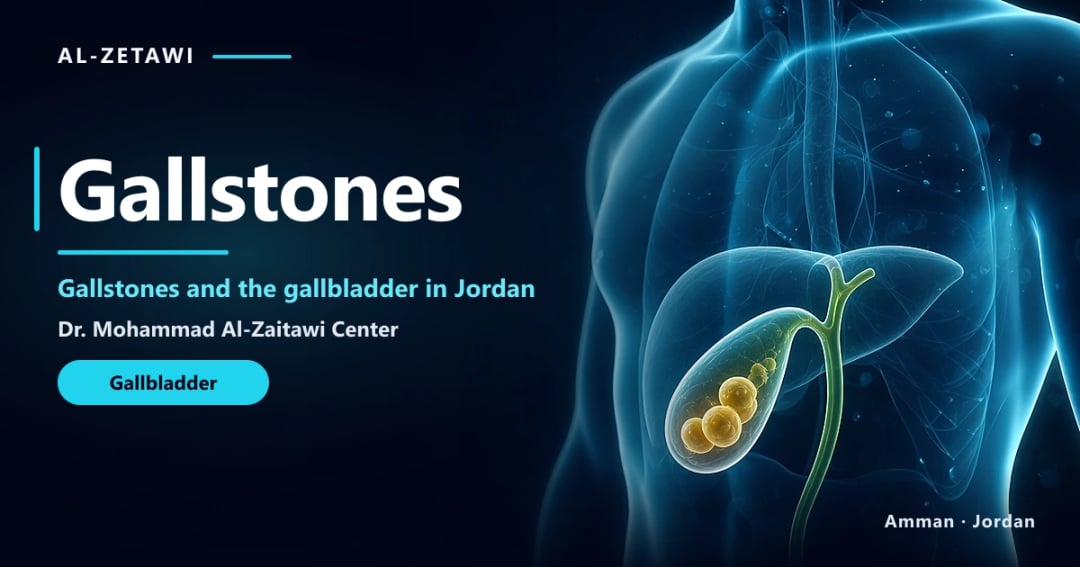
What Gallstones Are
Gallstones are solid pieces that form in the gallbladder, a small sac that stores bile beneath the liver. Many stones never cause symptoms and can be watched. Others cause biliary colic, a pattern of episodic upper abdominal pain. Removing the gallbladder is considered for repeated symptoms or complications, not simply because a scan mentioned stones.
Bile is the green-yellow fluid the liver makes to help digest fat and to carry some waste products out of the body. Between meals it is stored and concentrated in the gallbladder. When a fatty meal arrives, the gallbladder squeezes and sends bile down the cystic duct into the common bile duct and then into the duodenum. Stones form when the chemistry of that stored bile tips toward crystals. The crystals grow into sand, sludge, or stones that may be as small as a grain or as large as the gallbladder itself. Size alone does not tell you whether you will hurt. A tiny stone can block the outlet and cause a memorable night. A large silent stone can sit for years and never announce itself.
Two families of stones
Most stones in adults are cholesterol stones, even when they look dark. They form when bile carries more cholesterol than the bile salts and lecithin can keep in solution. Pigment stones are a smaller group, built more from bilirubin. They turn up with chronic breakdown of red blood cells, with cirrhosis, and with infection inside the bile ducts. The distinction matters to a specialist choosing a medicine or explaining a rare infection. It rarely changes the everyday decision a patient faces, which is whether the gallbladder that contains the stones is causing a recognisable illness. You do not need to memorise the chemistry. You do need a story of pain that either sounds biliary or does not.
Sludge is an earlier, thicker stage. It can cause the same pain as stones and it can pass. It can also be the first sign that rapid weight loss, pregnancy, or a period of not eating has changed the bile. A report that says sludge rather than stones is not a shrug. It is still interpreted through symptoms. Polyps, adenomyomatosis, and a porcelain, calcified gallbladder wall are different gallbladder findings that sometimes share a scan with stones. They are not stones, and they are not decided with a slogan. Porcelain gallbladder, once treated as an automatic cancer risk, is now approached more selectively because the older fear was probably overstated. That nuance belongs in a consultation, not in a reflex booking.
This page is about the condition
Dr. Mohammad Al-Zaitawi sees people in Amman at every point on this spectrum: the person who was told about stones during a checkup, the person who has had three identical attacks after dinner, and the person who is yellow and frightened. Those are different clinical problems. This guide stays with the condition and with the decision to remove or to watch. It is not a step list for the operating theatre, and it is not a protocol for acute gallbladder inflammation. Inflammation changes the tempo. The decision about silent stones should not be written as if everyone were already in an emergency bay.
The gallbladder is not a vital organ in the sense that life requires it. Bile continues to be made after it is removed. That fact is why surgery can be a clean solution when the organ is the source of repeated pain. It is also why removing it "just in case" from a person with no biliary symptoms can leave them with the same bloating they started with, plus a recovery they did not need. The skill is matching the organ to the illness.
How Stones Form and Who Develops Them
Stones form when three things overlap: bile that is prone to crystals, a gallbladder that does not empty briskly, and time. Cholesterol saturation rises with age, with some genetic patterns, with obesity, and with rapid weight loss, which mobilises cholesterol from fat stores into bile. Pregnancy and the hormone effects of oestrogen increase saturation and slow emptying, which is why stones are more often found in women during the reproductive years. None of this is a character flaw. It is physiology. The old classroom rhyme that blamed fair, fertile, forty-year-old women was lazy medicine. Men form stones. Thin people form stones. Children with blood disorders form stones. The rhyme is not an assessment.
Situations that raise the chance
Family history matters. If parents and siblings needed gallbladder surgery, your bile may share their tendency. Obesity raises the risk, and so does the weight-loss phase after bariatric surgery, especially in the first year when loss is fastest. Long periods without oral food, some intestinal diseases, and certain medicines are associated with sludge. Haemolytic anaemias produce pigment stones because the liver is processing more bilirubin from broken red cells. Cirrhosis changes bile and also changes how safe an operation would be, so the same stone carries a different plan in a scarred liver. Spinal injury and other causes of gallbladder stasis can contribute. Diabetes is often listed because it travels with obesity and with autonomic sluggishness, not because every person with a raised glucose and a silent stone needs an operation that week.
Diet myths are louder than diet evidence. A single rich meal can trigger pain if stones are already there, because the gallbladder contracts against a blocked outlet. That meal did not create a stone between the first course and the second. Crash dieting is more relevant to formation than a lifetime of occasional celebration. Very low calorie patterns and cycles of loss and regain are worth mentioning in clinic. So is a history of bariatric surgery. So is pregnancy. A blame-coloured food lecture does not dissolve a stone and often delays the real question, which is whether the pain is biliary at all.
What does not reliably prevent stones
Once stones have formed, drinking olive oil, starting a cleanse, or fasting is not a treatment. Cleanses can cause cramping and diarrhoea that are then misread as stones "passing". Passing a true stone through the duct can happen, and it can also be how pancreatitis starts. It is not a home experiment. A prescription bile-acid medicine has a narrow role for selected small cholesterol stones when the gallbladder still fills and empties and when surgery is a poor fit. It takes months, it fails often, and stones commonly return after the medicine stops. The dose is a prescribing decision. It is not printed here, and it is not the default for someone who is already missing work because of colic.
Prevention in the general population is ordinary health rather than a gallbladder supplement: avoiding crash weight loss when you have a choice, treating haemolysis if that is the driver, and not smoking yourself into poorer surgical fitness for later. There is no vitamin on a pharmacy shelf that has earned the right to be called a gallstone shield. If a product claims that, bring it to clinic so it can be retired from the plan.
Silent Stones and Biliary Colic
Most stones are found by accident. An ultrasound done for abnormal liver tests, a pregnancy scan, or a general abdominal ache shows bright echoes in the gallbladder, and a life that felt fine is suddenly described as diseased. If you have never had biliary pain, major guidelines generally advise leaving asymptomatic stones alone in adults who are otherwise straightforward. The yearly chance of developing symptoms is real but modest. Operating on every silent stone would expose many people who were never going to suffer to the uncommon but serious risk of bile duct injury. That trade is why observation exists. It is not neglect. It is a choice to avoid harm.
What biliary colic feels like
Biliary colic is a bad name, because "colic" suggests a wave that comes and goes every few minutes. Gallbladder pain more often rises, holds, and then releases. It sits in the upper abdomen, frequently under the right ribs or in the epigastrium, and it may bore through to the shoulder blade. People cannot get comfortable. They may sweat or vomit. A meal, especially a fatty one, may have come first, but not always. The attack often lasts from half an hour to several hours. When it finishes, the abdomen is relatively soft again and the person is tired rather than febrile. That off-switch is the clinical signature. It is the gallbladder trying to empty against a stone parked at the outlet, then the stone falling back and the pressure easing.
Between attacks, examination can be normal. Blood tests can be normal. This frustrates people who want a laboratory to confirm that last Tuesday was real. A normal test the next morning does not erase a classic history. It does mean you were not, at that moment, blocked at the liver or inflamed. The diagnosis is a partnership between that history and an ultrasound that shows stones or sludge. If the ultrasound is empty and the history is perfect, the story is reconsidered. Other organs occupy the same neighbourhood: stomach ulcer, reflux, duodenal disease, liver capsule pain, right lung problems, and kidney stones that radiate forward. A surgeon who operates only on the report will eventually remove a gallbladder from someone whose pain was a duodenal ulcer. Dr. Al-Zaitawi's questions are there to prevent that mismatch.
Patterns that should change the label
Pain that does not release, pain with shaking chills, a temperature, yellow eyes, urine the colour of tea, pale stools, or confusion is not simple colic. Those features suggest inflammation, a stone in the common duct, or infection under pressure. They belong in urgent care, not in a diary you show at a routine visit three weeks later. Similarly, pain that is clearly related to urination, or pain with a positive pregnancy test and bleeding, needs the right specialty first. Biliary colic is a specific pattern. Everything else is a differential diagnosis until proven otherwise.
One attack does not always mean an operation next week. Some people have a single episode and then years of quiet. Others have a second and a third within a month and can draw the next one on a calendar. Frequency, severity, travel plans, and whether you live far from a hospital all colour the advice. A pilot, a person about to spend months at sea, and a person who can reach Amman in an hour are not counselled with the identical sentence, even if their scans look identical.
When the Picture Is No Longer Simple Colic
Gallstones cause trouble in a few recognisable ways, and each way has a different urgency. The stone may block the gallbladder outlet long enough to inflame the wall. That is acute cholecystitis. The stone may pass into the common bile duct and block the flow from the liver, causing jaundice. It may block the pancreatic opening and trigger gallstone pancreatitis. Rarely, a large stone erodes into the bowel and causes obstruction, a dramatic event with a different operation. This guide names those complications so you know why the plan changes. It does not try to be the ward manual for treating them. Acute inflammation has its own tempo, its own antibiotics decisions, and its own timing of surgery. Mixing that emergency pathway into a leaflet about silent stones is how people either panic or delay.
Inflammation of the gallbladder
When a stone stays impacted at the gallbladder neck, the organ swells, the wall thickens, and pain stops behaving like a visit and starts behaving like an illness. Fever, a tender right upper abdomen, a raised white cell count, and ultrasound signs of inflammation support the diagnosis. Tokyo Guidelines give clinicians a shared language for that diagnosis and its severity. You do not need to grade yourself at home. You need to recognise that pain which is still there the next morning, especially with fever, is not a colic you should sleep on for a third night. Treatment may include hospital care, fluids, pain control, antibiotics when infection is judged present, and removal of the gallbladder sooner or later depending on how sick the wall and the patient are. Early removal is often preferred once the diagnosis is clear and the patient can tolerate it. Delayed removal is sometimes wiser if the person is too unwell or the hospital setting is wrong. Those timing judgements are clinical. They are not a recipe you assemble from a search result.
Chronic cholecystitis is the scarred, thick-walled version that follows repeated irritation. Pain may be less dramatic and more nagging. The gallbladder may barely fill. Surgery is still a discussion about symptoms and about cancer mimics. A mass in the gallbladder, unexplained weight loss, or a polyp that is growing is not "chronic stones" until imaging and sometimes a cancer-aware plan say so. Gallbladder cancer is uncommon. It is also not something to discover casually after a casual operation done for vague bloating. Suspicious imaging gets a different conversation.
Jaundice, duct stones, and pancreatitis
Yellow skin, dark urine, and pale stool mean bile is not reaching the intestine. A stone in the common duct is a classic cause when gallstones are already known. Blood tests show a cholestatic liver pattern. Fever and low blood pressure with jaundice suggest cholangitis, which is a same-hour emergency because infected bile under pressure can make people critically ill. Pancreatitis announces itself with severe upper abdominal pain, often through to the back, with vomiting and a blood test that shows pancreatic enzymes are up. Gallstones are a leading cause. The first treatment of pancreatitis is supportive, in hospital. Removing the gallbladder comes into the plan to prevent the next stone from taking the same path, and the timing depends on how severe the pancreatitis was. A retained duct stone may need endoscopic removal. None of those steps is optional trivia. They are the reason a "simple gallstone" history should include the question: have you ever been yellow, and have you ever been admitted with pancreatitis?
If those events have already happened, observation of the gallbladder is usually the wrong long-term strategy, even if you feel well today. The stone that caused pancreatitis may have passed. The gallbladder that made it is still there, and it can make another. That is a different sentence from the one offered to a person with silent stones and a normal pancreas.
How Stones Are Found
Ultrasound is the first test because it sees stones inside the gallbladder well, it does not use ionising radiation, and it can comment on wall thickness, fluid around the gallbladder, and the width of the bile duct. It is less comfortable after a large meal and less reliable when bowel gas is in the way, but as a starting examination it has earned its place. You do not need a specialist scanner for an ordinary first look. You do need the images interpreted by someone who knows why the test was ordered. A one-line report that says "cholelithiasis" without saying whether the wall is normal or the duct is wide is an incomplete friend. Ask for the description, not only the noun.
Blood tests tell a different part of the story
Liver enzymes, bilirubin, a blood count, and, when pain is acute, pancreatic enzymes answer questions ultrasound cannot. Normal bloods support uncomplicated colic or silent stones. A high bilirubin pushes the team to think about the duct. A high pancreatic enzyme during pain pushes them to think about pancreatitis even if the ultrasound was done last year. C-reactive protein and the white count speak to inflammation. None of these numbers diagnoses a stone by itself. A person can have raised enzymes from fatty liver, medicines, or a virus. The pattern plus the picture plus the clock of the illness is the diagnosis. Dr. Mohammad Al-Zaitawi will not treat a single mildly abnormal enzyme as a gallbladder destiny if the pain story is wrong.
When the duct is the question, ultrasound is often not enough. Magnetic resonance cholangiography maps the duct without an incision and without the risk of an endoscopic procedure. It is the usual next image when liver tests or duct width suggest a stone that ultrasound did not clearly show. CT scans are excellent for pancreatitis complications and for some other abdominal emergencies, and surprisingly ordinary for small cholesterol stones, which can be invisible on CT. A "normal CT" does not retire the gallbladder if the ultrasound already showed stones and the history is biliary. Endoscopic ultrasound is a more specialised way to look at the duct when the answer is still unclear and the risk of an unnecessary endoscopic clearance should be avoided.
Endoscopy of the duct is a treatment as much as a test
Endoscopic retrograde cholangiography can see the duct and remove stones from it. It can also inflame the pancreas, bleed, or perforate, so it is not ordered as a casual extra. European endoscopy guidance reserves it, in most elective pathways, for cases where a duct stone is likely or already confirmed, not for every person with gallbladder stones and a normal bilirubin. If you are offered duct endoscopy, ask what finding made it likely. If you are not offered it, that is often good news. It means the duct looks innocent and the gallbladder, if it needs anything, can be dealt with on its own.
Heart tests, chest assessment, and a pregnancy test enter when anaesthesia might. They are not gallstone tests. They are safety tests. A person who has been yellow for a week also needs to be asked about hepatitis risk, medicines, and alcohol, because not all jaundice in a person with stones is caused by those stones. Coincidences happen. They are embarrassing if nobody looked.
When Watching Is Reasonable
Observation is reasonable when stones have never caused biliary pain, the gallbladder wall is quiet, the bile duct is not under suspicion, and you can get care if the situation changes. NICE guidance on gallstone disease and the EASL gallstone guidelines both lean this way for straightforward asymptomatic adults. The plan should be explicit. You are not being forgotten. You are being spared an operation whose main serious risk, injury to the bile duct, would be suffered for a disease you could not feel. You should know which symptoms cancel the plan: a sustained attack, fever, jaundice, or pancreatitis. Write them down. Observation without a safety net is not observation. It is drift.
Borderline reasons people argue about
Some situations are discussed as possible exceptions, and the discussion should stay honest about weak evidence. Stones found before an organ transplant, or in some blood disorders that keep manufacturing pigment stones, may be treated more readily because a later emergency would be particularly unwelcome. A gallbladder that is calcified, or a polyp beside stones, may move the imaging into a cancer-caution pathway that has little to do with colic. Very large stones are sometimes cited. The data do not justify a universal rule, and a universal rule is what this page refuses. Diabetes used to be treated as an indication to remove silent stones. That habit has faded because the anaesthetic and wound risk in a person with diabetes is not a trivial exchange for a theoretical future attack. Each of these is a consultation. None of them is a coupon that bypasses your own history.
Incidental stones during another operation are a classic trap. You are asleep for a hernia, a bypass, or a bowel resection, and someone is tempted to remove the gallbladder because the abdomen is already open in a sense, or at least already anaesthetised. Sometimes that is wise, especially if access is genuinely there and you have had real biliary attacks. Often it adds a duct-injury risk to an operation that had a different purpose, through ports placed for a different target. The decision belongs in the consent conversation beforehand, not as a surprise in the recovery room. If you are having weight-loss surgery and you know you have stones, raise it before the day. Silent stones are frequently left. Symptomatic ones should not be an afterthought.
How to live with a decision to watch
You do not need a fat-free life. You need to notice a true attack and not rename it indigestion three times. A short note of the date, the meal, the duration, and whether you vomited or turned yellow is more useful than a restrictive diet that you will abandon. Maintain a way to be seen if pain persists past a night. If you travel to places where emergency surgery is distant, tell the surgeon that. The threshold for elective removal can reasonably shift when rescue would be slow, even if the scan has not changed. What should not shift is the invention of symptoms you do not have in order to fit an operation you have become afraid of postponing. Fear of cancer is common and usually disproportionate. Ask directly about your particular imaging. Vague reassurance is less comforting than a sentence about wall thickness, polyps, and duct width.
Repeat ultrasound for every silent stone, every year, forever, is not automatically required. It is considered when the first images were incomplete, when symptoms begin, or when another finding such as a polyp needs surveillance. Endless scanning without a question is how incidental findings multiply. A planned review with a purpose is different, and it is the style of follow-up used when Dr. Al-Zaitawi advises watching rather than operating.
When Removal Is Considered
Removal of the gallbladder, cholecystectomy, is the definitive way to stop that organ forming stones and squeezing against them. It is considered when biliary colic is recurrent and stones or sludge have been shown, when you have already had gallstone pancreatitis or a duct stone that came from the gallbladder, and when inflammation has declared the organ unsafe to leave for the long term. It is also considered, more cautiously, when symptoms are typical, other causes have been thought about, and the attacks are beginning to dictate travel, work, or pregnancy planning. The operation removes the factory. It does not remove every nerve in the upper abdomen. If the pain was never biliary, the factory was the wrong target.
What "definitive" does and does not mean
After the gallbladder is gone, bile drips more continuously from the liver into the intestine. Most people digest ordinary meals. A minority develop looser stools, particularly after a large fatty load, because the storage function is missing. That usually softens as the intestine adapts. It is not a reason to keep a painful gallbladder, and it is a reason not to promise a perfect gastrointestinal life. Some upper abdominal symptoms that were blamed on stones turn out to be reflux, irritable bowel, or ulcer disease and will still be there. This is why the history is taken so carefully before a date is offered. A good candidate can describe attacks. A poor candidate can describe only bloating and a report.
Alternatives are limited. Dissolving medicines, as already noted, suit a narrow group and are prescribed with a dose and a review plan, not borrowed from a relative. Shock-wave fragmentation is uncommon in modern routine practice and does not remove the gallbladder's tendency to make another stone. Draining the gallbladder through the skin is a rescue for selected people who are too sick for an anaesthetic during acute inflammation. It is a bridge, not a lifestyle. Endoscopy does not remove the gallbladder. It clears the duct. People sometimes hope for a tablet, a cleanse, or a drainage that spares them surgery while still giving the certainty of surgery. That combination does not exist for recurrent colic.
Choosing a moment, not a crisis
Elective removal aims to pick a week when you are not infected, not heavily anticoagulated without a plan, and not in the middle of an unstable medical event. Pain control, fasting, and a companion for the first night are arranged. Blood-thinning medicines and antiplatelet drugs are paused or bridged only by the person who knows why you take them. A stroke last year matters more than a convenient Thursday. Diabetes medicines on the morning of surgery are written down, because fasting plus the usual dose is a classic cause of a low glucose. This guide names the issues and refuses the doses. Your chart is the doses.
In Amman, the consultation with Dr. Mohammad Al-Zaitawi is where this timing is set if surgery is the right tool. If it is not, you should hear that with the same clarity. A second opinion is reasonable when the pain story and the recommendation seem to belong to two different patients. Bring both the images and a diary. Recommendations change when the facts change. They should not change merely because a different room has a different mood.
The Duct, the Pancreas, and Jaundice
The gallbladder and the common bile duct are neighbours, not the same structure. Stones are born, usually, in the gallbladder. They cause a different illness when they travel. A travelling stone can lodge in the common duct, block the liver's outflow, and leave the gallbladder itself looking surprisingly innocent on the day you are yellow. This is why a person can have a "mild" gallbladder report and still be in danger. The duct is the question whenever bilirubin rises, the duct looks wide, cholangitis is suspected, or pancreatitis has occurred. Treating only the pain and ignoring the duct is how people bounce back.
Clearing a duct stone
If a stone is confirmed in the common duct, it needs a route out. Endoscopic removal, performed with a side-viewing scope from the intestine, is the usual route when expertise is available. The sphincter at the duct opening may be cut just enough to let the stone pass, and a balloon or basket brings it down. That procedure has its own risks, especially pancreatitis, so it is justified by a real stone rather than by curiosity. In some operations the surgeon can clear the duct at the same time as removing the gallbladder. The choice depends on stone size, duct size, local skill, and whether you are already in an operating theatre for a good reason. You should know which team is responsible for the duct and which team is responsible for the gallbladder, especially if those are not the same afternoon.
After a stone is cleared, the gallbladder is still the source unless it has already been removed. Leaving it in place after pancreatitis or after a retrieved duct stone often sets up a sequel. There are exceptions: people who cannot tolerate an anaesthetic, or a long gap forced by another illness. Those exceptions need a named reason. "We will see" without a plan is not an exception. It is an invitation to the next admission. Timing after mild pancreatitis is often during the same hospital stay or soon after, once the pancreas is settling. Severe pancreatitis changes that timetable because the person may be too inflamed to add an operation safely. The principle is prevention of the next stone. The date is medical.
Jaundice that is not a stone
Not every yellow patient with a stone in the gallbladder has a stone in the duct. Hepatitis, drug reactions, pancreatic heads, and strictures also block or injure bile flow. A stone that is clearly inside a thin-walled gallbladder, with a narrow duct and a different pattern of liver tests, may be a bystander. Removing the gallbladder in that setting does not treat the liver. It adds risk. This is a moment for a physician and a surgeon to look at the same numbers. Dr. Al-Zaitawi's practice is surgical. Part of surgical judgement is knowing when the operation on offer does not explain the illness in front of you. If you have been yellow, bring the actual laboratory pages, not a memory that "the liver was off".
Itching, dark urine, and pale stool are practical clues you can report accurately. Itching without a rash, in particular, is easy to misfile as an allergy. Mention it. Mention the colour of the stool even if the subject feels awkward. Those details move a routine gallstone clinic into the right gear.
Gallstones After Weight Loss
Rapid weight loss is one of the most reliable ways to change bile chemistry. Cholesterol leaves fat tissue, the liver secretes more of it into bile, and the gallbladder may empty lazily when meals are suddenly small, as they are after sleeve gastrectomy or a bypass. Sludge and new stones are common in the first twelve to eighteen months. Some will never hurt. Some will produce a classic attack just as someone is celebrating a change in clothing size. This is not a sign that the weight-loss operation "failed", and it is not a reason to have avoided treating severe obesity. It is a known side street. People should hear about it before bariatric surgery so that later pain is recognised rather than blamed on overeating or on a staple line.
Prevention without a copied prescription
Some programmes discuss a bile-acid medicine during the fastest phase of weight loss to reduce new stone formation. The evidence is real enough that specialist guidelines mention the strategy, and narrow enough that it is not a souvenir every patient should buy at a pharmacy. It interacts with other plans, it is taken in a prescribed way, and it is irrelevant if the gallbladder has already been removed. This page will not list a milligram strength. If you had a sleeve or a bypass and you still have a gallbladder, ask whether prevention was considered and why it was or was not chosen for you. If stones were already symptomatic before weight-loss surgery, the better question is whether the gallbladder should have been removed first or during the same admission. Silent stones discovered on a preoperative ultrasound are often observed. That choice should be written in the bariatric consent so you remember it was a choice.
Pain after bariatric surgery has a wide differential. A squeeze under the right ribs can be biliary colic. It can also be a marginal ulcer after bypass, a reflux problem after sleeve, a food bolus, or a rare leak if the timing is early. The calendar helps. Colic from new stones is more typical months into rapid loss than on the second postoperative day. Early severe pain, a fast pulse, or fever still needs the bariatric team first, because assuming "it is just gallstones" is how leaks are delayed. Later, once recovery is established, a new pattern of meal-triggered pain deserves ultrasound and liver tests rather than reassurance by telephone alone.
Removal after a previous weight-loss operation
Keyhole gallbladder removal is usually still possible after a sleeve or a bypass, but the anatomy of the intestine may change how a duct stone would be reached. After some bypass operations the standard endoscopic route to the bile duct is not straightforward, and a different plan is required if the duct is involved. This is a technical point you do not need to solve. You do need to tell the gallbladder surgeon exactly which weight-loss operation you had. "I had stomach surgery in another city" is not enough. The name of the operation changes the endoscopy plan. Bring the old report to Amman if that is where you are being assessed.
Loose skin, vitamin deficiencies, and gallstones can overlap in the second year after major weight loss. They are three different problems. Iron deficiency does not prove a stone, and a stone does not prove you need a tummy tuck. Each gets its own decision. Dr. Mohammad Al-Zaitawi's bariatric follow-up is a natural place to mention new right-upper abdominal pain, because the team already knows your operation and your supplements. Use that continuity. Do not start a parallel story with a new clinic that never hears the word sleeve.
If the Gallbladder Is Removed
When removal is the right decision, most people have it done by keyhole surgery under general anaesthesia. The aim is to identify the duct of the gallbladder, separate it safely from the main bile duct, and take the organ off the undersurface of the liver. You do not need the names of the instruments. You do need to know that the entire safety culture of this operation is about not injuring the main bile duct. Surgeons use anatomical landmarks, and they are taught to convert the plan, ask for help, or change to an open incision if the view is not safe. A scar that is larger than you expected can be a sign of good judgement rather than a complication. Ask, afterward, what was seen. A clear explanation is part of the result.
The hospital course in ordinary words
Elective patients often drink within hours and walk the same day. Some go home the same evening and some stay one night, depending on nausea, pain, distance from the hospital, and whether the gallbladder was angry or calm. Shoulder tip discomfort from the gas used in keyhole surgery is common and usually short. The wounds are small unless the operation was opened. A drain is not routine for a straightforward elective case. If you have one, it is there for a reason that should be spoken. Heavy lifting and driving wait until you can move without protecting your abdomen and without sedating pain tablets. Many people return to a desk in one to two weeks. A physical job takes longer. These are ranges, not promises. An inflamed gallbladder that was operated in the night does not follow the same curve as a planned Tuesday removal of a quiet organ.
Eat what you can tolerate. A short period of smaller, less fatty meals is kind. A lifetime of dry toast is unnecessary for most. If diarrhoea appears, it is usually bile-acid related and often settles. Persistent, watery diarrhoea that does not settle is worth a specific conversation, because treatments exist and because other causes should not be ignored. Fever, a deepening yellow colour, uncontrolled pain, or vomiting that stops you drinking are not part of ordinary recovery. They can signal a bile leak, a retained duct stone, or infection. Same-day contact matters. Do not wait for the routine wound check if you are turning yellow.
What the pathologist is looking for
The removed gallbladder is usually examined. Most reports describe chronic inflammation and stones. Unexpected polyps or, rarely, a cancer change how the follow-up looks. This is uncommon, and it is why "throw the organ away without a look" is not the culture you want. You should know how you will receive that result. A normal report needs no further gallbladder surgery. It also does not explain every future stomachache. Keep a copy. If you ever present to an emergency department with jaundice, the first question will be whether the gallbladder is still inside you. The answer should be easy to prove.
Life without the organ is, for most, ordinary life. Pregnancy remains possible. Medicines remain absorbable. Sport returns. The myths that you cannot eat oil, cannot lift a child, or will inevitably have chronic diarrhoea are not counselling. They are folklore. The real residue is a small set of scars, a need to take duct symptoms seriously if they ever appear, and the absence of that particular colic.
Pregnancy, Diabetes, and Other Situations
Pregnancy encourages sludge and stones, and the growing uterus changes how abdominal pain is felt. Many pregnant women with mild biliary colic are managed without an operation, using pain strategies that obstetrics agrees are acceptable, and with a plan to reassess after delivery. That conservatism is about timing, not about pretending an infected gallbladder is comfortable. Persistent obstruction, cholecystitis that is not settling, or pancreatitis in pregnancy can require intervention. The second trimester is often the least awkward window if surgery cannot wait, but infection does not check the calendar, and emergency care happens when it happens. The obstetric team and the surgeon should be in the same plan. A pregnant patient should not be bounced between two waiting rooms while pain continues.
Diabetes, blood thinners, and the heart
Diabetes changes wound healing and changes how an infection looks. It does not, by itself, turn a silent stone into an indication. It does mean that if you are having surgery for true biliary disease, glucose around the operation needs an owner. Fasting plans and the usual morning medicines are written down. This article will not replace that note. People on anticoagulants or antiplatelet drugs need a stop, a bridge, or a deliberate decision to continue, depending on whether the medicine is preventing a stroke or protecting a stent. The gallstone is not the most dangerous item on that list. The clot you were preventing might be. Bring the cardiology letter. A surgeon who is willing to coordinate with that letter is the one you want. A surgeon who tells you to stop everything a week before, without reading why you take it, is cutting a corner.
Cirrhosis deserves a paragraph of respect. Portal hypertension, a low platelet count, and a stiff liver make gallbladder surgery more hazardous. Some people with advanced liver disease and only mild symptoms are safer observed, even if a fitter person with the same pain would be offered an operation. Others need a specialised liver unit rather than a standard day list. Alcohol history, hepatitis testing, and a truthful account of bruising or fluid in the abdomen help that triage. Shame is a poor anaesthetic assessment. Say what you drink.
Older age and vague symptoms
Older adults form more stones and also carry more anaesthetic risk. Age is not a contraindication to removing a gallbladder that is causing repeated admissions. It is a reason to be stricter about vague symptoms. Indigestion, early fullness, and weight loss in an older person may be stones, and may be a stomach or pancreatic problem. Endoscopy and a proper look at the pancreas sometimes belong before a cholecystectomy is booked as the convenient explanation. Children are outside this adult guide. Stones in a child usually mean a haematology or gastroenterology workup, not a scaled-down version of a parent brochure.
People who have had their stomach altered, who are on long-term nutrition into a vein, or who have had complex biliary surgery already need individual anatomy. The theme of this section is the same theme as the rest of the page. The stone is a finding. The person around the stone decides the tempo. Dr. Mohammad Al-Zaitawi's clinic in Amman is used to that kind of sorting, including patients who arrive from outside Jordan with a scan and a half-translated report. Bring the pictures.
Preparing a Consultation in Amman
A useful visit is mostly preparation. Write the attacks down: month, duration, site, whether you vomited, whether anyone saw yellow eyes, whether you were admitted, and what the discharge diagnosis was. List medicines, including blood thinners, contraceptives, and anything bought for "liver cleansing". Note previous abdominal surgery, weight-loss surgery, pregnancy, and episodes of pancreatitis. Bring ultrasound reports and, if you have them, the images. A sentence on a messaging app that says "I have 11 mm stones" is not the same as the films. Diameter without symptoms is especially easy to over-read.
Questions that clarify the recommendation
Ask whether your pain is biliary, possibly biliary, or unlikely. Ask whether the duct looks safe. Ask whether observation is being offered because you are well or because surgery is risky. Ask what event should bring you back before the planned review. If surgery is advised, ask whether it is elective, whether the duct needs a separate clearance, and what would make the surgeon change from a keyhole plan. Ask how bile duct injury is prevented in that hospital and how a leak would be managed if it occurred. Ask about looser stools honestly. Ask who to call if you are yellow on day four. These questions are not confrontational. They are how you tell a careful surgeon from a calendar.
Cost follows the plan, not the other way around. An elective removal, an emergency admission, and a duct endoscopy are different pieces of care. A single number printed in an article would be wrong for at least one of them. Ask what is included after the clinical decision exists. International patients should add a question about fitness to fly, companion support, and how records will be written in a language their home doctor can use. Entry rules for Jordan should be checked with official sources at the time of travel. A surgical page is the wrong constitution.
What you should leave with
You should leave knowing which of three boxes you are in. Box one: silent stones, watch, here are the warning signs. Box two: biliary colic or a past complication, removal is reasonable, here is the preparation. Box three: this pain is not yet explained by the gallbladder, here is the next test. If you leave with a date but without a box, the conversation is incomplete. Dr. Mohammad Al-Zaitawi's role is to put you in the correct box after examination and review of the record, not to decorate a scan with an operation.
This page is general education for people considering that assessment in Amman, Jordan. It does not diagnose you, does not time an emergency operation, and does not replace urgent care if you have fever, jaundice, or pain that is not easing. Gallstones are common. Judgement about them is individual. The condition deserves that patience, and so do you.
Medical note from Dr. Mohammad Al-Zaitawi
I do not book an operation because a sentence in an ultrasound says stones are present. I want the story of the pain, the blood tests, and a clear idea of whether the duct or the pancreas has already been involved. A single convincing attack and a sack of silent stones are not the same consultation.
Scientific references and guidance
These sources support the medical information on this page. If you want this guidance applied to your own case, send us your details for an initial review.
Reviewed by Dr. Mohammad Al-Zaitawi
Prefer a quicker route? Try the free case review or see bariatric surgery costs in Jordan.