
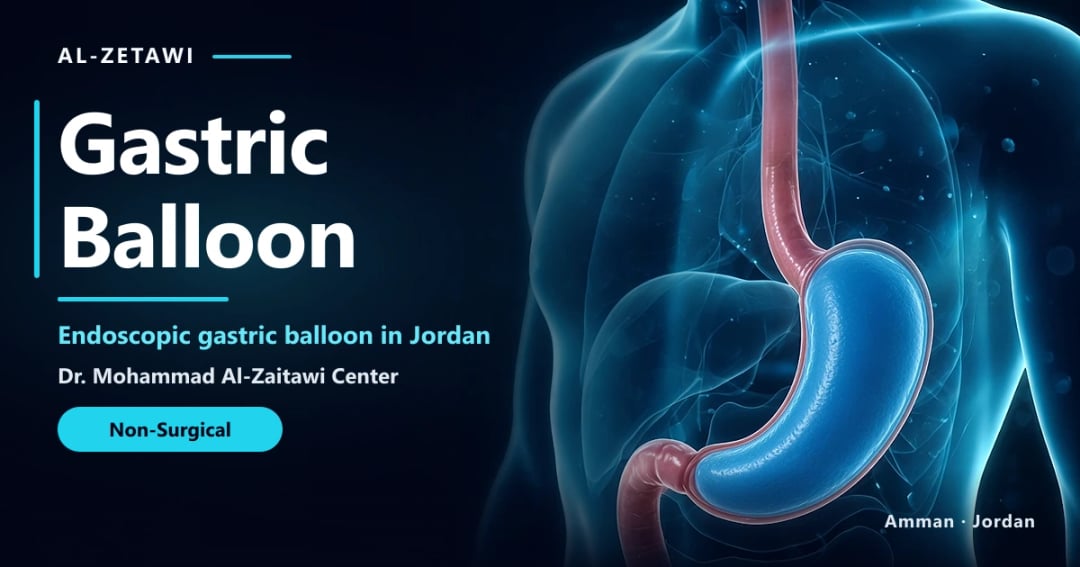
What an Endoscopic Gastric Balloon Is
An endoscopic gastric balloon is a soft balloon placed in the stomach through a camera test under sedation, filled while the doctor is watching, and removed with another camera test on a planned date. It is a temporary weight-loss tool. It is not a swallowable capsule, and it is not left in place indefinitely.
The camera is a gastroscope, a flexible instrument passed through the mouth. It lets the clinician see the oesophagus and the stomach lining before a balloon is committed to staying. Ulcers, a large hernia, retained food, inflammation, and unexpected surgical anatomy can cancel the placement on the day. That cancellation is a success of the method, not a wasted visit. A balloon sitting on an untreated ulcer is a harm. The swallowable capsule pathway does not give this look unless a separate endoscopy has been arranged. This page is about the pathway that includes the look by design.
Once the stomach is judged suitable, a deflated balloon is passed into it and filled under vision, usually with fluid and sometimes with gas, to a volume specified by that product. You are sedated for this. You do not watch, and you should not drive afterwards. The balloon then occupies space so that ordinary solid meals make you full sooner. It does not change intestinal absorption. It does not remove the part of the stomach that produces hunger hormone. Sugary drinks and liquid calories still pass. The constraint is real and partial.
A booked object, not a permanent implant
Most endoscopic balloons are licensed for a period of months, commonly around half a year, and then they are removed. The date is part of the prescription. A balloon left in because travel was inconvenient, or because weight loss felt unfinished, is a balloon past its design. Deflation, migration into the bowel, ulceration, and rare spontaneous overfilling become more likely when devices outstay their time. Removal is not an optional tidy-up. It is the second half of the procedure.
Designs differ, and the differences are clinical. Some balloons are single. Some systems use more than one balloon. Some are fluid-filled. Some are gas-filled. A few can have volume added or removed at another endoscopy. Dr. Mohammad Al-Zaitawi matches a device that is available in Amman to a person who has been assessed, rather than matching a person to an advertisement. This page will not pretend those designs share one fill volume or one comfort profile. You should leave the consultation knowing which design is proposed and whether anyone will adjust it.
Weight change is modest beside metabolic surgery and variable beside the photographs online. Completers in published balloon series often lose on the order of a tenth to perhaps fifteen percent of starting weight by removal, and many regain a share of that after the balloon is gone. Some lose less. The people who hold more of the loss are the people who changed meals, protein, activity, and sleep while the balloon made large portions uncomfortable. The balloon is a tutor with an end date. It is not a metabolism.
Who an Endoscopic Balloon Is For
An endoscopic balloon is considered for adults with overweight or obesity who want a temporary, reversible tool, who can attend both placement and removal, and whose stomach is safe to inspect and to house a balloon. The acceptable body-mass range follows the device indication and the clinician's judgement. Historically, balloons have been used most in people who do not yet meet a strong indication for surgery, or who decline surgery after understanding it, or who need some weight reduction as a bridge when an operation or another treatment is unsafe today. A bridge is a plan with a destination. A balloon without a destination is a delay.
You are more suitable if you eat large solid portions than if your excess is entirely sugary drinks, alcohol, and grazing, because the balloon is a volume occupying the stomach, not a conscience. You are more suitable if you can take a week of nausea with support at home. You are more suitable if you will actually return for removal, or if a named endoscopist at home has agreed, in writing, to remove that specific device on time. International patients fail this test when they book placement in one country and hope a stranger will remove an unfamiliar balloon later.
What the clinic needs to know first
The history that changes the day includes prior gastric or oesophageal surgery, reflux that wakes you, trouble swallowing, ulcers, Helicobacter treatment, inflammatory bowel disease, pregnancy plans, bingeing and purging, and blood thinners. It includes sleep apnoea, because sedation in untreated severe apnoea needs a plan. It includes who will take you home. Sedation is why a companion is not a luxury. You will be forgetful and unsafe behind a wheel for the rest of the day.
Metabolic disease is discussed in the same breath as the balloon's ceiling. Type 2 diabetes and fatty liver can improve with the weight a balloon helps you lose. They are more reliably altered by surgery when surgery is indicated. Medicines for obesity are another path and sometimes a better one. Dr. Mohammad Al-Zaitawi should tell you if a balloon is a compromise you are choosing, rather than the treatment he would rank first. You can still choose the compromise. You should not be left thinking it was the top of the evidence.
People who need their stomach inspected are a particular fit for this route rather than a swallowable capsule: those with significant reflux, those with anaemia of unclear cause, those with previous abdominal symptoms that never had a diagnosis, and those who cannot swallow a large capsule. Inspection is the advantage you are paying for in discomfort and in a second visit. Use it. Do not ask to skip the look to save ten minutes.
Age is not a slogan. Frailty, sedation risk, and the ability to cope with vomiting decide more than a birthday. Pregnancy is a no. Unreliable contraception during the months of residence is a no until contraception is real. An unmanaged purging disorder is a no. A person who cannot reach a hospital if the balloon deflates is a no, because migration does not wait for a convenient clinic day.
How the Decision Is Made
Decision-making starts with whether any anti-obesity treatment beyond a supervised programme is appropriate now. Guidelines used for surgery, including the joint ASMBS and IFSO indications and the NICE overweight guideline, describe a different intensity of treatment. They are still the backdrop. A person whose diabetes is advancing and whose BMI is in the surgical range should hear about operations and about medicines, not only about a balloon that will be gone in six months. A person with a lower BMI, a clear portion problem, and a wish for a reversible step may be a balloon candidate if the stomach is suitable. The order of that conversation matters. Device first is how people feel sold to.
The second step is whether the stomach should be examined under sedation in a unit that can place a balloon at the same sitting if the lining is healthy, or whether examination and placement should be separated. Separation makes sense when the likelihood of finding a problem is high. Combination makes sense when the history is quiet and you have agreed to placement only if the look is normal. You should know which plan is yours before you fast.
What cancels placement on the day
Food still in the stomach, an ulcer, severe inflammation, a hernia too large for the chosen device, a lesion that needs biopsy first, or an anatomy that shows previous surgery you did not mention, can all stop placement. So can a sedation problem. You wake, you go home unballooned, and you treat the finding. That is disappointing and correct. A clinician who fills a balloon beside an ulcer because you flew in is not doing you a favour. Ask, before the day, what findings would stop the procedure. The list should come easily.
Choice of fill is a medical choice. A larger volume produces more early nausea and sometimes more restriction. A volume too small for your stomach may do little. The product has a recommended range. The endoscopist uses it. You do not negotiate millilitres from a blog. If an adjustable system is available and suitable, the possibility of a later volume change is explained, including that adjustment is another sedated endoscopy, not a clinic handshake. If the system is not adjustable, you are told that intolerance means support or removal, not a partial deflation in the office.
Consent covers the first-week nausea, the removal date, the risk of early removal, ulcer and bleeding, rare perforation, rare pancreatitis and spontaneous overfilling of fluid-filled balloons, the possibility of a deflated balloon migrating, the modest average weight change, and regain. It covers cost as a quote. It covers what happens if removal is due while you are abroad. You should be able to say the removal month out loud. People who cannot remember the month are not ready to have the month exist.
A decision for a swallowable capsule instead, or for no device, is a complete decision. Endoscopy is not a prize. If you mainly want to avoid sedation and your history does not demand a look, the other pathway may be the one to discuss. If your history does demand a look, skipping it to swallow a capsule is how serious findings are missed. The two pages on this website are separated so that this choice stays visible.
What Placement Day Feels Like
You fast according to the written instruction. You arrange a companion who can hear the discharge advice, because sedation steals memory. You review medicines, especially blood thinners and diabetes drugs, with the team. You meet the person who will sedate you and the person who will do the endoscopy. In a combined visit, Dr. Mohammad Al-Zaitawi or the endoscopist responsible confirms that a balloon will be placed only if the stomach allows it.
A mouthguard protects your teeth. Sedation is given through a cannula. You become drowsy. The camera passes through the mouth and down. You are not expected to remember the details. Breathing, oxygen, pulse, and blood pressure are watched. If the lining is suitable, the balloon is positioned and filled under vision. The fill is checked. The camera comes out. The whole endoscopic visit is usually well under an hour, though your time in the unit is longer because of preparation and recovery. This description is the patient sequence. It is not a set of device settings for anyone to copy.
Recovery from sedation
You wake in recovery, often convinced that very little time has passed, with a sore throat, bloating, and the beginning of fullness. Nausea may start before you leave the unit. You are discharged when sedation has lightened enough, your observations are stable, and your companion is present. You may not drive, operate machinery, drink alcohol, or sign documents that need a clear head until the next day. Forgetfulness of the instructions is expected, which is why they are written and why the companion listens.
The stomach's protest usually peaks over the first few days. Nausea, retching, cramps, burping, and a feeling of having overeaten are common. Anti-sickness treatment and acid suppression are often prescribed. The names and doses are individual and are not listed here. Sip fluids. Do not lie flat immediately after sips if reflux is fierce. If sips will not stay down, call. Dehydration is the frequent early harm, and it is fixed with fluids, sometimes intravenously, not with endurance.
Most people sleep in their own bed or hotel the same night. A minority are kept or brought back because vomiting will not stop. Early removal is the safety valve if intolerance is severe or if pain suggests a complication. Removing a balloon on day two feels like failure and is sometimes the right treatment. A programme that makes you feel ashamed of early removal will delay the call. Ask their attitude to early removal before you are the person who needs it.
Food restarts in stages written for you, usually clear fluids, then fuller liquids, then soft foods, then small regular meals. The stages last days to a couple of weeks, not a season. Protein is introduced as soon as texture allows. Carbonated drinks are a poor idea while the stomach is sharing its space with a balloon. A large celebratory meal is a worse idea. The balloon does not need testing. It will announce itself.
The Months Before Removal
Once nausea fades, the useful phase begins. You feel full on a smaller plate. You can override that feeling with grazing, with melting foods, and with calories you drink. The practical rules are ordinary and strict enough: eat slowly, stop at comfort, build meals around protein and vegetables, keep a walking habit, and do not use vomiting as portion control. If vomiting becomes a tool, tell the clinic. The balloon can be removed. The habit is harder to remove later.
Reflux, a coated tongue, and bad breath bother some people the entire time. A head-up bed, no late meals, and the acid medicine you were actually prescribed are the responses. Chest pain, painful swallowing, black stool, or vomit that looks like coffee grounds are not reflux to tolerate. They can be ulcer or bleeding. Anti-inflammatory painkillers and smoking raise ulcer risk against a balloon that is already pressing on the lining. Ask before you take those painkillers for a backache. Paracetamol may be preferred and still has its own limits. The prescriber chooses.
Follow-up that earns the device
Visits or remote reviews exist to check intake, mood, weight trend, and warning signs. A stall is investigated as liquid calories, grazing, a leak, or a mismatch of tool and problem. Some fluid-filled balloons include a dye so that urine turns a noticeable colour if the balloon leaks. If yours does, you will be told what colour to watch for. If yours does not, nobody should tell you to wait for a colour that will never come. Sudden loss of restriction is a reason for a clinical check, sometimes a camera check.
Adjustment, if your device allows it and symptoms justify it, is another sedation day. It is not a promise that every balloon in Amman is adjustable. Adding fluid to chase a number can worsen nausea and ulcer risk. Removing fluid can reduce discomfort and also reduce effect. The trade is discussed with the person who can see the balloon, not with a group chat.
Pregnancy must not start during this interval. Illnesses that appear, such as a need for surgery or a new diagnosis of a clotting problem, are reasons to tell the team, because the balloon may need to come out before the other treatment. An elective operation elsewhere, a long period of lying flat, or a course of ulcer-provoking medicines should not be planned in ignorance of the balloon. Put it on every hospital admission form.
Exercise is encouraged once the first days have passed. Walking is the backbone. Higher intensity follows how you feel and what your joints allow. The balloon is not a reason to stay still, and it is not a reason to start a punishing programme that leaves you injured and living on anti-inflammatory tablets. Sleep apnoea may improve as weight falls and may not. Do not throw away a CPAP machine in week three because you feel hopeful. Stop it only when the clinician who prescribed it says so.
The removal month should stay in your calendar in ink. If you plan to be in another country, the removal arrangement moves with you only if a clinician there has accepted the device. Hope is not an arrangement. A balloon that is due out in June is a June procedure, not a September convenience.
Removal and the Weeks After
Removal is an endoscopy under sedation, much like placement in the logistics: fasting, companion, cannula, camera, recovery, no driving. The balloon is punctured and emptied under vision, then grasped and withdrawn. You may have a sore throat again and some cramping. You usually go home the same day if the stomach lining looks safe. If an ulcer is found, you leave with treatment and a review plan, not with a shrug. The lining has been living next to a foreign body for months. Looking at it is part of why removal is a procedure and not a transaction.
Hunger returns faster than morale expects. The stomach is empty of the balloon and full of old habits waiting at the door. The first month is when regain starts in people who had no practised pattern. Continue the plate you used in the best month of the balloon. Book the follow-up before you feel normal, because feeling normal is when people cancel. Protein, walking, and sleep remain the treatment. The device has finished.
If removal has to happen early
Early removal is done for intolerance that does not settle, for ulcer or bleeding, for suspected deflation, for pregnancy, and for any complication where leaving the balloon in is the larger risk. It is also sometimes done because a person simply withdraws consent. A temporary device requires ongoing consent. You are allowed to stop. The conversation should include what other treatment you will use, so that early removal is not the end of all care.
A deflated balloon that has slipped into the bowel is no longer a simple removal from the stomach. It can obstruct. Pain, vomiting, distension, and failure to pass gas are emergencies. Say the word balloon to the emergency team immediately. Some migrations can be retrieved endoscopically if they are still reachable. Some need surgery. The prevention is timely planned removal and a rapid response to signs of deflation, not a demand that every device be perfect.
After an uncomplicated removal, most people eat soft food briefly and then a normal pattern. There is no lifelong balloon diet because there is no balloon. There is the diet you intend to keep. Reflux often improves within days. If it does not, it needs its own diagnosis. Do not keep taking acid medicine for a year just because it was started with the balloon, and do not stop it abruptly if you were on it for a diagnosed ulcer. The prescriber closes that loop.
A second balloon is sometimes discussed months later. It is a new episode, with a new sedation risk, a new ulcer risk, and often diminishing enthusiasm. It is not maintenance. Before a second placement, look at what the first one changed and what surgery or medicine would change instead. Serial balloons for severe obesity are a long way around a decision.
Risks and Warning Signs
Sedation itself has risks: breathing depression, aspiration of stomach contents, allergic reactions, and heart rhythm problems. They are why you are fasted and monitored, and why severe untreated sleep apnoea is declared. Endoscopy can scratch the throat, dislodge teeth that were already loose, and, rarely, perforate the oesophagus or stomach. Placement of a balloon adds nausea, pain, ulceration, bleeding, and the mechanical risks of a device that can deflate or, rarely, overfill. Removal adds a second sedation and the possibility of finding damage that the balloon caused.
The first-week warning signs are inability to keep fluids down, repeated vomiting, severe pain, fainting, fever, vomiting blood, or black stool. The later warning signs are the same, plus sudden loss of restriction with a colour change in the urine if your device uses a dye, sudden abdominal swelling, or back pain that is new and severe. Regulators have warned that fluid-filled balloons can, rarely, overfill spontaneously or be associated with pancreatitis. You will not sort that out by message. You will go to an emergency department and tell them a balloon is inside you.
Obstruction, aspiration, and disappointment
If a balloon empties and leaves the stomach, it can jam in the intestine. The picture is bowel obstruction. It is uncommon when devices are removed on time and more likely when they are forgotten, when they deflate early, or when the bowel is already narrow. Previous abdominal surgery raises the stakes. Treat progressive cramp, green vomit, and a silent bowel as an emergency. Do not take a long-haul flight to the clinic that placed it.
Aspiration is a risk if you vomit while sedated or if you vomit large volumes at home while drowsy. This is another reason the first night should not be spent alone if you are frail, and a reason not to add sleeping tablets and alcohol to a nauseated evening. Ordinary queasiness does not require a hospital. Vomiting until you are too weak to stand does.
Nutritional disappointment is a slow risk. Very low intake without protein causes hair loss, dizziness, and muscle loss that the scales call success. Say if you are living on juice. The team can change texture or remove the balloon. Psychological harm is parallel. A device that legitimises vomiting can worsen an eating disorder. Report the behaviour early. Removal for that reason is good medicine.
The commonest bad outcome is milder: you lose some weight, you feel proud, the balloon comes out, and the weight returns over the following year because nothing in the week was rebuilt. That outcome is frequent enough that it belongs in the risk list beside perforation. Perforation is rare and catastrophic. Regain is common and predictable. A consent conversation that spends all of its time on the rare disaster and none on the common regain has entertained you and not informed you.
Death after balloon placement is rare and has been reported internationally from perforation, aspiration, and unrecognised complications. Rarity is not a comfort if the warning signs are ignored because a brochure said the procedure was simple. Simple describes the placement in a straightforward stomach. It does not describe a complication at day forty in a person who cannot name their device.
Alternatives to an Endoscopic Balloon
A supervised programme of eating pattern, activity, sleep, and treatment of medicines that promote weight gain is the alternative with the least device risk. It is also the alternative people have often attempted in a form too vague to count. If that effort has truly been structured and has failed, a balloon is more reasonable. If it has not, a balloon can still be chosen, but it should not be described as the only remaining option. For some people it is a preference. Preferences are allowed. They should be labelled as preferences.
Anti-obesity medicines are the alternative many people should examine before a foreign body is placed in the stomach. They require a prescriber, a check for contraindications, and follow-up. This page does not give doses or a drug of the month. Medicines can be stopped if they disagree with you, which is a practical advantage over a balloon that needs an endoscopy to leave. They also stop their effect when stopped, just as a balloon stops its effect when removed. Neither is a cure. Both are tools.
Swallowable capsules, surgery, and other procedures
A swallowable balloon capsule is the neighbouring device. It avoids placement sedation and often avoids a planned removal endoscopy because some products pass on their own. It gives up the routine inspection of the stomach and it adds dependence on safe passage through the bowel. Choose the endoscopic balloon when the look matters, when you want a date when the device will definitely be taken out by a clinician, or when you cannot swallow a capsule. Do not choose it only because endoscopic sounds more serious. Serious is not a benefit.
Sleeve gastrectomy and gastric bypass are the alternatives when you need larger, more durable weight loss and metabolic change, and when you accept permanent anatomy change, operative risk, and lifelong nutritional follow-up. A balloon can precede surgery as a bridge in selected high-risk patients, and it can also waste a year. The distinction is whether the bridge is aimed at a dated operation or at an indefinite postponement. Ask which one is being proposed. In Amman, that conversation belongs with the same bariatric assessment, not with a separate sales desk.
Other endoscopic procedures, where available, alter the stomach or the proximal small bowel by stitches or by mucosal treatment. They have their own evidence, their own durability, and their own complications. If the clinic does not offer them, you should be told they exist elsewhere only if that information helps a real decision, not as a tour of the possible. If the clinic does offer them, the reason for a balloon instead should be clinical.
Declining every device is reasonable when your health risk is moderate and the thought of sedation twice does not match the size of the likely benefit. Obesity care can intensify later if glucose, liver disease, or function worsen. A balloon now is not a moral duty. A balloon never, despite worsening disease and a clear surgical indication, is a decision to document so that nobody confuses it with a lack of access.
Life After the Balloon Has Been Removed
Life afterwards is ordinary eating with a smaller practised portion, or it is a return. The anatomy is unchanged. There is no band, no sleeve, no bypass, and no residual restriction you can rely on. People who feel a little tighter for a few weeks are feeling memory and habit, not a ghost balloon. Use the feeling. Do not depend on it.
Follow-up in the first months after removal is when regain declares itself. A review at a set interval beats a vague invitation to call if you struggle. Struggling is quieter than a complication. It looks like the old breakfast. Bring a honest record. The clinic cannot coach a fiction.
Health markers, skin, and future surgery
Blood pressure, glucose, and liver tests may have improved and may slide as weight returns. Repeat the ones that were abnormal. Stop or continue medicines only with the prescriber. Sleep apnoea equipment stays until a proper reassessment. These are the medical fruits of the weight change, and they are why a balloon is a health intervention rather than a short-term appearance project. Appearance may improve. It is not the measure that decides whether the risk of sedation was worth it.
Loose skin reflects the amount lost, age, and genetics. A balloon rarely produces the dramatic loss that creates an apron by itself, though some people notice a change. Skin is not treated with another balloon. If you later lose a large amount with surgery, body-contouring questions belong to that later chapter.
Future bariatric surgery remains possible. Tell the surgeon the balloon type and the removal date, and whether any ulcer was seen. The stomach usually returns to a normal cavity. Endoscopy before surgery may still be requested for reflux or other indications. A prior balloon is information. It is not a scar inside the stomach in the way an operation is, provided removal was uncomplicated.
If you had a complication, life afterwards includes resolving it fully: an ulcer treated until healed, a migration confirmed to be over, a plan for anaemia if you bled. Do not start a second device, a crash diet, or a long trip until that chapter is closed. Complications have aftercare. The calendar of the original package does not cancel them.
Keep the discharge documents. Years later an emergency doctor may ask whether you have anything inside you. You will want to say, accurately, that a balloon was placed and removed, and when. Memory is a poor medical record. The paper is the record. International patients should carry it in the same folder as the placement card they no longer need around their neck, but should not throw away.
Travelling to Amman for Placement and Removal
An endoscopic balloon is two trips or one trip plus a formal removal arrangement at home. Dr. Mohammad Al-Zaitawi's clinic in Amman can place a balloon after assessment and can remove it. What the clinic cannot do is escort you through every emergency department you might pass in the months between. Before placement, name the removal. If the removal is in Amman, put the month in the same plan as the placement, with permission to move the flight if an ulcer or slow recovery makes the original day wrong. If the removal is in your own country, the accepting endoscopist should know the device. A promise to find someone later is not acceptance.
Assessment can start remotely with your history, medicines, and any previous endoscopy report. It finishes in person. Send the truth about reflux, surgery, and purging before you buy tickets. A cancelled placement after a long flight is the correct outcome when the camera finds an ulcer, and it is an expensive way to learn that the history was incomplete. Bring a companion for both sedations. A hotel the night before and the night after is sensible. Flying the same evening after sedation is a poor plan even if the airline allows the ticket.
The in-between months and the fee
During the months of residence you may travel if you are well, you carry a card with the device name, fill type, placement date, and due removal date, and you know where you would seek urgent endoscopy. Do not travel in the first days of vomiting. Do not plan a trek far from hospitals around the time a dye-related leak warning would need action. The card belongs with your passport. Write the warning signs in a language emergency staff at home will read.
Cost is quoted after assessment. Placement, the device, sedation, facility fees, early follow-up, and removal are separate ideas that a quote should line up in ordinary language. A quote that bundles removal only if it happens in Amman must say so. A complication, an early removal, or a night in hospital is not a guaranteed inclusion unless the written quote says it is. There is no public single price and no price that buys a particular number of kilograms.
After you go home, non-urgent questions can be remote. Urgent symptoms belong to local emergency care. Contact the placing team so they can tell local doctors the device details, without delaying the local visit in order to place the call. If removal is due and you cannot return, execute the plan you made at the start. Do not stretch the balloon because the second flight is costly. A migrated balloon is more costly.
Insurance and visas are your arrangements. Some policies exclude self-funded weight-loss procedures and then cover a life-threatening complication poorly or well depending on the wording. Read it. The clinic describes care. It does not reinterpret your insurer. Budget for a companion's travel twice if both procedures are in Amman. The second trip is shorter and just as medically real.
A good international plan feels slightly dull: records sent, device named, companion booked, removal dated, card printed, margin of days around sedation, and a local hospital identified. Excitement is a poor safety system. The procedure is reversible and temporary. The logistics have to be as complete as if it were not.
Questions to Ask Before You Agree
Ask whether a balloon is the right intensity for your weight and your illnesses, or a compromise beside medicine or surgery. Ask which device is proposed, whether it is fluid or gas, whether it is adjustable, and the month it must come out. Ask what would stop placement on the day. Ask who removes it if you are not in Jordan that month. Ask those before you discuss hotels.
Ask how nausea is handled in the first week and what the threshold is for early removal. Ask whether your balloon has a leak-indicator dye. Ask what protein target and food stages you will actually be given. Ask how follow-up works when you are abroad. Ask what regain looks like in the clinic's own patients, without a testimonial. You want a range and a condition, not a story.
Safety, sedation, and money
Ask who sedates you and what happens if you have sleep apnoea. Ask where a perforation or a bleeding ulcer would be treated in Amman. Ask where a migrated balloon would be treated at home. Ask for the wallet card. Ask which symptoms are a same-night emergency rather than a morning message. Then read the list back. Sedation means you will not remember this conversation if it happens only in recovery.
Ask whether you need blood thinners stopped and who will decide. Ask about pregnancy and contraception in plain language. Ask whether the look inside will include a check for Helicobacter or a biopsy if something is seen. Ask how you will receive the endoscopy report. That report is useful later if another doctor needs to know your anatomy was normal.
Ask what the quote includes for placement, for removal, and for an unplanned visit. Ask what is excluded. Ask whether a cancelled placement because of an ulcer still incurs a fee, so you are not surprised by an honest clinical decision. A clinic can charge for an endoscopy that found disease. It should say so. It should not fill the balloon to justify the invoice.
Ask yourself whether you will attend removal on time even if you are happy with the weight and bored of the project. The danger point is success, not only failure. People protect the balloon past its date because it is working. That is when deflation risk grows. If you already know you will not come back for removal, do not have an endoscopic balloon. Have a different treatment, or have a device whose exit does not depend on your future enthusiasm. In Amman, Dr. Mohammad Al-Zaitawi can place and remove an endoscopic balloon when the indication is sound. The soundness includes your calendar.
Special Situations That Change the Balloon Plan
A large hiatal hernia can make a balloon unsafe or unwise because of reflux, migration risk, and poor anatomy. The endoscopy measures that judgement better than a symptom score. If the hernia is the main problem and reflux is severe, you may need a surgical conversation, not a balloon. Filling a stomach that spends its time in the chest is not clever persistence.
Previous bariatric or gastric surgery is usually a contraindication. The pouch or sleeve is not a normal stomach, staples and scars change the risk, and a balloon is the wrong tool for regain after surgery. Regain after a sleeve or bypass needs a nutritional and surgical review. It does not need a device designed for an unoperated stomach. Mention the operation in the first email. Photos of your abdomen are irrelevant. The operation note is relevant.
Diabetes medicines, pregnancy, and forgotten balloons
Diabetes medicines may need adjustment as intake falls, particularly medicines that can cause low blood sugar when meals shrink. The prescriber does this. Do not copy another patient's dose change. A balloon clinic that never asks what you inject or swallow for glucose is not watching you. Bring the list. During the months of residence, hypoglycaemia is a practical risk if tablets or insulin stay at the old dose while you suddenly halve your portions.
Pregnancy discovered with a balloon in place needs prompt advice. The usual direction is to plan removal rather than to carry a weight-loss device through pregnancy. Do not wait for the originally booked month if that month is late in pregnancy. Tell the obstetric team as well. This is a coordination problem, and it is solvable if it is not hidden.
A forgotten balloon is a special situation you should only know about in order to avoid becoming it. People move house, lose the card, and feel well. The removal month passes. Months later they develop pain or obstruction. The prevention is a dated reminder in a place that is not the clinic's goodwill. Put it in a calendar that will alarm even if you have blocked the clinic's emails. If you inherit the care of a relative who had a balloon abroad, ask whether it was removed. Families often assume it dissolved. Endoscopic balloons do not dissolve.
Very high BMI with severe sleep apnoea, heart failure, or a need for another operation such as joint replacement is sometimes the setting for a balloon used as a bridge. The bridge needs a date for the destination treatment and a team that will manage sedation risk. A bridge without a destination is marketing language. If a joint surgeon or an anaesthetist has asked for weight loss first, they should be part of the correspondence. The balloon team should not be guessing the target.
In Amman, these exceptions are discussed before anyone is fasted. An endoscopic gastric balloon is a camera-placed, camera-removed, time-limited device. It suits some people well for a season. It suits nobody as an unattended object. If your life cannot hold a removal date, it cannot hold this balloon. That is the sentence to remember when every other detail blurs.
Medical note from Dr. Mohammad Al-Zaitawi
I place an endoscopic balloon only after the camera shows a stomach that can safely hold it, and only when the removal date already has an owner. A balloon without a retrieval plan is an abandoned device. I would rather cancel on the day of an ulcer than fill a balloon to match a travel schedule.
Scientific references and guidance
These sources support the medical information on this page. If you want this guidance applied to your own case, send us your details for an initial review.
Reviewed by Dr. Mohammad Al-Zaitawi
Prefer a quicker route? Try the free case review or see bariatric surgery costs in Jordan.