
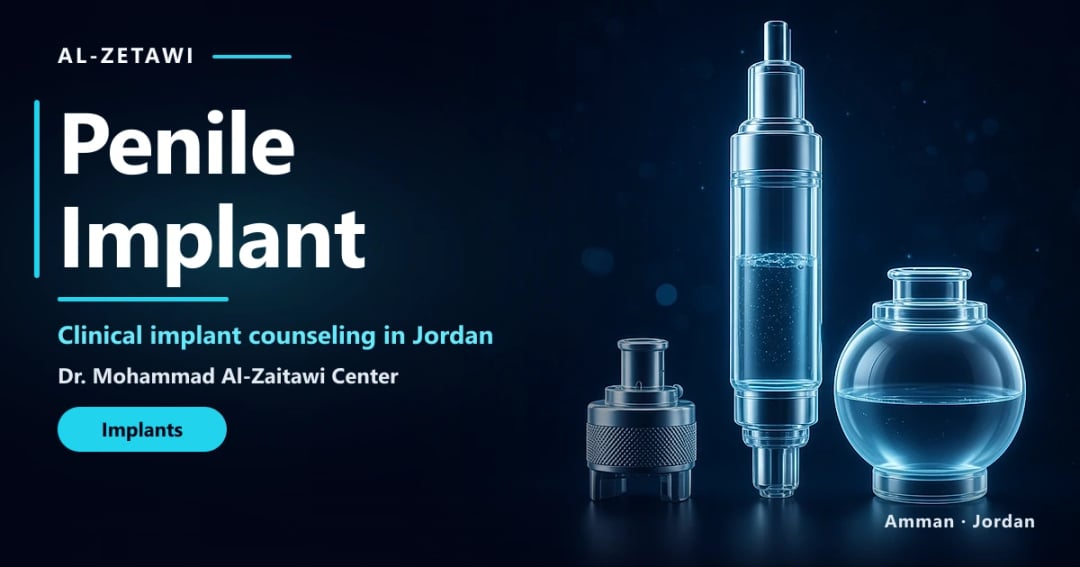
What a Penile Implant Operation Is
A penile implant is a device placed inside the penis during an operation to restore rigidity when erectile dysfunction has not improved with other suitable treatments. The procedure is done under anesthesia in a hospital. It does not increase penile length, and the choice of device is made only after a personal assessment.
An operation, not a tablet and not a product page
This guide describes the surgery itself: who is usually considered, what is placed, how the hospital stay feels, and which problems need a phone call afterwards. It is not a comparison of brands, and it is not a pathway through tablets, vacuum devices, or injections. Those treatments exist and are often tried first. They are mentioned here only so you can see where an implant sits. Dose schedules, injection techniques, and head-to-head device shopping do not belong on this page. If you are still deciding whether any treatment for erection difficulty is appropriate, that is a separate clinical conversation.
During the operation the surgeon places cylinders inside the two erectile chambers, the corpora cavernosa, which normally fill with blood to create rigidity. A malleable implant uses bendable rods that give a permanent firmness you can position for daily life. An inflatable implant uses cylinders that stay soft until you activate a pump, most often placed in the scrotum, which moves fluid from a reservoir. Both are internal. Nothing is meant to be visible as an external splint. Skin sensation, orgasm, and the ability to climax are usually preserved when the nerves were already intact. The implant does not create desire, and it does not repair a relationship by itself.
Dr. Mohammad Al-Zaitawi assesses men for this operation at his center in Amman, Jordan. The decision is elective. It waits for a proper history, an examination, and a discussion of expectations. It is not an emergency, and it is not offered because a website described a device in attractive terms. You should be able to say, in your own words, what the operation will change and what it will leave unchanged before you book a date.
How to read the rest of this page
The sections that follow explain the difference between device types only as far as a patient needs in order to understand the operation they might undergo. They then describe preparation, the day in hospital, recovery, risks, and a few situations that make surgery more complex: diabetes, curvature from Peyronie's disease, previous prostate surgery, and replacement of an existing implant. None of this is a personal recommendation. Men with sudden painful erections that will not settle, a penile fracture, or a spreading infection need urgent local care, not a planned trip for an implant.
When an Implant Is Considered
A penile implant is considered when erections remain inadequate for the sexual activity you want, and when suitable non-surgical treatments have failed, are medically inappropriate, or are unacceptable to you after a real explanation. It is a definitive operation. It is not the first idea raised in a new diagnosis of erection difficulty.
The clinical situations that lead to surgery
Common histories include long-standing erectile dysfunction from diabetes or blood-vessel disease, difficulty after pelvic or prostate surgery, severe Peyronie's disease in which curvature and poor rigidity travel together, and corporal scarring after a prolonged unwanted erection, called priapism. Some men have tried tablets and found them ineffective or poorly tolerated. Some cannot use a vacuum device because of discomfort or because it does not produce a rigid enough erection. Some have used penile injections and stopped because of pain, fibrosis, or a wish not to inject. The implant conversation starts after those facts are documented, not instead of them.
Major guidance from the American Urological Association and the European Association of Urology treats penile prosthesis surgery as an established option for erectile dysfunction when less invasive treatment is unsuccessful or unsuitable. The International Consultation on Sexual Medicine has published specific recommendations on prosthesis surgery that stress counseling, infection prevention, and matching the device to the patient. Those documents do not rank a clinic by advertising. They describe a standard: the man understands permanence, length expectations, and the possibility of revision.
What should already be clear before you travel
Elective implant surgery is a poor plan if erection difficulty has never been assessed. Low desire, relationship conflict, depression, a new medication, low testosterone that has not been evaluated, or a recent illness can all mimic a surgical problem. Some of those are treated without an operation. A hormone issue, when present, is managed on its own merits. Correcting it does not automatically remove the need for an implant, and taking testosterone is not a requirement invented to delay surgery. The point is that the diagnosis should be erection failure, not an unexamined complaint.
You do not have to fail every treatment in a fixed sequence if one of them is unsafe for you. A man who should not use certain tablets because of heart medicines, or who has deformity that injections will not straighten, can move to a surgical discussion sooner. That judgment is individual. What this center will not do is skip the history because a date is already booked. Bring previous prescriptions, operation notes from prostate or penile surgery, and any photographs of curvature that you are willing to share in a clinical setting. A partner may attend the counseling visit if you both want that. It is your choice, not a condition of care.
Device Types as Part of the Operation
Two families of implant are used in this operation: inflatable devices, which cycle between soft and rigid, and malleable devices, which stay firm and are positioned by hand. The family is chosen for your hands, anatomy, and goals. This page does not compare manufacturers or claim that one brand is the correct purchase.
Inflatable implants
A three-piece inflatable implant is the operation many men picture. Two cylinders lie inside the erectile chambers. A small pump sits in the scrotum, where it can be felt but is usually not obvious in clothing. A reservoir of fluid is placed in the lower abdomen or in a space just behind the pubic bone, depending on the technique chosen for you. When you squeeze the pump, fluid fills the cylinders and the shaft becomes rigid. When you press the release, the fluid returns and the penis becomes softer for daily life. A two-piece inflatable device combines some of these parts and avoids a separate abdominal reservoir. It is a legitimate option in selected anatomy, not a lesser operation to be apologized for, and not a prize to be upsold.
The advantage patients notice is concealment. Deflated, the penis hangs more naturally than with a permanent rod. The cost of that advantage is mechanical complexity. Tubing, a pump, and a reservoir can wear out over years. Long-term series from experienced surgeons have reported that most modern inflatable devices remain mechanically intact for many years, while a minority need revision for leak, pump failure, or infection. Those series are not a warranty. Your own tissues, a later injury, and the need for any future pelvic surgery all sit outside a brochure.
Malleable implants
A malleable, or semirigid, implant uses rods with a flexible core. The penis is always firm enough for intercourse once you are healed and cleared, and you bend it downward or upward to suit clothing and activity. There is no pump to learn and no reservoir. Men with limited hand strength, reduced sensation in the fingers, or difficulty with the mental steps of cycling a device often do better with this simpler operation. It is also considered in some complex reconstructions where an inflatable device is less practical. The trade is concealment. A permanently firm penis can be noticeable in close-fitting clothes or in a changing room, and partners should hear that before surgery rather than discover it afterwards.
Neither device enlarges the penis beyond the stretched length that is already there. Neither restores the spontaneous nighttime erections of early adult life. Neither is activated in the operating room for you to 'try' while asleep as a demonstration. The surgeon may cycle an inflatable device on the table to confirm that it fills and deflates, then leave it deflated. Teaching you to use it happens later, in clinic, when swelling has fallen. Do not practice from a video before that visit. Established manufacturers supply both families. The specific model, if an operation is agreed, is named in your consent and your operation record, not chosen from a webpage ranking.
Assessment Before Surgery
Assessment confirms that an implant is the right operation, that infection risk can be made as low as reasonably possible, and that you can use the device you are offered. It includes a history, an examination, a review of medicines, and a direct conversation about length, sensation, and permanence.
What the surgeon needs to know
The history covers how long erections have been poor, what treatments you have used, morning erections, desire, orgasm, ejaculation, curvature, pain, and any episode of priapism. Pelvic surgery, radiation, bladder or prostate cancer, urethral injury, and previous implant or penile surgery change the anatomy. Diabetes, heart disease, and anticoagulant medicines change the preparation. Smoking and poorly healed skin infections raise the chance of a wound problem. A complete list of medicines matters, including recreational drugs and over-the-counter products, because some affect bleeding or blood pressure. You will be asked about hand function if an inflatable pump is being considered. That question is practical, not a test of dignity.
Examination looks at the penis, the scrotum, the groin, and the skin. Stretch is assessed so that length expectations are based on your tissues rather than on memory. Plaques from Peyronie's disease, a buried penis related to weight, or a very tight foreskin may need to be part of the plan. A urine check is done so that an active urinary infection is treated before any elective implant. Blood tests are chosen for your health, not as a fixed panel to impress. Heart and lung fitness for anesthesia is reviewed. If your physician has advised that sexual activity itself is currently unsafe because of unstable heart disease, an implant does not bypass that advice. The operation would give rigidity you are not yet cleared to use.
Counseling that should feel specific
You should leave the visit knowing that the implant is permanent in the sense that the natural erectile tissue is altered to hold the cylinders, that removal without replacement usually means no reliable natural erection afterwards, and that a later revision is possible but is a second operation. You should hear that perceived length may be less than you remember, especially after prostate removal or long-standing erectile dysfunction, because the tissues have already shortened. You should hear that the glans, the head of the penis, may not become as full as the shaft, because the cylinders support the shaft. You should hear how the pump will feel in the scrotum, or how a malleable device is positioned in clothing.
Written information supports the conversation. It does not replace it. If you feel hurried toward a date, pause. A man who expects an implant to add centimeters, to restore ejaculation after prostate removal, or to guarantee a partner's response has not been counseled yet. Those expectations can be corrected. Surgery before the correction is how dissatisfaction happens in a technically successful operation. Dr. Al-Zaitawi's comment in clinic is the one that counts. This page can only show you the topics that ought to be covered.
The Day of the Operation
Penile implant surgery is performed in an operating room under anesthesia, most often general or spinal. The skin is prepared carefully to reduce infection. Through an incision, cylinders are placed inside the erectile chambers. An inflatable device also includes a scrotal pump and a fluid reservoir. You wake with dressings, and usually with the inflatable device left deflated.
What you experience, not a surgical manual
You fast according to the anesthetic instruction. The genital skin is prepared in hospital. Shaving, if needed, is done with a method that avoids nicks. Do not shave yourself the night before unless you were told to, because small cuts are a route for bacteria. An intravenous line is placed. Antibiotics are given around the time of the operation when the team uses them. The names and doses are a hospital decision for your allergies and your kidneys. They are not listed here, and they are not something to arrange privately beforehand.
Once you are anesthetized, the surgeon makes an incision in a position agreed during consent. The two common positions are at the junction of the penis and scrotum, or lower on the abdomen just above the penis. Each has reasons related to your anatomy, any previous scars, and whether a reservoir is part of the device. Through that incision the erectile chambers are opened enough to allow the cylinders to sit inside them. The chambers are prepared so the cylinders lie smoothly, without a recipe of instrument sizes on this page. The cylinders are sized to your anatomy so they support the shaft without stretching it beyond what the tissues allow. If an inflatable device is planned, the pump is seated in the scrotum and the reservoir is placed in its planned space and filled. The surgeon checks that an inflatable device cycles, then leaves it deflated so the tissues are not under tension while you heal. The incision is closed and a dressing, sometimes a light supportive wrap, is applied.
Variations you may notice afterwards
A catheter may drain the bladder during the operation and for a short time afterwards so the urethra is protected and urine does not strain a fresh wound. Burning on the first voids after it is removed is common and usually brief. A drain is not routine for every man. It is used if the surgeon wants to limit a collection of blood. Bruising that tracks onto the scrotum or the lower abdomen can look alarming on day two and still be within the expected range if you are comfortable, passing urine, and free of fever. The team would rather see a photograph of a dramatic bruise than have you decide alone that it is normal.
The operation often takes one to two hours, longer when scarring from priapism, prior surgery, or severe curvature must be addressed. Time is not a quality score. A difficult reconstruction that is unhurried is safer than a fast operation in fibrous tissue. You are transferred to recovery, then to a room. Pain is treated. Ice is sometimes used in a way the nurse specifies. You are helped to stand and pass urine before discharge planning begins. Same-day discharge is possible for some straightforward cases in experienced pathways. An overnight stay is common and is the expectation you should pack for unless you have been told otherwise.
The First Weeks After Surgery
The first weeks are about swelling, wound healing, and leaving an inflatable device alone until you are taught to use it. Most men wear supportive underwear, limit strenuous activity, and are reviewed before any sexual activity. Bruising can be impressive. Fever, a opening wound, or escalating pain is not part of normal healing.
Pain, swelling, and daily care
Soreness in the penis and scrotum is expected for several days and often lingers as tenderness for a few weeks. The pain should trend downward. A sudden increase, especially with fever, chills, or a feeling of being systemically unwell, needs same-day contact. Supportive underwear that lifts the penis toward the abdomen is often more comfortable than ordinary loose boxers in the first week, because movement tugs on the incision. You may shower when the team says the dressing allows it. Soaking in a bath, swimming, and using a sauna wait until the skin has sealed. Keep the wound clean and dry. Creams, powders, and antiseptics from a pharmacy are unnecessary unless they were prescribed.
Constipation is worth preventing, because straining hurts a fresh scrotal wound. Fluids, fiber, and a gentle laxative if it was recommended are enough for most men. Do not lift heavy objects, cycle, or do gym work. Desk work is often possible within a week or two if you can sit comfortably and you are not using strong pain medicine that clouds driving. Jobs with heavy lifting or prolonged standing in heat may need longer. Driving waits until you are safe to perform an emergency stop and you are not impaired. Follow the local driving rules as well as the surgical advice.
What the device is doing during healing
An inflatable implant stays deflated. You may feel the pump in the scrotum as a firm oval. Leave it alone. Early squeezing can hurt, can stress the incision, and can confuse you if swelling makes the release button hard to find. A malleable implant is already firm. Position it as you were shown, usually upward against the abdomen inside supportive underwear at first, so the incision is not pulled. Do not bend it repeatedly out of curiosity in the first days. The tissues that hold the rods need quiet.
A review is arranged before you rely on the device. For many men, teaching to inflate and deflate begins around four to six weeks, when swelling has settled enough for the pump to be identified easily. Some heal faster and some need longer. The date is set by the wound, not by a calendar you found online. Sexual activity, including intercourse, waits for explicit clearance. Six weeks is a common landmark after a straightforward first implant. It is not a promise, and it is not permission to start earlier because swelling 'looks fine.' International patients should plan to be seen before a long flight home, and to have a way to send a wound photograph to the team during the first weeks. A flight the morning after surgery is a bad plan.
Learning the Device and Returning to Intimacy
You learn to use an inflatable implant in clinic, after healing allows the pump to be felt clearly. A malleable implant is positioned by hand once tenderness allows. Sexual activity restarts only when the surgeon clears you. The aim is a rigid shaft sufficient for intercourse, with sensation and climax that match your nerves, not a performance script.
Inflation as a skill, taught in person
The pump sits in the scrotum. When the time comes, you are shown how many squeezes fill the cylinders, how the penis should feel when rigid, and how to press the release so it softens fully. Early cycles can feel stiff. The tissues are learning a new shape, and mild discomfort with the first inflations is common. You may be asked to cycle the device regularly for a period so the capsule around it stays supple. That instruction is personal. A webpage that tells every man to inflate twice a day for a set number of minutes would be inventing a protocol. Follow the one you were given, and stop and call if inflation becomes sharply painful, if the penis angulates in a new way, or if the pump will not move at all.
Partners sometimes worry that a mechanical step will remove spontaneity. Many couples find a routine that is private and quick once the learning phase is over. Some men inflate privately beforehand. The device does not vibrate, does not move on its own, and does not replace foreplay or affection. If climax was possible before surgery, it usually remains possible. Ejaculation depends on anatomy that the implant does not rebuild. After prostate removal, orgasm is often dry. That fact should have been discussed before the operation. If it is a surprise afterwards, ask. It is a consequence of the earlier prostate surgery, not of a pump failure.
Malleable positioning and shared expectations
With a malleable device there is no inflation to learn. You position the penis for intercourse and reposition it afterwards for clothing. Tenderness with bending fades as the tissues settle. Tell a regular partner, if you have one and you wish them to know, that firmness is present even when you are not planning sex. Surprise, not the firmness itself, is what causes awkwardness. Single men have the same operation. You do not need a partner's signature. You do need a plan for your own privacy in shared housing during the swollen first week.
If the shaft is rigid but the head feels soft, say so at review. A degree of difference is common, because glans filling depends on blood flow rather than on the cylinders. When the head buckles enough to make intercourse difficult, that is a recognized issue, sometimes called a floppy glans, and it is assessed rather than ignored. Do not try to solve it with unprescribed devices or with tight rings unless a clinician has told you that is safe with your implant. Rings and vacuum devices can injure tissue over a cylinder if they are used casually. Ask before you improvise.
What an Implant Does Not Change
An implant provides on-demand rigidity of the penile shaft. It does not lengthen the penis beyond its current stretched length, does not create sexual desire, and does not restore ejaculation that pelvic surgery has already changed. Knowing those limits is part of a good result, because the operation can succeed and still disappoint a man who was promised youth.
Length, girth, and memory
Men often remember the size of an erection from years before erectile dysfunction, weight gain, or prostate surgery. The tissues shorten when they are not regularly filled. An implant can reveal the length that remains. It cannot invent the length that was lost. Published surgical series and the counseling standards from sexual-medicine bodies are consistent on this point, even when marketing is not. Girth is supported by the cylinders and may feel different, sometimes fuller when inflated, but it is not a custom enlargement. Procedures advertised elsewhere as lengthening or girth enhancement are not part of a standard implant operation and should not be assumed to be included.
Weight loss, control of diabetes, and stopping smoking improve general health and wound healing. They do not, on their own, add centimeters at the time of implantation. If the penis is buried by the lower abdomen when you stand, that is a separate anatomic issue. It may be discussed honestly, including what an implant will and will not show in the mirror. Shame is a poor surgical plan. Measurement and a straightforward sentence are better.
Desire, sensation, fertility, and urine
Libido lives in hormones, mood, relationship, and the brain. An implant does not raise it. If desire is the main problem, surgery for rigidity will produce a device you do not wish to use. Sensation in the skin is usually preserved, because the nerves of sensation are not the target of the operation. Numbness that was already present after prostate surgery or diabetes will not be reversed by cylinders. Fertility and the path of semen are not the purpose of this operation. If you are trying to conceive, say so. The implant does not block the urethra, but ejaculatory and erectile function are different systems, and your situation should be understood before a date is set.
Urine should flow as before once early swelling and any temporary catheter irritation settle. New difficulty passing urine, a weak stream that is getting worse, or blood that continues beyond the first day or two needs review. The implant is not a treatment for prostate obstruction. A man who already needs assessment for urinary symptoms should have that clarified so he is not attributing an old prostate problem to a new device. Nighttime spontaneity will not return in the old pattern. Rigidity happens when you decide to inflate or when a malleable device is positioned. Some men miss the unpredictability of a natural erection. That grief is legitimate, and it is easier to carry if it was named before the operation than if it appears as a suspicion that the surgery went wrong.
Risks of Implant Surgery
Infection, erosion of a device through skin or urethra, mechanical failure, bleeding, and a result that does not match expectations are the risks that should be named before consent. First-time implants in well selected men are usually straightforward. Replacement surgery and scarred tissue carry more risk. No percentage on a website is your personal risk.
Infection and erosion
Infection is the complication surgeons work hardest to prevent, because bacteria on a device are difficult to clear with antibiotics alone. Prevention is a system: treating a urinary infection first, careful skin preparation, limiting traffic in the theater, antibiotics around the operation, and gentle handling of the implant. Even then, infection can occur. It may appear as rising pain, fever, redness, wound drainage, or a part of the device becoming visible. That situation is urgent. The usual treatment of an infected implant is removal of the infected material, with a plan for later replacement only when it is safe. Trying to 'save' an infected device with a long unsupervised antibiotic course is how a small problem becomes a larger one. Call. Do not wait for a scheduled flight if you are systemically unwell.
Erosion means tissue over the cylinder, the pump, or the tubing gives way so that the device is pressing into the urethra or through the skin. It is uncommon after a careful first implant and more likely after infection, after vigorous early use, or in tissues damaged by radiation, diabetes, or a long-neglected injury. Blood in the urine, a new split in the skin, or the sensation that a part of the device is at the surface needs immediate assessment. You will be told not to use the device. Repair or removal is a surgical decision made when you are examined, not from a message alone, but the message should be sent the same day.
Mechanical wear, bleeding, and expectation
Inflatable parts can leak or a pump can fail years later. The penis then may not become rigid, or may not deflate fully. That is a mechanical problem, often solvable by revision, and it is not an infection until proven otherwise. Malleable rods rarely 'break' in the everyday sense, but a rod can fracture or a position can become uncomfortable, and those events are also assessed in person. A hematoma, a collection of blood in the scrotum, can swell dramatically in the first days. Many settle. A hematoma that is expanding, painfully tense, or associated with dizziness needs review, particularly if you take blood thinners. Injury to the urethra during the operation is uncommon. If it occurs and is recognized, the plan may change, including postponing placement of a cylinder. You would be told.
Autoinflation, a spontaneous partial firmness of an inflatable device, and a reservoir that can be felt in thin men are less dramatic issues that still deserve a mention so they are not mysterious. A floppy glans, persistent pain beyond the usual healing window, and dissatisfaction with length are the problems most tied to counseling and to anatomy. Dissatisfaction is real even when the incision looks perfect. The remedy starts with being heard and examined, not with being told the operation was a success because the cylinders are inside. Serious anesthetic and clot risks exist, as with any operation, and are discussed by the anesthesiologist for your heart, your lungs, and your weight. This page will not quote a survival percentage for a device as if it were a guarantee. Experience in the literature is encouraging for modern implants. Encouraging is not the same word as guaranteed.
Situations That Change the Operation
Diabetes, Peyronie's curvature, previous prostate surgery, priapism scarring, and replacement of an old implant do not automatically forbid surgery. They change preparation, sometimes the device, and the risk conversation. Each is a reason for a tailored plan rather than for a standard booking.
Diabetes, blood thinners, and skin
Diabetes is a frequent reason erections fail, and it is also a reason wounds heal less predictably. Elective implant surgery waits until glucose control is as good as your circumstances allow and until any skin or urinary infection is gone. The operation is not a reward for a perfect laboratory number, and it is not refused forever because diabetes exists. Bring recent records so the anesthetic and surgical advice is based on you. Blood thinners and antiplatelet drugs are managed with the doctor who prescribed them. Stopping them casually before a flight is dangerous. Continuing them without a plan raises the chance of a scrotal hematoma. The coordination is part of the operation, even though it happens in the weeks before.
A high body weight can bury the penis and can make a reservoir or a pump harder to feel. It also affects anesthesia. Weight loss is sometimes suggested before surgery for safety and for a result you can actually see. It is advice, not a moral condition. Smoking is similar. Stopping reduces cough and wound problems. If you cannot stop completely, be honest, so the risk is stated accurately in consent rather than discovered later as a surprise infection.
Peyronie's disease, prostate surgery, and revision
Peyronie's disease can scar the shaft and bend the erection. When rigidity is also poor, an implant is sometimes the operation that addresses both problems, because the cylinders support the shaft and a planned straightening maneuver can improve the bend. Severe deformity may need a more complex reconstruction. This page will not describe how to cut a plaque or how to graft. Those are operative decisions. What you should understand is that straightening has its own effects on perceived length, and that the goal is a shaft that is straight enough and rigid enough for intercourse, not a photograph of a perfectly linear penis. Bring any earlier penile injections or shockwave treatments into the history so the tissues are understood.
After radical prostatectomy, erections may not return, even when rehabilitation was tried. An implant can provide rigidity. It will not restore ejaculation of semen, and it will not repair urinary leakage. If incontinence is significant, that problem is assessed on its own. Some men need it addressed before or apart from an implant so that one operation is not asked to solve two different failures. Radiation to the pelvis increases the care required of tissues. It is not an absolute barrier, and it is not something to hide because you want to seem an easy case.
Scarring after priapism makes the erectile chambers stiff. The operation can be longer and more difficult, and the discussion of erosion and incomplete dilatation belongs in clinic. Revision of an existing implant, whether for infection, a mechanical leak, or an old device that no longer serves you, is a different operation from a first implant. This guide describes the primary operation. If you already have a device in place, send the old operation note, including the manufacturer card if you were given one. Replacement is planned from those facts. It is not ordered as a like-for-like swap from a catalogue.
Planning the Operation in Amman
Penile implant surgery with Dr. Mohammad Al-Zaitawi is planned in Amman after assessment, for men whose health and expectations fit an elective operation. Records can be reviewed before travel. The stay must cover the hospital night and an early wound review. A fixed tourism timetable does not override swelling.
Before you book flights
Send a concise history: age, diabetes and heart disease if present, a list of erection treatments already used, previous pelvic or penile operations, medicines, and what you hope the implant will change. Photographs of curvature, if relevant, should be sent only through the channel the clinic gives you, not through a public social network. The team may ask for a urine test or blood results before you fly, so that an infection is not discovered on the morning of surgery. If the history suggests that a non-surgical option was never really tried and is still appropriate, you may be advised to pause. That answer is a medical conclusion, not a refusal of hospitality.
Plan a companion if you can, especially for the first day out of hospital, when walking is fine but driving and carrying luggage are not. Pack supportive underwear of the kind the clinic describes, loose trousers, and your usual medicines in original packaging. Leave vacuum devices and constriction rings at home unless you were explicitly asked to bring them. They are easy to misuse beside a fresh implant. Accommodation should be comfortable enough for several quiet days. You do not need a particular hotel. You need a clean place to rest, a way to reach the team, and time before a long-haul flight.
The hospital and the days after
Dr. Al-Zaitawi is a consultant surgeon in Amman with the Jordanian Board in General Surgery, fellowship of the American College of Surgeons, and fellowship of the International College of Surgeons. The implant operation is done in a hospital setting with anesthetic support, not in a consultation room. On arrival you are examined again. Consent is signed when the device type and the incision plan are clear to you. After surgery you receive written advice on the dressing, urine, pain medicine, activity, and the number to use if fever appears. The inflatable device, if that is what you have, remains deflated. Teaching is scheduled for when healing allows, which may be after you have returned home if your travel cannot extend to the six-week mark. In that case the teaching plan must be explicit: who will see you locally, and what you must not do until then. Leaving with a device you have never been shown how to use, and with no follow-up arranged, is an incomplete operation.
Remote review of a healing wound is realistic. Remote management of a suspected infection is not. If you develop fever or wound breakdown after you are home, you need a surgeon where you are, the same day, with a message to Amman so the records can be shared. Carry the implant identification card that comes with the device. It tells any future clinician what is inside. Airport security metal detectors may alarm. The card is the explanation. You do not need to announce your operation in a public queue beyond what the screening officer requires.
Decisions, Fees, and the Limits of This Page
Choose an implant only when you can describe the operation accurately: an internal device that creates rigidity, placed under anesthesia, with a real but limited set of risks, and with no promise of extra length. Fees are quoted after assessment. This page is education. It is not consent and it is not a review from a patient.
Questions that belong in the visit
Ask which device family is being recommended and why it fits your hands and your anatomy. Ask where the incision will be, whether a reservoir is part of the plan, and how long you should stay in Amman. Ask when cycling is taught and when sexual activity is permitted. Ask what perceived length you should expect from the stretch already present, not from a younger memory. Ask how infection would be handled, including whether the device would need to come out. Ask who you contact if you are abroad and a fever starts. Ask for the plan in writing. A team that welcomes those questions is doing ordinary good surgery. A team that answers them with a slogan is not ready to operate on you.
It is also fair to ask what happens if you decide against surgery after the consultation. You should be able to leave with advice and without a sense that a deposit has made the decision for you. Erectile difficulty is private. The clinical record is still a medical record. It is handled as such. You do not owe the clinic a testimonial, a photograph for marketing, or an explanation of your private life beyond what changes the risk of the operation.
Fees, and what this guide refuses to invent
The cost of penile implant surgery depends on the hospital, the device that is actually used, the length of stay, anesthesia, and whether the anatomy is a straightforward first implant or a scarred, revisional, or reconstructive case. A written quote follows assessment. It itemizes what is included. It is not a guaranteed package if safety requires a different device or a longer stay, and this page does not publish a number that could be mistaken for an offer. Comparing a single price across countries without knowing which device and which aftercare are included is how men are surprised. Ask what the quote contains. Ask what infection or a return to theater would mean practically. Those questions are more useful than a headline figure.
Nothing here is a patient review. Satisfaction in the medical literature is often high when men were properly selected and counseled, and that fact should encourage a careful process, not a sense that happiness is automatic. Individual men are disappointed, usually when length, sensation, or a partner's reaction was not discussed honestly. If that happens, the next step is a clinical review, not a public argument with a webpage. Complications are treated. They are not hidden inside a satisfaction percentage.
This guide is general information about the penile implant operation. It does not recommend a device for you, does not prescribe medicine, and does not describe how to perform surgery. It is distinct from any page that compares products and from any page that walks through the wider evaluation of erectile dysfunction. If you want an assessment, use the English consultation route on jordansleeve.com and share your history with Dr. Mohammad Al-Zaitawi in Amman. If you have fever, a device visible through the skin, or sudden inability to pass urine after surgery, seek urgent care where you are.
Medical note from Dr. Mohammad Al-Zaitawi
An implant is a good operation when expectations match what a device can actually do. I want men to understand length, the feel of a pump or a malleable rod, and the meaning of infection before they choose a date. If another treatment is still the safer first step, that is the advice I will give.
Scientific references and guidance
These sources support the medical information on this page. If you want this guidance applied to your own case, send us your details for an initial review.
Reviewed by Dr. Mohammad Al-Zaitawi
Prefer a quicker route? Try the free case review or see bariatric surgery costs in Jordan.