
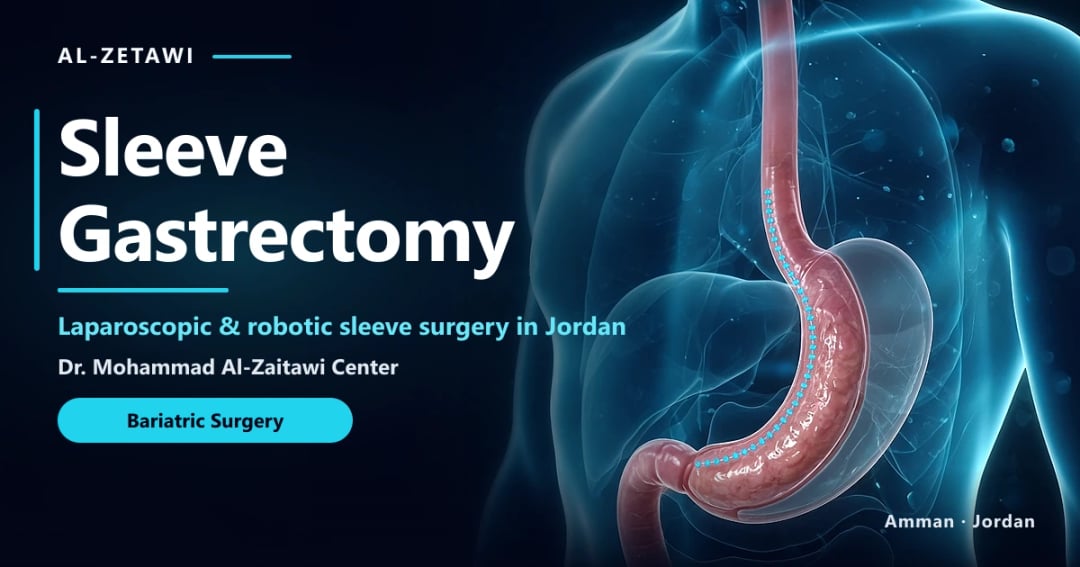
How Much Does Gastric Sleeve Surgery Cost Without Insurance?
If you are paying cash in the United States, self-pay quotes for a gastric sleeve in 2026 are often about $10,000 to $20,000. Some quotes fall outside that band, lower or higher, depending on the city and on what the page actually includes. That range describes US facilities. It is not an invoice from this practice, and it is not a national price list.
This center's published reference average for sleeve gastrectomy is about USD 2,500. The binding price is the written quote after your file is reviewed. The operation that is recommended, the private hospital in Amman, and the length of stay can change it. A reference average is a starting point for budgeting a sleeve. It becomes a personal figure only after someone has read your medicines, your reflux history, and any endoscopy you already have.
Those two numbers answer different questions. The US band is what cash patients are often shown at home. The Amman figure is what this center publishes for a sleeve before the records arrive. Neither number includes airfare. Neither number is a bypass price, and this page will not invent one. If an employer plan excluded bariatric surgery, paying cash at a US hospital does not create a benefit, and paying privately in Amman does not create one either. Surgery here is a private payment, not a US insurance claim.
The search usually starts after a benefits call. Someone said the operation is excluded, or the deductible made the insured path feel as large as cash. That is a financial fact. It does not choose the operation. A sleeve gastrectomy removes about 80 percent of the stomach and leaves the intestine in its normal path. If heartburn is already severe, the honest recommendation may be a bypass, and the sleeve advertisement you started with stops being the right product to price.
Why Do Self-Pay Gastric Sleeve Quotes Vary So Much?
Two US centers can both be honest and still print numbers that are thousands of dollars apart. One quote may be a surgeon's professional fee posted on a blog. Another may be a hospital package that includes the operating room, anesthesia, and one night. A third may be a chargemaster total that nobody actually pays until a self-pay discount is applied. Comparing the headlines without the line items is how people decide they found a bargain that was never a total.
Geography changes the facility side of a US bill more than it changes the anatomy of the operation. A downtown academic hospital and a specialty surgery center do not buy supplies, staff nights, or malpractice coverage on the same terms. Some centers publish a single cash price for patients who pay before the day of surgery. Others bill each department separately and call the sum self-pay. Both can land inside, or outside, the $10,000 to $20,000 band that shows up often in 2026. The band is a description of what people are quoted. It is not a ceiling and not a floor.
The other source of spread is scope. A quote that assumes a straightforward sleeve, a short stay, and tests done somewhere else will look cleaner than a quote that includes an endoscopy, a cardiology visit, and treatment if the stay is longer. Neither quote is lying if it says what it is. The patient gets misled only when the narrow quote is treated as the wide one. Ask, in writing, what would move the number. The answer you want is a list, not a reassurance that everything is included.
What a wide range does not mean
A higher US quote is not proof of a safer staple line, and a lower one is not proof of a shortcut. This page will not assign quality scores to American hospitals, and it will not invent complication rates to explain the spread. The useful move is to put two quotes side by side and mark every blank cell. Blank cells are where surprise bills live.
What Is Included in a Gastric Sleeve Surgery Cost?
A complete self-pay conversation names five kinds of work, even if some of them are billed by someone else. The surgeon plans and performs the operation. Anesthesia keeps you safe while it happens. The facility provides the room, the staplers, the nurses, and the bed afterward. Tests decide whether a sleeve is even the right operation. Follow-up is the vitamins, the labs, and the person who reads them after you are home. A headline that covers only the first of those is a surgeon fee, not a surgery cost.
In a bundled US package, several of those lines disappear into one number. That can be easier to budget, but only if the bundle states its edges. How many nights are inside? Is the endoscopy inside? If the surgeon recommends a bypass after seeing a hernia, does the bundle convert, or does the whole quote get rewritten? A bundle that cannot answer those questions is a slogan with a dollar sign.
On the Amman side, the same edges matter, and they matter more because you are adding a flight. The published reference average of about USD 2,500 is for sleeve gastrectomy. It is not a blended price for every bariatric operation, and it is not a promise that every file stays at the average. The cost and packages page is the public reference. The written quote after file review is the number you can put in a budget. Operation, hospital, and length of stay are the three reasons that written number can move.
- Surgeon and the operation that was actually recommended, named as a sleeve or as something else
- Anesthesia and the operating room, stated as included or as separate
- Hospital nights, with the number of nights written down
- Tests done in that city, listed one by one rather than called pre-op
- A sentence about problems that arise during that same admission
Does the Surgeon Fee Include the Hospital?
Often it does not. In American billing, the professional fee and the facility fee are different claims even when you are self-pay. The surgeon can quote a fee for the operation and still leave the hospital, the staplers, and the overnight nursing on a second bill. Patients discover this when they ask for a total and receive a professional fee that looked, on a webpage, like the whole event.
Anesthesia is frequently a third relationship. The anesthesiologist or the anesthesia group may not be employed by the surgeon and may not be employed by the hospital in a way that puts them inside the surgeon's quote. A flat anesthesia fee and an invoice that arrives two weeks later are both possible. You cannot infer which one you have from the fact that the center advertises cash prices. You have to ask whether anesthesia is inside the number you were given, and whether that inclusion survives if the operation takes longer than the schedule assumed.
A package can solve the three-bill problem by naming one payee and one total. It can also hide the problem by using the word package without defining it. When you compare a US surgeon-only fee with a hospital package, you are not comparing two prices for the same object. You are comparing a part with a whole. Add the missing parts before you decide which whole is larger.
The same distinction applies when you look at care in Amman. Ask whether the written quote is the surgical episode, not a clinic visit. The office where records are reviewed is not the operating room. The hospital is a private hospital in Amman, and it is named before you book. Until that name is on the quote, you do not yet have a facility fee, a package, or a plan. You have a conversation.
How Much Do Pre-Op Tests Add Before Surgery?
This page will not invent a dollar amount for endoscopy, blood work, or a heart clearance. Those prices depend on who orders them and whether you already had them this year. What matters for a self-pay budget is that they exist, that they are often outside the surgical headline, and that skipping them to protect a number can lead to the wrong operation.
An endoscopy is the clearest example. A sleeve does not reroute the intestine, and it can leave you with more heartburn if the esophagus was already irritated. If you have years of reflux, a known hiatal hernia, or Barrett's esophagus, a report from a camera in the stomach can change the recommendation from sleeve to bypass. That test may have been done in the United States already. If it has, send the report. Repeating it for the sake of a package is not a goal. Doing it because the records are silent about the esophagus is a different decision, made after the file is read, not guessed from a form.
Other evaluations show up because anesthesia has to be planned. A medicine list, a recent blood count, a kidney test, and an HbA1c if you have diabetes tell a clearer story than weight alone. Some people need a sleep study or a cardiology note because of their own history. Some people need a nutrition visit and a mental-health visit because a US insurer demanded them, even if that insurer later denied the claim. Bring those notes. They are part of the medical record even when they are no longer part of a US payment path.
Tests you already paid for
A denial letter does not erase the workup. If you completed supervised visits, labs, or an endoscopy for a US prior authorization, say so in the first message. The point of a file review is to use what is true, not to rebuild a packet so it looks new. Tell us what is missing instead of estimating a lab value you do not have.
Does an Extra Hospital Night Change the Price?
For a straightforward sleeve, the hospital stay is often one or two nights. That is a common pattern, not a promise that your admission will match it. Nausea, trouble drinking, blood sugar, blood pressure, or oxygen can keep a person longer. A bypass or a revision can be planned for a longer stay than a sleeve from the start. The quote should say how many nights it assumes, because the length of stay is one of the three things that can change the written figure.
Ask the question in a form that has a factual answer. Does the price include one night, two nights, or nights as medically needed during a defined window? If you stay an extra night, is that a new charge, and who tells you before it happens? A center that cannot describe its own rule is asking you to budget a mood. You do not need a scare story to justify the question. You need the rule because you are paying cash and you are also buying a plane ticket around the admission.
Many people who travel to Amman for this operation plan about a week in the city, not a weekend. The week covers tests if they were not done at home, the operation, the nights in hospital, and a review before a long flight. That week is not the same thing as the hospital bill. Hotel nights for you, after discharge, and for a companion are travel costs. They sit outside both the US self-pay band and the sleeve reference average. Fit-to-fly is an individual decision. A quote that assumes you will leave on a fixed morning is a travel assumption, not a medical one.
When you read a US package, apply the same night-count test. A one-night bundle and a two-night bundle are different products even if both are called gastric sleeve self-pay. If the cheaper quote is cheaper because it stops at lunchtime the next day, the comparison is not finished until you know where you would sleep if you are not ready to leave.
Who Pays If There Is a Complication in the Hospital?
Leak, bleeding, and blood clots are known problems after stomach surgery. This page will not attach a percentage to them, because inventing a rate is worse than leaving the rate to the papers your own surgeon discusses with you. The cost question is narrower. If one of those problems happens during the admission you already paid for, is the treatment inside the quote, or does a second bill start?
Ask it that way, of a US center and of any package abroad. Some self-pay agreements include re-operation or a longer stay during the same admission. Some include neither, and the cash patient learns the boundary only after a bad night. Get the boundary in the written quote. A sentence that says complications are extra, without saying which events and which days, is not yet a boundary. It is a warning that you should keep asking.
Care after you have flown home is a different contract. An emergency department in the United States can treat fever, vomiting that will not stop, a racing heart, calf swelling, or sudden shortness of breath. That visit is generally a US medical event, billed under whatever coverage you have for emergency care, which may be entirely different from a plan that excluded bariatric surgery. Do not assume a surgical package in another country pays for an American emergency department weeks later. Do not assume it does not, either, if a written policy says something specific. Read that policy. A forum summary of someone else's package is not your policy.
The practical preparation is a one-page summary you can hand to a nurse at home: operation name, date, hospital name, and how to reach the team. That page does not replace insurance. It stops the emergency department from guessing what was done. Build it before you travel, and keep it where a companion can open it if you feel too ill to explain.
What Does Gastric Sleeve Aftercare Cost After You Get Home?
The operation is one day. The eating pattern and the blood tests are the next year and the years after that. Vitamins, protein, and lab draws are real costs, and this page will not invent prices for them. What it will say is that they are rarely inside a surgical quote, in the United States or in a travel package, beyond a short supply to get you home. Budget them as a household cost, the way you would budget a long-term prescription.
Many programs use at least 60 grams of protein a day unless the written plan differs. That sentence is a common floor, not a personal prescription. Your plan may differ because of kidney disease, because you cannot tolerate a particular shake, or because the operation was not a sleeve. Do not copy a dose from a social media caption and do not add protein powders until the written plan says what you are supposed to eat. Liquid calories are the usual way people slide off the result they wanted. A protein shake that is actually a dessert is not the same object as the protein target.
Time off work is often the largest unlisted cost, and it depends on the job rather than on the stapler. Desk work is often reasonable in two to four weeks if you can sip, stand, and concentrate. Heavy lifting usually waits four to six weeks. A person who is paid only for shifts they work will feel those weeks differently from a person with sick leave. Ask your employer what documentation they need, and do not promise a return date that assumes the most optimistic night in hospital.
Blood tests after you land need a clinician in the United States who has agreed to order them. Iron, B12, vitamin D, and a blood count are the usual conversation after a sleeve, and they are watched even more closely after a bypass because the intestine was rerouted. The surgical quote does not hire that clinician. Call them before you buy tickets and ask whether they will follow labs for an operation done elsewhere. Emergency care is not the same as that agreement.
Is a High Deductible the Same as No Insurance?
No. A deductible is an amount you pay before a covered benefit starts sharing the bill. Self-pay, in the sense of this search, means you are paying a center that is not sending a claim for the operation. The $10,000 to $20,000 band describes quotes given to cash patients. It does not describe your deductible, your coinsurance, or the allowed amount on an in-network claim. Mixing those vocabularies makes every number look like a scam, including the accurate ones.
If your plan covers bariatric surgery, your US cost may be the deductible plus coinsurance, and it may be lower or higher than a cash quote at the same hospital. Contracted rates and cash rates are negotiated differently. Sometimes a hospital's cash package is simpler than running a prior authorization. Sometimes the insured path is cheaper once the deductible is already met from other care that year. The only person who can price your insured path is the plan and the US billing office, using your policy. A clinic in another country cannot see that accumulator.
If the plan excludes bariatric surgery, you do not have a deductible for this operation. You have an exclusion. Paying cash does not reopen the exclusion. Appealing an exclusion as if it were a missing form usually fails, because the contract never contained the benefit. That is the moment a private path, at home or in Amman, becomes the practical financial option. It is still not a medical approval. The plan's no and the surgeon's yes are different sentences.
Out-of-network benefits, when they exist, are a third category. They are not an invitation to file a foreign invoice and hope. Ask the plan, in writing, whether an operation outside the United States can be a covered bariatric claim. Expect the answer to be no. If someone on a phone says otherwise, keep the reference number and the date, and still wait for the written policy. This center bills privately. It does not submit US claims.
How Do You Compare a US Sleeve Price With Amman?
Put the quotes in one table you control, not in a screenshot of an advertisement. Use the same rows for a US self-pay offer and for the written figure from Amman. If a cell is blank, leave it blank until someone fills it. Empty cells are the comparison. A filled cell that says excluded is also useful. It tells you the cost did not vanish. It moved to you.
| Question | What to write down |
|---|---|
| Which operation? | Sleeve, bypass, or revision. Do not force them into one price. |
| Which hospital? | Named before you pay. The office is not the operating room. |
| How many nights? | A straightforward sleeve is often one or two nights. Longer stays can change the quote. |
| Which tests are inside? | Endoscopy, labs, heart clearance, nutrition, and mental-health notes, each marked in or out. |
| Problems during that admission | Ask whether treatment is inside the quoted episode. |
| Labs after you fly home | Name the US clinician who will order them. That person is not inside either surgical quote. |
| Currency and flights | The Amman reference is about USD 2,500 for a sleeve. Flights are separate. Convert on the day you decide. |
The US column will often start from a quote in the $10,000 to $20,000 range, with some offers outside it. The Amman column starts from the published sleeve reference and ends at the written quote after file review. If the recommended operation is not a sleeve, the sleeve reference is the wrong row. Leave that row and wait for the quote that matches the operation. Do not average a sleeve price and a guess.
Send the US quote with the records if you want the comparison to be line by line. A photograph of a webpage total, with no list of inclusions, cannot be compared with anything. A PDF that names nights, anesthesia, and the facility can. The medical file still comes first. A cheap match on paper is irrelevant if the esophagus says the operation should change.
When Is a Sleeve Quote the Wrong Operation to Buy?
A sleeve price is the wrong product when a sleeve is the wrong operation. The common reason is reflux. Significant heartburn, esophagitis, a large hiatal hernia, or Barrett's esophagus often points toward a Roux-en-Y bypass, which makes a small pouch and two intestinal connections. Food skips most of the stomach and the duodenum. Reflux is usually treated more reliably that way than by a sleeve. Choosing the sleeve because it was the number you already budgeted, then living on high-dose acid medicine, is not a savings. It is a mismatch.
Five-year trials are the reason this is a medical point and not a sales point. In SM-BOSS, excess BMI loss at five years averaged 61.1 percent after sleeve and 68.3 percent after bypass. That difference was not statistically significant. Reflux symptoms were a clearer difference, in favor of bypass. SLEEVEPASS, another five-year randomized comparison, also found large weight loss after both operations. Harvard Health's patient summary puts typical loss near 25 percent of body weight after a sleeve and near 33 percent after a bypass. Those figures describe groups. They are not a reason to buy the operation with the larger average if your esophagus cannot live with it.
Diabetes can push the same direction without setting a price. The STAMPEDE trial, published in the New England Journal of Medicine, found an HbA1c of 6 percent or less at five years in 5 percent of the intensive medical group, 29 percent after bypass, and 23 percent after sleeve. Sleeve still helped many people. Long duration of diabetes and insulin use still change the individual odds, and this page will not turn that trial into a personal forecast. It will say that a diabetes history belongs in the file before anyone locks a sleeve package.
Previous stomach surgery is the other moment a sleeve advertisement expires. A revision is not priced on this page. If you already had a band, a sleeve, or a bypass, say so in the first message, including the year and any operative note you have. The written quote, if an operation is appropriate, follows that history. It does not follow the search term you typed.
What Should a Written Bariatric Quote List?
A quote you can budget has nouns in it. It names the operation. It names the hospital. It names the number of nights it includes. It lists the tests done in that city. It says what is not included, especially flights, hotel, vitamins after the first days, and care in the United States after you land. It says that the figure can change if the operation changes or the stay changes. A quote that is only a number in a chat window fails this test even if the number is attractive.
The hospital name has to appear before you pay a deposit that is supposed to hold a bed. You should not be asked to wire money to secure a theater in a building nobody has identified. The clinic where the file is reviewed is the office. The operation, when it goes ahead, is in a private hospital in Amman that is named before booking. Those are different buildings. A quote that blurs them is not ready to accept money.
Currency should be explicit. The published sleeve reference is in US dollars, about 2,500, as an average rather than as your invoice. Your bank's conversion on the day you pay is the conversion that matters, not a screenshot from last season. If a quote is in another currency, ask for the dollar figure in the same document so you are not doing the arithmetic from memory at the airport.
Keep the quote with the medical recommendation, not instead of it. The recommendation should say why a sleeve, or why not, in language you can show your doctor at home. Reflux, diabetes medicines, smoking, and prior operations belong in that paragraph. A price without that paragraph is a product code. You are not buying a product code. You are deciding whether someone should staple your stomach.
What Travel Costs Sit Outside the Surgery Price?
Flights are not inside a US self-pay sleeve quote, and they are not inside the Amman sleeve reference. A companion who can walk with you and handle bags is worth more than a nicer room, because you will not be lifting a suitcase in the first weeks. Heavy lifting usually waits four to six weeks, which includes the luggage you would normally throw into an overhead bin. Price the companion's ticket as part of the trip if you are not traveling with someone who already lives at the destination.
Build the return so a delay does not wreck the budget. Fit-to-fly is individual. Many international patients stay about a week, and that week is a planning range, not a clearance. A nonrefundable departure the morning after discharge assumes you are drinking, walking, and not vomiting. If you are not, the safe move is to move the ticket. Fare rules that punish a change are a reason to buy a different fare, not a reason to board while dehydrated. The international patients page describes the shape of the trip. The surgeon confirms the dates after seeing you.
Food for a companion, local transport, and a hotel after discharge are ordinary travel costs. They vary by season and by how close you stay to the hospital, and this page will not invent them. What it will say is that the cheapest flight paired with the most rigid schedule is a common way to make a straightforward recovery feel like a crisis. Leave slack. The medical priority in the days after a sleeve is fluids, walking, and a stable abdomen, not a connection in a third city.
Insurance for the trip, if you buy it, has to be read for an elective-surgery exclusion. Some policies cover a trip interruption and exclude the operation itself, or the reverse. Buy nothing on the assumption that travel insurance is a substitute for a US health plan that excluded bariatric surgery. It is a different contract. If the exclusion is there, the premium is not buying the thing you are worried about.
How Should You Send a US Quote for a Real Comparison?
Send the quote and the medical file together. The quote tells us what you were offered at home. The file tells us whether that offer was for the operation you actually need. A useful packet has height and a recent measured weight, not the lowest number from a hopeful morning. It has every medicine and dose, including injections for diabetes or weight, blood pressure pills, reflux medicine, blood thinners, and anti-inflammatory painkillers. It has prior abdominal operations, smoking, and alcohol. It has reflux symptoms in ordinary language: night cough, food coming back, or a diagnosis you were given.
Add documents you already paid for. The last HbA1c if you have diabetes, a blood count, a kidney test, an endoscopy report, a sleep-study summary, and any denial letter belong in the same folder. A denial letter is not a medical opinion about weight loss. It is a map of what the insurer already made you collect. That map can spare repeat testing. A gym contract and a screenshot of a calorie app do not replace those records.
Say what you want compared. If the US document is a surgeon fee only, write that in the first line so nobody treats it as a hospital total. If it is a bundle, say how many nights it names. If you do not know, say you do not know. Guessing that anesthesia was included, because the font looked official, wastes a round of messages and can make two honest quotes look dishonest.
Use the BMI calculator so the number in your message matches the height and weight you send. BMI starts the conversation. It does not finish it. A person with a lower BMI and insulin-treated diabetes can be a clearer surgical candidate, under the 2022 ASMBS and IFSO statement, than a person with a higher BMI who still smokes. The quote is written after that medical reading, not after the calculator alone.
Where Do You Go in Amman, and What Happens Next?
Dr. Mohammad Al-Zaitawi reviews the file before any date is set. If the records support an operation, the team confirms the hospital and the written figure before you buy tickets. If they support a different operation than the one you priced, you will hear that before you hear a celebration of the sleeve average. If they do not support an operation yet, because of smoking, an unsafe anesthesia issue, or missing information about the esophagus, the next step is the missing piece, not a deposit.
The clinic is in Amman, Shmeisani, Hanin Bin Ishaq Street, Al-Husseini Medical Complex 1, opposite Specialty Hospital. The operation, when it is appropriate, is done in a private hospital in Amman. That hospital is named before you book. It is not the same building as the clinic, and the clinic is not the operating room. You can reach the team by phone or WhatsApp at +962 7 9570 2800, use the clinic map, or request a case review.
Bring the US quote if you have one, and bring the questions this page walked through: what is included, how many nights, what happens during that admission if a problem occurs, and who orders labs after you land. Those questions are how an adult compares a cash bill at home with a private episode abroad without pretending the two bills are the same product. The published sleeve reference remains about USD 2,500. Your written quote is the number that applies to you, and only after the file has been read.
Until that quote is in your hands, keep the US band and the Amman average in separate columns. One describes self-pay quotes Americans are often shown in 2026, with some quotes outside $10,000 to $20,000. The other describes a reference for sleeve gastrectomy at this center. The flight, the companion, the time off work, and the clinician at home are the rest of the true cost. Add them once, on paper, and then decide.
Questions patients ask
These answers are general. Your file, your medicines, and your endoscopy can change them.
Does the U.S. range include my deductible?
Is USD 2,500 the final sleeve price?
What should a quote list?
Can I get a sleeve price from a photo?
Medical note from Dr. Mohammad Al-Zaitawi
The cheaper line on a webpage is not the operation. Reflux, diabetes medicines, and a hospital named before you pay decide more than the first number you see.
Scientific references and guidance
These sources support the medical information on this page. If you want this guidance applied to your own case, send us your details for an initial review.
Reviewed by Dr. Mohammad Al-Zaitawi
Prefer a quicker route? Try the free case review or see bariatric surgery costs in Jordan.