
When Can You Fly and Return to Work After a Gastric Sleeve?
There is no fixed day when every patient can fly after a gastric sleeve; fit-to-fly is an individual medical decision your surgeon makes after examining you. Many people with a desk job return to work after about 2 to 4 weeks, while heavy lifting usually waits about 4 to 6 weeks.
Those two answers shape almost every travel plan. If you live in the United States and are considering surgery in Amman, Jordan, you are really planning three overlapping timelines: the hospital stay, the days in the city before a long flight home, and the weeks of recovery once you are back. Each has its own rules, and confusing them is how people end up booking a return flight that does not match how their body is actually healing.
For a straightforward sleeve, the hospital stay is often one to two nights. Many international patients plan about a week in Amman in total, which leaves time for any tests that were not done at home, the operation, the hospital stay, and a review before the flight. A bypass or a revision operation can need a longer stay, so the plan changes if the recommended operation changes.
This guide is written for American adults working with Dr. Mohammad Al-Zaitawi. It walks through the day of surgery, the hospital nights, the fit-to-fly review, how to reduce blood clot risk on a long flight, when desk and physical work usually resume, when driving is reasonable, and the warning signs that mean you need care quickly, wherever you are. It deliberately avoids promising dates, because the safest recovery plan is one built around your own progress rather than a calendar printed in advance.
What Happens on the Day of Gastric Sleeve Surgery?
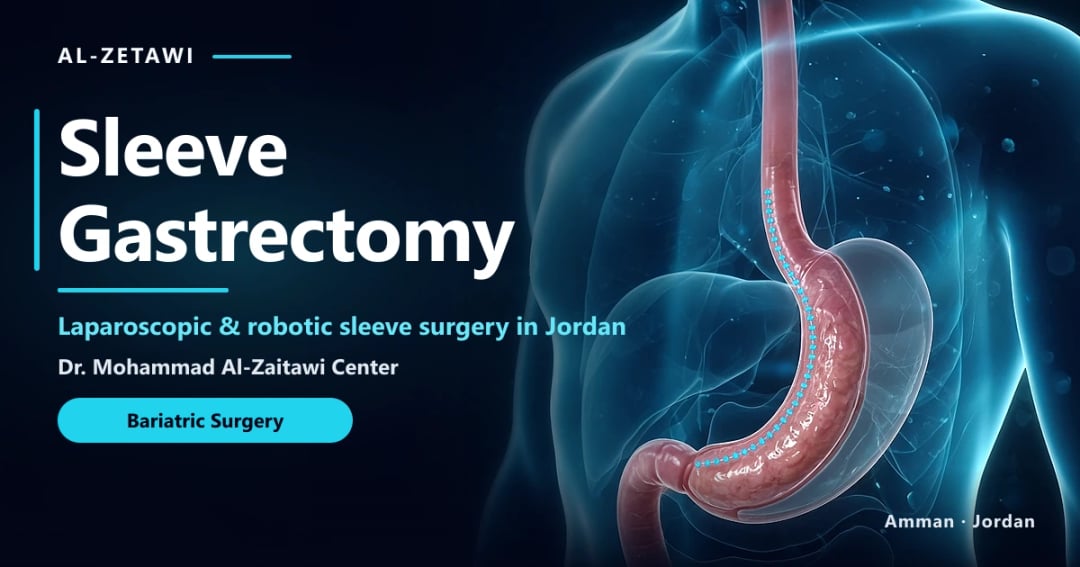
A sleeve gastrectomy is usually done laparoscopically, through several small incisions, under general anesthesia. About 80 percent of the stomach is removed and the remainder is shaped into a narrow tube. The intestine is not rerouted. You wake up in a recovery area, then move to a hospital room once your breathing, blood pressure, and pain are under control.
One of the most important parts of recovery begins that same day: walking. Nurses will help you stand and walk, usually within hours of surgery. Walking early improves breathing, helps the bowels wake up, and reduces the risk of blood clots in the legs. It can feel like the last thing you want to do, but short, frequent walks in the hallway matter more than any single long effort.
What you may feel
Soreness at the incisions, a sense of fullness or pressure in the upper abdomen, and shoulder discomfort from the gas used during laparoscopy are common. Nausea can occur and is treated with medicine. You will start with small sips of clear liquid when the team says it is safe, not on your own schedule.
Preparing a companion
If someone is traveling with you, the day of surgery is when they are most useful. They can keep your phone charged, track when medicines were given, help you walk, and write down instructions from the nurses and the surgeon. Ask them to keep a single notebook or phone note with the date, time, and content of every instruction. That record becomes very valuable during the review before your flight and again when you are back in the United States describing what happened to your own doctor.
How Long Do You Stay in the Hospital After a Gastric Sleeve?
For a straightforward sleeve, a stay of one to two nights is common. That reflects how most uncomplicated recoveries go, not a guarantee. The team decides on discharge based on what they observe, and staying longer when something is not quite right is a sign of good care, not of failure.
What the team checks before discharge
- You can drink enough fluid in small sips to stay hydrated without IV support
- Nausea and pain are controlled with medicines you can take by mouth
- You are walking on your own
- Heart rate, temperature, blood pressure, and breathing are within expected ranges
- Blood sugar is stable, which matters especially if you have diabetes
If any of those is not yet true, an extra night may be advised. Common reasons include nausea that keeps you from drinking, a heart rate that stays higher than the team would like, or blood sugar that needs adjustment. Each is checked carefully because a fast heart rate or fever after stomach surgery can be an early clue to a problem that needs attention.
Different operations, different stays
A gastric bypass, which creates a small egg-sized pouch and two intestinal joins, or a revision of a previous operation can need a longer hospital stay than a sleeve. If your file review leads to a recommendation for one of those, the travel plan should be rebuilt around that operation rather than stretched from a sleeve itinerary. The private hospital in Amman where surgery takes place is named before you book, so you know exactly where you will be admitted and can share that information with family at home.
How Long Should You Stay in Amman After Gastric Sleeve Surgery?
Many international patients plan about a week in Amman for a sleeve. That week is not a hospital stay. It typically includes arrival and any pre-operative tests not completed in the United States, the operation, one to two hospital nights for a straightforward sleeve, and several days in a hotel or apartment before a review and the flight home.
The days after discharge are not idle. You are walking regularly, sipping fluids on a schedule, taking prescribed medicines, and getting used to the first diet stage. Having a few days close to the surgical team means that if something feels wrong, you can be seen by the people who performed the operation instead of explaining it to strangers in another country.
Building flexibility into bookings
Because fit-to-fly is decided individually, avoid locking yourself into a return ticket that cannot be changed. Look for fares that allow date changes, and check the hotel's policy on extending a stay. If you are traveling with a companion, confirm that they can also stay longer if needed. Make sure your employer knows that the return date is an estimate.
Choosing where to stay
Pick accommodation where you can walk indoors or in a safe area, where there is an elevator if you are not on the ground floor, and where you can keep cold drinks and protein shakes. A refrigerator and an easy route to the review appointment matter more than a view. The international patients page explains how arrivals, transfers, and accommodation are usually coordinated, and what entry requirements you should check with official sources for your passport before booking.
Who Decides When You Are Fit to Fly After Bariatric Surgery?
Your surgical team decides, after examining you. Fit-to-fly is an individual medical decision, never a fixed number of days after surgery. Websites and forum posts that name a single day for everyone are describing an average, a package itinerary, or one person's experience, none of which can replace an examination.
The review usually looks at how you are drinking, whether nausea is controlled, how your incisions look, your heart rate and temperature, whether your pain is managed with oral medicines, and whether you are walking comfortably. The team will also consider your health history, including previous blood clots, heart or lung disease, and diabetes, because those conditions affect how risky a long flight might be.
Questions to ask at the review
- Are you comfortable with me taking a long-haul flight now, and if not, what would need to change?
- Do I need any medicine to reduce clot risk during travel, and how do I take it?
- Should I wear compression stockings, and if so, what type?
- Which medicines should I carry in my hand luggage?
- What should I do if a warning symptom appears during a layover?
Ask for a short written summary of the operation, the hospital, the date, your discharge medicines, and the follow-up plan. Keep it in your carry-on, not your checked bag. If you feel unwell on the trip or after arriving home, that page helps any doctor understand what was done without guessing. If the team asks you to wait a little longer before flying, follow that advice even if it means changing a ticket. A rebooking fee is small compared with a complication over the ocean.
Is It Safe to Take a Long Flight After Gastric Sleeve Surgery?
A long flight after abdominal surgery raises the risk of blood clots in the legs, called deep vein thrombosis, which can travel to the lungs. That risk is the main reason fit-to-fly is taken seriously after bariatric surgery. Most people who are cleared to fly travel home safely, but they do it with a plan rather than by sitting still for many hours.
Flights from Amman to the United States are long and usually involve at least one connection. Sitting in a cramped seat, dehydration from dry cabin air, and reduced movement all slow blood flow in the legs. Recent surgery adds to that.
Steps that reduce risk on the flight
- Walk the aisle regularly whenever the seatbelt sign allows, and stand during layovers instead of sitting the entire time
- Flex your ankles, point and pull your toes, and tighten your calf muscles while seated
- Choose an aisle seat if you can, so getting up is easy and does not depend on neighbors
- Sip fluids steadily within the fluid rules your team gave you
- Use compression stockings only if your surgeon prescribed them, and wear them the way you were shown
- Take any prescribed anti-clot medicine exactly as directed
Avoid alcohol on the flight. It dehydrates you, can affect you more strongly after surgery, and is not part of the early diet. Sleeping pills that make you sleep through hours without moving are also worth discussing with the team before you take them.
Know the warning signs before you board: swelling, pain, or warmth in one calf, or sudden shortness of breath or chest pain. Tell the cabin crew immediately if any of these appear during the flight. After landing, seek urgent care rather than waiting to see if it passes.
How Do You Eat and Drink on the Flight Home After a Sleeve?
In the first days after a sleeve, your stomach holds only small amounts, and staying hydrated is one of the most important parts of recovery. Air travel makes that harder because cabin air is dry, meal service follows the airline's schedule rather than yours, and there are long periods when you may be seated with the beverage cart out of reach.
Plan your fluids like a medicine schedule. Small, frequent sips across the flight are better than large amounts at once, which the sleeve may not tolerate. Bring an empty water bottle through security and ask the crew to fill it. If your plan allows sugar-free electrolyte drinks or clear protein drinks at this stage, pack powder sticks you can mix on board.
What not to rely on
Airline meals will not match the diet stage you are on. In the early weeks, you are usually still on liquids, so the tray of rice, bread, and dessert is not for you. Carbonated drinks can cause bloating and discomfort and are generally discouraged early on. Sweet juices and sodas add sugar your plan does not want.
Packing for the journey
- Protein shake powder or ready-to-drink shakes that meet carry-on liquid rules once past security
- Prescribed medicines, including any anti-nausea and acid-reducing tablets, in your hand luggage
- A small notebook or phone timer to remind you to sip and to walk
- Loose, comfortable clothing that does not press on the incisions
If nausea or vomiting stops you from drinking during the trip, do not wait until you are home to address it. Persistent vomiting can lead to dehydration quickly after a sleeve. Tell the crew, and seek medical care at the next opportunity.
What Does the Gastric Sleeve Recovery Timeline Look Like?
Recovery after a sleeve happens in overlapping phases rather than on exact dates. The table below summarizes the general pattern described in this guide. Your surgeon may adjust any part of it based on your operation and progress, and your written instructions take priority over any general summary.
| Phase | What usually happens | Key caution |
|---|---|---|
| Day of surgery | Wake up, start walking with help, small sips when allowed | Do not drink on your own schedule; follow nursing instructions |
| Hospital stay | Often one to two nights for a straightforward sleeve | Bypass or revision can need longer |
| Days in Amman | Many international patients plan about a week in total | Fit-to-fly is decided individually |
| Flight home | Long-haul travel once cleared | Walk the aisle, hydrate within fluid rules, compression only if prescribed |
| Desk work | Often around 2 to 4 weeks | Fatigue and the diet stage still matter |
| Heavy lifting | Usually around 4 to 6 weeks | Ask before returning to physical jobs |
| Driving | When off sedating pain medicine and able to react safely | Never while taking sedating pain medicine |
| Diet stages | Liquids, purees, soft, then regular over several weeks | Follow your written plan |
Notice that the table describes ranges and conditions, not countdowns. A person who feels strong and is drinking well may resume desk work toward the earlier end. A person who had nausea, needed an extra hospital night, or has a long commute may need the later end. Neither path is better. The aim is to return to activities when your body is ready for them rather than when a calendar says so.
Energy is the part of recovery people underestimate most. Because you are eating very little in the first weeks, fatigue is common even when the incisions feel fine.
When Can You Go Back to a Desk Job After a Gastric Sleeve?
Many people with office, remote, or other desk-based jobs go back to work about 2 to 4 weeks after a sleeve. The range reflects real differences between people. Some feel ready sooner, especially those working from home with flexible hours. Others need the full span or a little more, especially if they had a slower start in the hospital or are commuting.
What makes the first days back harder than expected
The incisions are often the least of the challenge. Low energy from a very small food intake, the need to sip fluids constantly, and frequent bathroom trips can make an eight-hour day tiring. Long meetings make it hard to keep up with fluids. Working lunches and office snacks do not fit the diet stage you are likely still on. Concentration can dip on days when hydration falls behind.
Ways to ease back in
- Ask whether you can start with shorter days or a mix of remote and in-office work
- Keep a water bottle and a protein shake at your desk and set reminders to sip
- Plan short walks every hour or so, which also help with circulation
- Schedule demanding tasks for the time of day when your energy is best
- Tell a trusted colleague or manager that you are recovering from surgery so absences for breaks are not misread
You do not have to share medical details with coworkers. A simple explanation that you are recovering from a planned procedure and need regular breaks is usually enough. If your job involves a lot of driving between sites, the driving guidance in this guide applies too. Anyone who returns and finds they are exhausted, dizzy, or unable to keep fluids up should step back and contact their doctor rather than pushing through.
When Can You Lift Heavy Things or Return to a Physical Job?
Heavy lifting usually waits about 4 to 6 weeks after a sleeve. The abdominal wall needs time to heal where the instruments passed through, and straining too soon can increase discomfort and the risk of a hernia at an incision site. Your surgeon will tell you what counts as heavy for you and when it is safe to begin.
For people whose jobs involve lifting, carrying, climbing ladders, or long hours on their feet, that timeline matters for planning time off. Warehouse workers, nurses, construction trades, movers, mechanics, and parents of young children who need to be carried all face the same question: when can the body handle the load safely?
Gradual return beats a sudden jump
Walking is encouraged from the day of surgery and should increase steadily. Light household tasks follow. Lifting a full laundry basket, a toddler, a suitcase, or heavy grocery bags is the kind of effort to ask about specifically. When you are cleared, increase the load gradually rather than returning to your full workload on the first day.
Talking with your employer
If you have a physically demanding job, ask before surgery whether light or modified duties are available for the weeks between returning to work and being cleared for heavy lifting. A written note from your surgeon describing temporary restrictions can help. Do not rely on lifting a suitcase in Amman or at the airport. Ask a companion, use a luggage cart, request assistance from the airline, or pack light enough that you never need to hoist a heavy bag into an overhead bin.
Core exercises, weight training, and contact sports usually come later than everyday lifting. Ask the team when each is appropriate rather than assuming they share one date.
When Can You Drive After Gastric Sleeve Surgery?
Do not drive while taking sedating pain medicine. That rule matters more than any number of days. Opioid pain relievers and some other medicines slow reaction time and judgment, which makes driving unsafe for you and for others on the road, even if you feel alert.
Beyond medicine, think about the physical demands of driving. You need to be able to turn your body to check blind spots, press the brake hard in an emergency, and wear a seatbelt comfortably across a healing abdomen. If any of those cause sharp pain or make you hesitate, you are not ready yet.
A self-check before getting behind the wheel
- You have stopped all sedating pain medicine, not just reduced it
- You can twist to look over your shoulder without significant pain
- You can make an emergency stop in a parked car without flinching
- The seatbelt does not press painfully on the incisions
- You are hydrated and not lightheaded, which is common in the early weeks
Dehydration and low food intake can cause dizziness, especially when standing up quickly or after long periods without fluids. Bring water on any drive and do not set out on a long trip until you are confident you can stay hydrated along the way.
In Amman, you will not need to drive; arrange transfers or rides for your appointments and the trip to the airport. When you are back in the United States, ask someone to drive you home from the airport. A long flight followed by a drive while tired, recently operated on, and possibly still on pain medicine is a combination worth avoiding entirely.
How Does the Post-Op Diet Affect Your Recovery and Energy?
The diet after a sleeve moves through stages over several weeks: liquids first, then purees, then soft foods, and finally regular textures. Each stage protects the healing staple line and lets the stomach adapt. Your written plan from the surgical team sets the exact timing, and you should follow it if it differs from anything you read online.
The diet stages explain much of how you feel during recovery. In the liquid weeks, you are taking in far less energy than before, so tiredness is normal. As you progress to purees and soft foods, energy usually improves. Many people find they feel more like themselves around the time they reach soft or regular textures.
Protein and fluids as recovery tools
Many programs use a goal of at least 60 grams of protein a day unless the written plan specifies otherwise. Protein supports wound healing and helps protect muscle while weight falls quickly. Hitting the goal early on usually requires protein shakes, sipped slowly throughout the day.
Fluids are just as important. Dehydration is one of the most common reasons people feel unwell after a sleeve. Because the stomach is small, many programs ask you to keep drinking separate from meals, often with about 30 minutes between finishing fluids and eating and again after eating before you drink. That pattern helps food stay in the sleeve longer and reduces discomfort.
Returning to work or travel during the liquid or puree stage means planning ahead: packing shakes, knowing where you can refrigerate them, and keeping a bottle within reach. The guide to eating after a gastric sleeve describes each stage, and the page on vitamins after weight-loss surgery explains the supplements that start during recovery and continue long term.
What Symptoms After a Gastric Sleeve Need Emergency Care?
Most recoveries are uneventful, but some symptoms need prompt attention because they can signal a leak, bleeding, infection, a blood clot, or severe dehydration. Knowing them in advance is part of planning a trip for surgery, because the first days back in the United States are when you are farthest from your surgical team.
Seek urgent medical care for
- Fever or chills
- A fast heart rate that persists, even at rest
- Abdominal pain that is getting worse rather than better
- Vomiting that will not stop, or being unable to keep fluids down
- Swelling, pain, or warmth in one calf
- Sudden shortness of breath or chest pain
While you are still in Amman, contact the surgical team immediately if any of these appear. If you are already home, go to urgent care or your local emergency department. Do not wait for a reply to a message before seeking care when symptoms are severe or getting worse. Call 911 for sudden breathing difficulty, chest pain, or fainting.
Helping the US doctors help you
Bring the written operative and discharge summary with you. Tell the staff the date of surgery, the name of the operation, and the hospital where it was done. Mention any long flight in the past few days, because that changes how doctors think about clot risk. Afterward, let the surgical team know what happened and what treatment you received, so your records stay complete.
Less urgent problems, such as mild constipation, trouble reaching your protein goal, or questions about medicines, can usually be handled through regular follow-up channels. If you are unsure whether a symptom is urgent, err on the side of being checked.
How Much Time Off Work Should You Plan for Surgery Abroad?
Plan time off in two blocks: the trip itself and the recovery at home. For a sleeve, many international patients plan about a week in Amman. After returning, many desk workers need more time before working again, since a return to desk work often comes about 2 to 4 weeks after surgery. Physical jobs can need longer because heavy lifting usually waits about 4 to 6 weeks.
Start the conversation with your employer or human resources department early. Ask what leave options exist for a planned medical procedure and what documentation they need. Leave rules depend on your employer, your state, and your role, so get the answer from the people who administer them rather than relying on general advice. If paperwork requires a physician's signature, ask the surgical team in advance what they can provide and in what format.
A planning checklist
- Confirm the leave you are eligible for and any forms with deadlines
- Ask whether a phased return, remote work, or light duty is possible
- Arrange coverage for your responsibilities, including caregiving, for the whole recovery window
- Book flexible flights and accommodation in case fit-to-fly takes longer
- Schedule a visit with your US primary care doctor shortly after returning
- Stock your kitchen with protein shakes, broths, and the foods for your next diet stage before you leave
Self-employed people and small business owners often feel pressure to return sooner. Building a buffer into client deadlines protects your recovery. It is easier to return early from a generous plan than to explain a sudden extension because you are not ready.
Who Follows Your Recovery After You Fly Home?
Follow-up continues long after the flight. The surgical team in Amman remains involved remotely, and a doctor near home handles in-person needs. Arranging both before you travel makes recovery smoother and keeps problems from falling between two health systems.
Ask your primary care doctor before the trip whether they are willing to see you after surgery, review medicines, and order blood tests. Bring them the written summary when you return. People with diabetes or high blood pressure especially need an early visit, because medicine doses often have to come down as eating changes and weight falls. That adjustment should not wait months.
What remote follow-up looks like
The surgical team will usually ask for updates at set intervals: how you are eating and drinking, your weight, any symptoms, and lab results once you have them. Organized updates make remote follow-up effective. A short message with your weight trend, typical daily intake, and specific questions gets a far more useful answer than a vague note sent weeks after a problem started.
Long-term care
Vitamins and minerals continue for life after bariatric surgery, and periodic labs check that levels stay healthy. Weight loss continues for many months, and the habits you build in the first year shape the long-term result. If you notice reflux, difficulty swallowing, or weight rising steadily later on, contact the team or your local doctor. The guide on weight regain after a gastric sleeve explains what to do if weight starts creeping back. Keep every document from the trip in one place, on paper and on your phone, so any future doctor can see exactly what was done.
How Do You Plan a Gastric Sleeve Trip to Amman Around Recovery?
Start with a file review rather than a flight. Send your height and measured weight, medical conditions, full medicine list, any history of blood clots, prior abdominal surgeries, reflux symptoms, and any recent tests or endoscopy reports. Dr. Mohammad Al-Zaitawi reviews the file and advises whether a sleeve is appropriate, whether another operation such as a bypass may fit better, and what that means for hospital nights and time in Amman. You can check your BMI first with the BMI calculator.
The clinic is in Amman, Shmeisani, Hanin Bin Ishaq Street, Al-Husseini Medical Complex 1, opposite Specialty Hospital. Consultations take place at the clinic, which is not the operating room. Surgery is performed in a private hospital in Amman, named before you book. Reach the team on WhatsApp at +962 7 9570 2800, and use the clinic map to find the office.
For budgeting, US self-pay sleeve quotes in 2026 are often about $10,000 to $20,000; that is a US figure, not this center's fee. This center's published reference average for a sleeve is about USD 2,500. The binding price is the written quote issued after file review, and the operation, the hospital, and the length of stay can change it. Flights, accommodation, and time off are separate costs. The cost and packages page describes the reference in detail, and the sleeve gastrectomy page explains the operation itself.
When you are ready, request a consultation and mention your preferred travel window, your job type, and whether a companion will come. Those details help the team suggest a realistic schedule with room for an individual fit-to-fly decision.
Questions patients ask
These answers are general. Your file, your medicines, and your endoscopy can change them.
Can I fly on day three?
What do I do on the airplane?
When can I drive?
Is a bypass the same timeline?
Medical note from Dr. Mohammad Al-Zaitawi
I clear a flight from the person in front of me, not from a package that promised day seven.
Scientific references and guidance
These sources support the medical information on this page. If you want this guidance applied to your own case, send us your details for an initial review.
Reviewed by Dr. Mohammad Al-Zaitawi
Prefer a quicker route? Try the free case review or see bariatric surgery costs in Jordan.