
Is Ozempic or Wegovy Better Than a Gastric Sleeve?
They are different treatments, not rival brands of the same thing. In published summaries, GLP-1 medicines such as semaglutide and tirzepatide often lead to about 15 to 20 percent loss of body weight while the injections continue. Harvard Health's patient summary puts typical loss near 25 percent of body weight after a gastric sleeve and near 33 percent after a gastric bypass. A UCLA patient page has cited about 10 to 15 percent for Wegovy and 15 to 21 percent for Zepbound. Those figures are averages from summaries and a patient page. They are not a promise, and they are not a reason to declare a winner for every adult.
The pen does not change your anatomy. You inject it on a schedule, and the effect described in those summaries is the effect while you take it. A sleeve removes about 80 percent of the stomach and leaves the intestine in place. The change stays when you are not collecting a refill. You can still regain weight if liquid calories and grazing take over, and you still need vitamins. Surgery is one operation. The medicine is an ongoing treatment. Comparing them as if one were a coupon for the other is how people feel misled later.
The right question is whether you can stay on the injection, whether reflux or longstanding diabetes needs an operation, and what you will do when a coupon, a supply, or a side effect ends the pen. A medicine you cannot obtain next year is not a long-term plan. An operation you cannot follow with vitamins and labs is not a long-term plan either. Dr. Mohammad Al-Zaitawi sees adults who have tried one path, both, or neither. The file decides. A trend does not.
If you are searching because a US plan excluded surgery and covered a pen, or the reverse, say so. Coverage is not the same as the result in the summaries. An operation in Amman is private pay, not a US insurance claim. The published reference average for sleeve gastrectomy is about USD 2,500, and the binding price is the written quote after file review. That price is not a drug price, and this page will not invent one for the pen.
Is Ozempic the Same Medicine as Wegovy?
Both contain semaglutide. Ozempic is labeled for type 2 diabetes. Wegovy is labeled for weight management. The dose you are prescribed and the insurance rule that pays for it often differ even though the molecule is the same. Do not swap pens, click-count a diabetes pen up to a weight dose, or borrow someone else's box. The prescriber who knows your pancreas history, your gallbladder history, and your other medicines is the person who changes a dose.
People use the names interchangeably in conversation and then get confused at the pharmacy. If your chart says Ozempic, write Ozempic in the message to a surgeon, plus the milligram dose and the day of the week you inject. If it says Wegovy, write Wegovy. A screenshot of the box is better than a family member's memory of the brand. Diabetes doses and weight-management doses are not interchangeable just because a forum said the drug is the drug.
Insurance often follows the label. A plan may cover semaglutide for diabetes and refuse it for weight, or cover a weight indication only after a paperwork path that has nothing to do with bariatric surgery rules. That split does not tell you whether a sleeve is medically reasonable. It tells you which benefit, if any, is buying the pen this month. Many commercial plans still use BMI 40, or 35 with a comorbidity, when the question is surgery, and they can exclude surgery entirely. The pen's prior authorization is a different checklist. Do not assume that finishing one checklist finishes the other.
Bring the start date. A person who has been on semaglutide for three weeks is not in the same position as a person who has been on it for a year and has plateaued. The surgical file needs the duration, the dose, the side effects you actually had, and whether the medicine was for diabetes, for weight, or for both. Those facts change the plan for holding the drug around an operation. They do not change it through guesswork in a chat.
Where Do Mounjaro and Zepbound Fit Beside a Sleeve?
Mounjaro and Zepbound contain tirzepatide, which acts on GLP-1 and on GIP. They are not semaglutide, and they are not a sleeve. Mounjaro is the diabetes label many people meet first. Zepbound is a weight-management label. As with Ozempic and Wegovy, you do not swap them because the pens look related. A UCLA patient page has cited about 15 to 21 percent of body weight for Zepbound, and about 10 to 15 percent for Wegovy. That is a citation of a patient page, not a claim that UCLA proved a personal result for you.
Harvard's broader summary, about 15 to 20 percent while these medicines are taken, is the sentence to keep next to the sleeve average of about 25 percent. The ranges overlap in real clinics because people are not trials. Some adults on tirzepatide lose more than some adults after a sleeve. Some cannot tolerate the medicine long enough to find out. The comparison that helps is the one that includes what continues: a refill and a tolerable side-effect profile on one side, vitamins and a changed stomach on the other.
If you switched from semaglutide to tirzepatide because the first drug stalled or caused nausea, say so. The sequence is part of the history. A surgeon who hears only the current pen will misunderstand how much of your weight change was the earlier drug, how much was the current one, and how much was a diet you started on the same day. Net weight from your heaviest year is not the same as weight change on this dose.
None of these pens reroutes the intestine or removes the outer curve of the stomach. None of them treats a hiatal hernia. If regurgitation is the problem that dominates your week, the pen-versus-sleeve debate is the wrong debate. The comparison that matters is sleeve versus bypass, because reflux usually does better after a bypass. A stronger injection does not become an endoscopy.
What Does a GLP-1 Injection Change in the Body?
These medicines mimic gut hormones that increase fullness and, for some of them, insulin response. Appetite falls for many people. The stomach empties more slowly, which is one reason nausea shows up, especially while the dose is rising. You are still digesting with the stomach and intestine you were born with. Stop the injection and the hormone signal you were adding goes away. That is the structural difference from an operation, and it is why summaries describe the weight change while the medicine is taken.
Side effects are a counseling topic for the prescriber, not a footnote to skip because the scale moved. Nausea is common enough that people plan meals around it. Gallbladder problems and a pancreas risk are part of what that prescriber should mention. This page will not attach percentages to those events. Muscle loss is a reason resistance work and protein get discussed while you are losing weight quickly on a pen, just as they are discussed after surgery. Many programs use at least 60 grams of protein a day unless the written plan differs. That sentence is a floor programs use. It is not a tirzepatide dose and it is not permission to invent a higher target.
Diabetes control can improve on these drugs, which is why Ozempic and Mounjaro exist as diabetes labels. Improvement in glucose is not the same measurement as percent of body weight. You can lose less weight than a friend and still have a meaningful change in HbA1c, or the reverse. When you write to a surgeon, send both numbers if you have them: weight before the pen, weight now, and the last HbA1c. One number without the other hides whether the pen is doing the job you care about.
The injection does not require a hospital stay, a staple line, or a flight. That is a real advantage if the medicine is available, tolerated, and matched to your BMI and your diseases. It is not an advantage if you are using it to postpone a reflux problem that needs an operation, or if access disappears every other month and the weight returns in the gaps. Availability is a medical fact. Treat it as one.
What Does a Gastric Sleeve Change That a Pen Does Not?
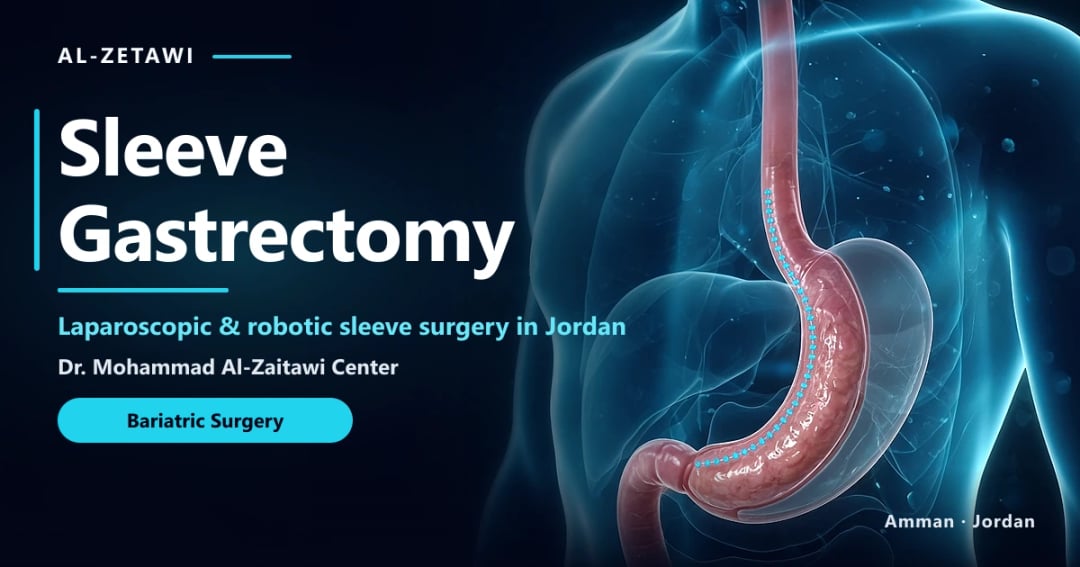
A sleeve staples off most of the stomach and removes it. The remaining tube fills quickly. Ghrelin, produced largely in the removed portion, falls. Food still meets the duodenum in the normal order. There is no refill to forget and no coupon to expire. There is also no return to the old stomach if you dislike the result. The removed part does not go back. Vitamins and a way of eating are the maintenance, for life, in place of a pen.
The restriction is mechanical and hormonal, and it can be outflanked. Milkshakes, alcohol, and constant small snacks do not need a large stomach. People who do well after a sleeve are usually the ones who keep protein first, keep liquids off the plate, and keep walking. The operation starts a change in hunger and portions. It does not police a pantry. If your main worry about a pen is that you might stop it, the parallel worry about a sleeve is that you might graze through it. Both worries are legitimate. Only one of them matches your actual habits.
A sleeve can worsen heartburn. A pen does not rebuild the valve at the bottom of the esophagus, but it also does not remove the stomach in a way that favors reflux. If you already have esophagitis, a large hiatal hernia, or Barrett's esophagus, choosing a sleeve because you are tired of injections can be the wrong trade. The alternative operation is a bypass, with a small pouch and two intestinal connections, not a higher dose of the pen and not a sleeve chosen for convenience. SM-BOSS found reflux better after bypass than after sleeve at five years, while excess BMI loss was 61.1 percent after sleeve and 68.3 percent after bypass, a gap that was not statistically significant.
Hospital time is part of what the pen does not ask of you. A straightforward sleeve is often one or two nights. Many international patients stay about a week. Desk work is often two to four weeks. Heavy lifting usually waits four to six weeks. Fit-to-fly is individual. Those costs of time are real even when the surgical reference price looks smaller than a year of injections. They belong in the comparison. They do not belong as a scare tactic, and they are not a reason to skip surgery that your file actually needs.
How Much Weight Do Pens, a Sleeve, and a Bypass Take Off?
Keep the labels attached to the numbers. Harvard's summary is about percent of body weight, and it describes GLP-1 medicines while they are taken. The UCLA figures are what a patient page has cited for two specific brands, not a laboratory verdict. Surgical figures from that same Harvard summary are typical program averages, not the excess-BMI figures used in SM-BOSS. If you put 61 percent and 25 percent in one sentence without labels, you will think a sleeve contradicts itself. It does not. The measures differ.
| Treatment | What published summaries report | What has to continue |
|---|---|---|
| Semaglutide or tirzepatide | Often about 15 to 20 percent of body weight while taken. A UCLA patient page has cited about 10 to 15 percent for Wegovy and 15 to 21 percent for Zepbound. | The injection, access, and a dose you can tolerate |
| Gastric sleeve | About 25 percent of body weight in Harvard's summary | Protein, vitamins, labs, and an eating pattern the tube cannot enforce alone |
| Gastric bypass | About 33 percent of body weight in that same summary | Stricter vitamin labs and ulcer precautions at the joins |
SLEEVEPASS, a five-year randomized trial, also found large weight loss after both sleeve and bypass. This page does not invent that trial's percentages. The direction is enough: surgery's averages in these summaries sit above the medicine averages, the ranges overlap in ordinary life, and bypass is not magically twice a sleeve. STAMPEDE's diabetes targets, discussed later, are a different scoreboard from the scale.
Your starting weight changes the pounds even when the percent stays an average. Twenty-five percent of 260 pounds is 65 pounds. Fifteen percent of 260 pounds is 39 pounds. Those products illustrate the summaries. They are not owed to you. Diabetes drugs, whether you can walk, and whether the treatment is still in your life a year from now move the result more than a calculator does. No page on this site assigns a personal pound target from a message.
What Happens When You Stop Ozempic or Wegovy?
The weight change described in the summaries is tied to taking the medicine. When semaglutide or tirzepatide is stopped, appetite commonly returns, and weight commonly returns with it. This page will not invent a regain percentage or name a trial result it is not allowed to quote. The practical statement is the one patients already discover: the pen works while it is in the plan, and stopping is not a neutral event. Cost, shortages, nausea, and insurers that cover only a few months are ordinary reasons people stop. None of those reasons freezes the weight where it was on the last injection day.
A sleeve does not have a refill, which is its advantage and its responsibility. The anatomy stays, and so do the vitamins. Regain can still happen after a sleeve, usually more slowly and usually when grazing, liquid calories, or a stretched eating pattern takes over. Some regain of a small slice is common after the second year and is not, by itself, a failed operation. A return of most of the lost weight is a review. The pen and the sleeve fail differently. The pen fails when access stops. The sleeve fails when the habits that liquids allow take back the day, or when a medical problem such as severe reflux needs a second look.
If you are stopping because of a shortage, write down the last dose and the last date before you ask whether surgery is the replacement. A gap of two weeks is not the same as a decision you have already lived with for a year. If you are stopping because the medicine made you miserable, that is also relevant. An operation has its own miseries, concentrated around the surgery and then expressed as rules about food. Trading a nausea you hate for a staple line you have not imagined clearly is not automatically wise. It might still be right. The file has to say why.
Do not stop a diabetes-labeled drug on your own because a surgical date might be coming. Glucose can rise fast. The prescriber at home gives the instruction, including what to do in the weeks around an operation if an operation is offered. A travel plan is not a diabetes plan.
Why Do People Stop a Weight-Loss Injection That Is Working?
Access is the reason that surprises people who only read the trial summaries. The medicine can be working in the body and still be gone from the pharmacy, or priced in a way the household will not carry, or tied to a coupon that ends. This page will not invent a monthly price. Prices move, coupons move, and plans change their formularies. What you can write down is your own price, your own denial, and whether you have a realistic way to stay on the drug for years. Years are the horizon that matches a surgical decision. A good month is not.
Side effects are the second reason. Nausea, vomiting, constipation, and a fullness that makes protein difficult can push people off a dose that looked correct on paper. Sometimes a slower titration fixes it. Sometimes it does not. If you never reached a stable dose, you do not yet know what the medicine can do for you, and you also do not have to force a dose that makes you unable to eat protein. Tell the prescriber. Tell the surgeon the same fact so nobody assumes you failed a drug you mostly stored in a refrigerator.
Coverage rules are the third reason. Some plans cover the diabetes label and stop covering it if the HbA1c improves, which is a bitter kind of success. Some cover a weight label only while BMI stays above a line, then create a problem about maintenance. Some never covered it, and the entire course was cash. A plan can also cover the pen and exclude bariatric surgery, or the reverse. Read both benefits. They are not one obesity policy. They are two contracts that happen to live in the same booklet.
A fourth reason is simple fatigue with injections, prior authorizations, and the feeling of renting a result. That feeling is understandable. It is not, by itself, an indication for surgery. The 2022 ASMBS and IFSO statement still sets the clinical frame: surgery is recommended above a BMI of 35, and it should be considered from 30 to 34.9 when metabolic disease is present. Being tired of a pen does not move those lines. It does explain why a person who already meets them might stop waiting.
Can You Use a GLP-1 Medicine Before Gastric Sleeve Surgery?
Sometimes, yes. Some people use a medicine to lose enough weight to make anesthesia safer, then have surgery. Some use it because diabetes treatment was needed anyway and the surgical decision came later. Starting with a medicine does not burn a bridge. It also does not obligate you to have an operation if the medicine solves the problem you actually had and you can stay on it.
The safety piece is specific. Very high BMI can make the airway, the breathing at night, and the liver harder to manage. A period on a medicine, if you tolerate it, can be part of preparing for an operation rather than an alternative to it. That is a plan made with the anesthesiologist's concerns in view, not a social-media challenge to drop a certain number of pounds before a flight. Send the weight before the pen and the weight now so the trajectory is visible. A short, steep drop changes glycogen and water as well as fat. The team needs the dates.
Holding the medicine around surgery is a medical instruction. Delayed stomach emptying from a GLP-1 drug is relevant to anesthesia. You do not invent the hold interval from a blog, and you do not keep injecting on the morning of surgery because you paid for the pen. If an operation is offered, you will be told what to do with the last dose. Until then, do not change diabetes medicine in anticipation. Bring the prescribing clinician into the plan so instructions do not collide.
A preoperative medicine is not a substitute for smoking cessation, and it is not a substitute for telling the truth about reflux. Losing 20 pounds on a pen and still smoking leaves the staple-line problem untouched. Losing 20 pounds and still waking up with food in your throat leaves the sleeve-versus-bypass problem untouched. Use the pen for what it can do. Do not ask it to erase facts it does not touch.
Can You Take Ozempic or Wegovy After a Gastric Sleeve?
Sometimes, if weight returns or diabetes remains and the medicine is safe for you. Needing a medicine after surgery is not a personal failure, and it does not erase the operation. The sleeve may have done exactly what the averages describe, and biology plus habits may still push weight upward years later. Adding a GLP-1 drug in that setting is a medical decision. It belongs to the clinician who knows your gallbladder, your pancreas history, your nutrition labs, and your current intake. It is not automatic, and it is not forbidden.
Timing matters. The first months after a sleeve are about fluids, protein, and healing, not about stacking every weight tool on the same week. Many programs use at least 60 grams of protein a day unless the written plan differs. A medicine that worsens nausea during that period can work against healing. Later, if the curve has clearly reversed and the eating pattern is already being addressed, the conversation is different. Bring labs. Iron and B12 problems should be treated as themselves, not disguised as a reason to start an injection.
A bypass has the same possibility and a few extra cautions, because ulcer risk, dumping, and stricter vitamin losses already shape that life. Do not transfer a friend's post-sleeve prescription onto a bypass, or the reverse. Do not buy the medicine from an unofficial channel because a clinic abroad is not your US prescriber. This center does not manage your long-term pen. Your clinician at home does, if they agree it is appropriate.
Tell a future surgical reviewer if you are already back on the drug. The weight they see includes the drug. Hiding it makes the result of the sleeve look larger or smaller than it is, and it makes anesthesia planning wrong if another operation is ever considered. The combination is allowed to be part of an honest chart.
Do Diabetes Trials of Surgery Still Matter If You Are on a GLP-1?
They matter, and they do not answer the pen you are holding. STAMPEDE followed people for five years and compared intensive medical treatment with sleeve and with bypass. An HbA1c of 6 percent or less occurred in 5 percent of the medical group, 29 percent after bypass, and 23 percent after sleeve. That medical group was not treated with today's semaglutide or tirzepatide. Quoting STAMPEDE as if it defeated Wegovy is a misuse. Ignoring it because newer drugs exist is also a misuse. The trial shows what surgery did against intensive medical care available for that study. It does not show what surgery does against a drug you might stop next year.
Read it this way. If your diabetes is the disease you care about most, surgery has a long record of moving HbA1c, and the record is stronger than the old medical arm in that paper. A modern pen can also move HbA1c, while you take it, and it may be the right treatment if you can stay on it and your BMI and your esophagus do not argue for an operation. If you cannot stay on it, STAMPEDE is one reason not to pretend that willpower after the pen is the same as the medical arm of a trial. You would be on neither the pen nor the operation.
Sleeve and bypass were not identical in that trial. Bypass reached the HbA1c target more often. Sleeve still did so far more often than the medical group. Reflux can override that ranking. A person with Barrett's esophagus should not pick a sleeve because 23 is close to 29. A person with a quiet esophagus and a strong wish to avoid rerouting should not be pushed into a bypass only because the diabetes column was higher. Duration of insulin use remains the detail that moves a individual file more than a single percentage point.
Send the diabetes timeline beside the pen timeline. Year of diagnosis, year insulin started if it did, year the injection started, and the last HbA1c give a reviewer a story. A single current weight does not. The story is how you avoid choosing an operation to imitate a drug, or a drug to avoid an operation your esophagus needs.
Who Should Not Choose a Sleeve Just Because the Pen Feels Slow?
People with a BMI in the high 20s and no metabolic disease are in a weak position to ask for a sleeve, even if a pen feels slow or a wedding is dated. The 2022 statement does not open surgery there for the general population. It recommends surgery above a BMI of 35, considers it from 30 to 34.9 when metabolic disease is present, and uses lower thresholds for Asian populations, with clinical obesity recognized above 25 and surgery considered above 27.5. A slow pen does not rewrite those lines. Vanity timelines are not an indication.
People who still smoke should not chase a date to escape a stalled injection. Smoking raises healing problems at a staple line. The pen did not require you to stop. The operation does. If the real barrier is cigarettes, the next step is stopping, not switching tools. Alcohol misuse belongs in the same pause. A bypass changes alcohol absorption. A sleeve is not a reason to drink. Neither operation treats dependence.
People who want an operation so they can avoid building any eating structure will be disappointed by both the pen and the sleeve. The pen reduces appetite while it is present. The sleeve reduces the room for a meal. Neither one prevents sipping calories all afternoon. If that is the pattern, name it before you buy a flight. A mental-health evaluation is not an insult. An active eating disorder or an unstable severe psychiatric illness is treated before an operation date. Many stable adults with depression or anxiety have surgery safely. Instability is the issue, not the diagnosis label alone.
People with severe reflux who have decided the answer must be a sleeve, because a sleeve is what they searched, should slow down. The pen is not fixing the esophagus, and the sleeve may worsen the symptom that already ruins sleep. The fitting operation may be a bypass. If that is unwelcome news, it is still the news. Compare operations in the sleeve versus bypass guide before you compare prices.
How Do You Compare Side Effects With Surgical Risk Without Fake Numbers?
You compare the kind of risk, not a made-up percentage. A GLP-1 medicine can cause nausea and other problems your prescriber should list, and those problems usually stop when the drug stops, which is also when the weight effect described in summaries tends to stop. A sleeve concentrates risk around an operation: bleeding, a leak, a clot, a reaction to anesthesia, and later reflux or a stricture. A bypass adds joins, ulcer risk if you smoke or take anti-inflammatory pills, and internal hernia risk because the intestine was moved. This page will not invent rates for any of those. Your own surgeon should discuss the risks that apply to your heart, lungs, and stomach.
Reversibility is the cleanest distinction. Stop the pen and the anatomy is the one you started with. You may be heavier again. You are not reconstructed. A sleeve does not offer that exit. A bypass does not offer it in any casual way. People who value an exit more than they value a durable anatomical change should stay with the medicine if they can get it. People who cannot get it, and who meet clinical criteria, should not pretend the pen's reversibility helps them during a shortage.
Time is the other distinction. The pen asks for a tolerable week, repeated. Surgery asks for one or two nights in hospital for a straightforward sleeve, a recovery measured in weeks, and a vitamin habit measured in years. Desk work is often two to four weeks. Heavy lifting usually waits four to six weeks. A bad week on a pen can be abandoned. A bad week after surgery has to be gotten through, with help, fluids, and a low threshold for calling if pain, fever, or vomiting is wrong. Those are different kinds of courage. Neither is morally superior.
Use a sheet of paper with two columns rather than a video that declares a winner. Column one: can I obtain this medicine, at a dose I tolerate, for as long as I want the effect? Column two: do I meet the BMI and disease frame, is my esophagus suitable for a sleeve, can I stop smoking, and will someone at home order labs? If column one is yes, you may not need column two this year. If column one is no and column two is yes, the surgical conversation is the honest one. If both are no, the next step is not a flight.
What Should You Tell a Surgeon If You Are on Ozempic or Wegovy?
Tell the drug name, the dose, the start date, and the date of the last injection. Tell whether it was prescribed for diabetes, for weight, or for both. Tell what you weighed when you started and what you weigh now, measured, not remembered from a good week. Tell the side effects that made you skip doses. Tell every other medicine, including insulin, reflux drugs, blood thinners, and anti-inflammatory painkillers. A pen does not replace that list. It joins it.
- Last HbA1c and the year diabetes was diagnosed, if diabetes is part of the story
- Reflux symptoms in plain language, plus any endoscopy
- Smoking and alcohol, in amounts
- Whether a US plan excluded surgery, covered the pen, or denied both
- The name of the prescriber who would give instructions if a dose had to be held
Say what you want. Some people want an opinion on whether they can stay with the medicine. Some people already know the medicine is ending and want to know if surgery fits. Some people want both, sequenced. Those are different requests. A reviewer can answer the one you actually make. A reviewer cannot answer a request you disguised as a price question.
Use the BMI calculator on the weight you have today and, if you can, think about the weight before the pen as a separate fact you will type in the message. Today's BMI decides the frame you are in now. The earlier BMI explains how much the pen already did. Hiding the earlier number makes a surgical result look easier to promise than it is. Hiding today's number makes anesthesia planning worse. Send both.
If the medicine is for diabetes, ask the prescriber what a pause would mean before you ask a surgeon for dates. Bring that answer with you. The surgical team should not be the first people to notice that nobody is watching your glucose. Coordination is the requirement that keeps a modern drug and an operation from becoming two plans that never met.
Where Do You Ask Whether a Pen or a Sleeve Fits You?
Ask with the records, not with a brand preference. Dr. Mohammad Al-Zaitawi can tell you whether a sleeve is a reasonable operation beside the medicine you are on. He cannot tell you that a US insurer will keep paying for the pen, and he will not tell you to stop a diabetes drug because a trip might be convenient. If reflux dominates, the answer may be a bypass discussion rather than a sleeve-versus-pen discussion. If BMI and disease do not meet the 2022 frame, the answer may be to stay with non-surgical care.
The clinic is in Amman, Shmeisani, Hanin Bin Ishaq Street, Al-Husseini Medical Complex 1, opposite Specialty Hospital. Surgery, when it is appropriate, is in a private hospital in Amman named before you book. The clinic is not the operating room. Phone or WhatsApp +962 7 9570 2800. The clinic map shows the office. Request a case review and include the pen's name, dose, and last date. The sleeve gastrectomy page describes the operation. The cost and packages page publishes the sleeve reference average of about USD 2,500. Your price is the written quote after the file is read. Flights and the medicine you already pay for are separate.
A straightforward sleeve is often one or two nights. Many international patients stay about a week. Fit-to-fly is decided individually, not by a package that assumed you would be done with both the pen and the airport on a fixed morning. Whoever prescribes your injection has to agree with any hold. Whoever orders your labs at home has to know an operation happened. Those two clinicians are part of the plan if surgery is the path you take.
Leave with the comparison in one breath. Medicines in these summaries often take off about 15 to 20 percent of body weight while you take them. A sleeve average in Harvard's summary is about 25 percent, and a bypass average is about 33 percent. A UCLA patient page has cited about 10 to 15 percent for Wegovy and 15 to 21 percent for Zepbound. The pen ends when the pen stops. The sleeve stays, with rules. The one that fits is the one you can still be doing, safely, in two years.
Questions patients ask
These answers are general. Your file, your medicines, and your endoscopy can change them.
Is Ozempic the same as Wegovy?
Can I take a GLP-1 after a sleeve?
Do medicines replace surgery for diabetes?
Who should not chase a sleeve because of a trend?
Medical note from Dr. Mohammad Al-Zaitawi
A medicine you cannot obtain in a year is not a long-term plan. An operation you cannot follow with vitamins is not a long-term plan either.
Scientific references and guidance
These sources support the medical information on this page. If you want this guidance applied to your own case, send us your details for an initial review.
Reviewed by Dr. Mohammad Al-Zaitawi
Prefer a quicker route? Try the free case review or see bariatric surgery costs in Jordan.