
Introduction
What is a re-sleeve gastrectomy?
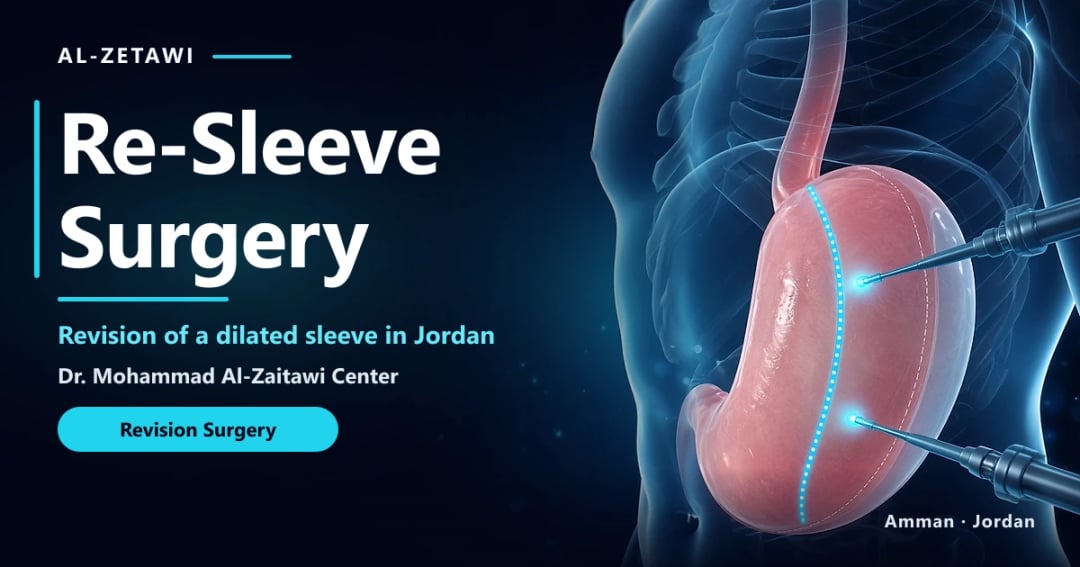
A re-sleeve gastrectomy, also called a redo sleeve or revisional sleeve gastrectomy, is an operation that reshapes a sleeve stomach that has become too large after a previous sleeve gastrectomy. The surgeon removes the excess stomach tissue, usually a dilated upper portion or a retained fundus, and recreates a narrow, uniform tube. The aim is to restore the restriction and the early fullness that the original sleeve provided, so that the patient can once again eat smaller portions and feel satisfied.
Sleeve gastrectomy is the most commonly performed bariatric operation in the world. It is effective, relatively simple compared with bypass procedures and preserves the normal passage of food through the digestive tract. Yet over the years, a proportion of patients notice that they can eat larger portions, that hunger has returned and that weight is creeping back. In some of these patients, imaging shows that the sleeve itself has changed shape or was never as narrow as intended. For this specific group, a re-sleeve can be an effective, focused solution.
This guide explains everything patients need to know about re-sleeve surgery: why sleeves dilate, how to tell whether your sleeve is really enlarged, who is a good candidate and who is not, how re-sleeve compares with other revision options, how the operation is performed, what recovery looks like, what the scientific evidence shows, and what it costs in Jordan. It is written with the experience of Dr. Mohammad Al-Zaitawi, a bariatric surgeon in Amman with more than 15 years of experience in sleeve gastrectomy and revisional bariatric surgery, including re-sleeve operations.
Key facts at a glance
| Question | Short answer |
|---|---|
| What is it? | Reshaping a dilated sleeve into a narrow tube again |
| Main indication | Weight regain or insufficient weight loss with a proven enlarged sleeve or retained fundus |
| Not suitable for | Patients with significant reflux, large hiatal hernia or Barrett's esophagus |
| Approach | Laparoscopic or robotic |
| Hospital stay | Usually 1 to 3 days |
| Key to success | Accurate diagnosis, careful technique and long-term follow-up |
| Surgeon in Amman | Dr. Mohammad Al-Zaitawi, 15+ years in sleeve and revision surgery |
Re-sleeve is one member of a wider family of revision bariatric surgery options. Choosing it over other pathways, such as conversion to gastric bypass, depends on the shape of your stomach, the presence or absence of reflux, your weight history and your overall health. The sections below walk you through that decision step by step.
Why a Sleeve Can Dilate
Primary dilation: the sleeve was never narrow enough
In some patients, the problem dates back to the original operation. If part of the upper stomach, called the fundus, was left behind near the angle of His, or if the sleeve was created over a wide calibration tube or away from the lesser curvature, the stomach may have been larger than intended from the start. The fundus is the most expandable part of the stomach and also produces much of the hunger hormone ghrelin, so a retained fundus can both enlarge capacity and blunt the reduction in appetite. This is often called primary dilation or incomplete sleeve.
Secondary dilation: the sleeve stretched over time
In other patients, the sleeve was well formed but gradually stretched over years. The stomach is a muscular organ designed to accommodate food, and repeated overfilling, especially in the first years after surgery, can contribute to progressive enlargement. Secondary dilation is typically seen in the upper part of the sleeve and may form a pouch-like shape. Its exact causes are still debated, and not all experts agree how often true stretching occurs, which is why objective measurement matters so much before deciding on a re-sleeve.
Factors that may contribute
- Retained fundus or a wide upper sleeve after the first operation
- Use of a large calibration tube or stapling far from the lesser curvature
- Incomplete mobilization of the back wall of the stomach during the original surgery
- Regular overeating, large meals or drinking with meals that repeatedly stretch the sleeve
- High-calorie liquids and soft foods that pass easily and do not create fullness
- A hiatal hernia that allows part of the stomach to slide into the chest
Dilation is only one cause of weight regain
It is important to understand that a dilated sleeve is not the only reason patients regain weight after sleeve gastrectomy, and often it is not the main reason. Hormonal adaptation, reduced metabolism, eating behaviors such as grazing, emotional eating, lack of physical activity, certain medications and the natural tendency of the body to defend a higher weight all play a role. Systematic reviews show that weight regain after sleeve gastrectomy becomes more common with longer follow-up, but the reported rates vary widely depending on the definition used.
This is why re-sleeve should never be offered on the basis of weight regain alone. The decision requires proof that the sleeve is anatomically enlarged and a realistic assessment of the other factors involved. When dilation is confirmed and the patient is otherwise a good candidate, re-sleeve directly addresses the mechanical cause of the problem.
| Type | What it means | Typical finding |
|---|---|---|
| Primary dilation | The sleeve was larger than intended from the start | Retained fundus near the angle of His |
| Secondary dilation | A good sleeve stretched over the years | Enlarged upper sleeve or neo-fundus |
| Hiatal hernia | Part of the stomach moved into the chest | Upper sleeve above the diaphragm, often with reflux |
| Normal sleeve with regain | Anatomy is fine, regain has other causes | Normal shape and volume on imaging |
Is a Re-Sleeve Right for You?
Good candidates for re-sleeve
International guidance from the American Society for Metabolic and Bariatric Surgery (ASMBS) and the International Federation for the Surgery of Obesity and Metabolic Disorders (IFSO) supports revisional surgery when there is a documented reason and the expected benefit outweighs the higher risk of reoperation. For re-sleeve specifically, the best candidates usually share these features:
- A previous sleeve gastrectomy with an objectively enlarged sleeve or retained fundus on imaging
- Significant weight regain or insufficient weight loss together with obesity-related health problems
- Little or no reflux, with no esophagitis or Barrett's esophagus on endoscopy
- No large hiatal hernia, or a small one that can be repaired during the operation
- Good nutritional status and no serious medical contraindication to surgery
- Commitment to dietary changes, supplements and long-term follow-up
- Non-smokers, or patients who have stopped smoking well before surgery
When re-sleeve is not the right choice
Re-sleeve narrows the stomach again and increases the pressure inside it. For this reason, it can worsen reflux, and it is generally avoided in patients whose main problem is gastroesophageal reflux disease. Large randomized trials such as SLEEVEPASS and SM-BOSS have shown that reflux is more common after sleeve gastrectomy than after gastric bypass, and studies have reported Barrett's esophagus in some patients years after a sleeve. In these patients, conversion to Roux-en-Y gastric bypass is usually the better solution.
- Moderate or severe reflux, esophagitis or Barrett's esophagus
- A normal sleeve size, where regain has non-anatomical causes
- Very high BMI or uncontrolled type 2 diabetes, where a more metabolic operation may be more effective
- Active binge eating disorder or untreated depression
- Severe nutritional deficiencies that have not been corrected
- Patients who are not ready to commit to follow-up
A decision built on evidence, not on the number on the scale
Dr. Mohammad Al-Zaitawi has followed one clear principle over more than 15 years of practice: the operation must match the problem. A re-sleeve can be excellent for a patient with a clearly enlarged sleeve and no reflux, and inappropriate for a patient with regain driven by eating patterns or with severe heartburn. An honest consultation that explains why re-sleeve is or is not recommended is part of safe care.
Diagnosis and Evaluation
Proving that the sleeve is enlarged
The central question before any re-sleeve is simple: is the sleeve really dilated, and where? Several complementary tests answer it. No single test is perfect, so surgeons usually combine them to build a complete picture of the anatomy.
- Barium swallow or upper gastrointestinal contrast study, which shows the shape of the sleeve, a retained fundus, a pouch in the upper sleeve or a narrowing lower down
- CT scan with three-dimensional gastric volumetry, which measures the sleeve volume objectively and allows comparison with typical post-sleeve volumes
- Upper endoscopy, which looks for esophagitis, Barrett's esophagus, ulcers, bile, hiatal hernia and the general shape of the sleeve
- Esophageal pH monitoring and manometry when reflux symptoms or swallowing problems are present
- Review of the original operative report to learn the calibration tube size, where stapling started and whether the fundus was fully removed
Medical and nutritional assessment
Revision surgery is safer and more successful when the patient is in the best possible condition. The work-up therefore also includes:
- Blood tests: complete blood count, iron studies, vitamin B12, folate, vitamin D, calcium, albumin, liver and kidney function, HbA1c and thyroid function
- Detailed weight history: starting weight, lowest weight after the first sleeve and current weight
- Dietary assessment: meal size, eating speed, grazing, liquid calories and protein intake
- Psychological assessment to identify emotional eating, binge eating and support needs
- Review of medications, especially those that promote weight gain
- Assessment of heart, lung and sleep apnea status for anesthesia safety
Interpreting the results
| Finding | What it suggests | Usual direction |
|---|---|---|
| Clear fundus or upper pouch, no reflux | Anatomical cause of regain | Re-sleeve can be considered |
| Enlarged sleeve with reflux or esophagitis | Re-sleeve may worsen reflux | Conversion to Roux-en-Y bypass preferred |
| Normal sleeve shape and volume | Regain is not mechanical | Nutrition, behavior and medication first |
| Hiatal hernia | Upper stomach in the chest | Hernia repair, choice of procedure depends on reflux |
| Narrowing or twist of the sleeve | Obstruction rather than dilation | Endoscopic dilation or bypass, not re-sleeve |
International patients can send their contrast study, CT scan, endoscopy report and previous operative notes before traveling. Dr. Mohammad Al-Zaitawi's center reviews the file in advance so the plan is clear before arrival in Amman.
Re-Sleeve vs Other Options
Comparing the main pathways after a failed sleeve
Patients with regain after sleeve gastrectomy have several options. Re-sleeve is attractive because it keeps the same type of anatomy and avoids the lifelong malabsorption risks of bypass procedures. However, it is not always the most effective choice, and the alternatives deserve a clear comparison.
| Option | How it works | Best suited for | Main limitations |
|---|---|---|---|
| Re-sleeve | Removes excess stomach and narrows the sleeve again | Proven dilation or retained fundus, no reflux | May worsen reflux; additional weight loss can be modest over time |
| Conversion to Roux-en-Y bypass | Small pouch connected to the small intestine | Regain with reflux, esophagitis or Barrett's | More complex, lifelong supplements, risk of ulcers |
| Conversion to one-anastomosis bypass | Long pouch with a single intestinal connection | Regain without reflux, need for stronger effect | Risk of bile reflux and deficiencies |
| SADI-S or SASI | Adds an intestinal bypass to the existing sleeve | High BMI, major regain, type 2 diabetes | Malabsorption, strict follow-up |
| Anti-obesity medication | GLP-1 and related drugs reduce appetite | Regain with normal anatomy, or as an addition to surgery | Ongoing treatment, cost, side effects |
| Endoscopic sleeve revision | Endoscopic sutures narrow the sleeve | Selected patients wanting a less invasive option | More modest and possibly less durable results |
Why re-sleeve remains valuable
- It preserves the normal passage of food through the duodenum, so absorption of iron, calcium and vitamins is less affected than after bypass
- It is technically less complex than a conversion to bypass in most cases
- It removes the fundus, which is a major source of the hunger hormone ghrelin
- Recovery is usually similar to the first sleeve
- It keeps future options open, including conversion to bypass if needed later
When to choose something else
If reflux is a major problem, a Roux-en-Y gastric bypass is usually the better choice. If you need substantial additional weight loss or have poorly controlled diabetes, a more metabolic operation such as one-anastomosis gastric bypass or SASI may achieve more. If the sleeve is normal in size, a structured medical and behavioral program is the right first step. Dr. Mohammad Al-Zaitawi explains these trade-offs clearly in consultation, so each patient chooses with full information.
The Re-Sleeve Operation
Laparoscopic and robotic approach
Re-sleeve is performed with minimally invasive surgery through small incisions. Dr. Mohammad Al-Zaitawi performs re-sleeve laparoscopically and robotically, choosing the approach after assessing each patient. Robotic surgery provides a stable three-dimensional view and wristed instruments that help with precise dissection in scar tissue and suturing near the hiatus, while laparoscopy remains a proven and effective technique in experienced hands. Dr. Al-Zaitawi was the first surgeon to perform robotic sleeve gastrectomy in Jordan — Robotic Sleeve Gastrectomy (Lap. Assisted).
Step-by-step overview
- General anesthesia, careful positioning and measures to prevent blood clots
- Placement of small ports and inspection of the abdomen
- Careful release of adhesions between the sleeve, liver, spleen and surrounding tissue
- Full mobilization of the upper sleeve and the retained fundus, including the back wall of the stomach
- Inspection of the hiatus and repair of any hiatal hernia found (cruroplasty)
- Placement of a calibration tube along the lesser curvature to guide the new sleeve width
- Stapling to remove the excess stomach, taking care not to narrow the angle of the stomach or create a twist
- Reinforcement of the staple line when appropriate and careful control of bleeding
- Leak testing with air or dye before removing the excess stomach through one of the incisions
Technical challenges specific to re-sleeve
A re-sleeve is not simply a repeat of the first operation. The tissue around the previous staple line is often thicker and scarred, adhesions can make planes difficult to identify, and the blood supply may have changed. Stapling across or next to an old staple line requires careful choice of staple height and technique. These factors explain why leak rates after revisional sleeve surgery are reported to be higher than after a first-time sleeve, and why the experience of the surgical team matters greatly.
Duration and hospital stay
The operation usually takes between one and a half and three hours, depending on adhesions and whether a hiatal hernia repair is needed. Most patients stay in the hospital for one to three days. Perioperative care follows Enhanced Recovery After Surgery (ERAS) principles: early walking, early fluids, effective pain control with fewer opioids, and prevention of nausea and blood clots.
Surgery is performed in an accredited hospital in Amman with intensive care, advanced imaging and endoscopy available, so that any complication can be recognized and treated promptly.
Recovery and Diet After Re-Sleeve
The first weeks
Recovery after re-sleeve closely resembles recovery after the first sleeve gastrectomy. Most patients walk within hours of surgery, start small sips of clear fluids the same day or the next morning and go home within a few days. Mild discomfort at the incisions and shoulder tip pain from the gas used during surgery are common and settle within days.
| Phase | Timing | What to expect |
|---|---|---|
| Clear liquids | Days 1 to 3 | Small sips of water and clear fluids, about 30 to 60 ml at a time |
| Full liquids | Up to week 2 | Protein shakes, milk, thin soups and yogurt drinks |
| Pureed foods | Weeks 2 to 4 | Smooth, protein-rich foods eaten slowly in small amounts |
| Soft foods | Weeks 4 to 6 | Tender foods such as eggs, fish and soft cooked vegetables |
| Regular textures | After week 6 | Small, balanced, protein-first meals chewed well |
Building habits that protect the new sleeve
A re-sleeve gives a second opportunity, and protecting it depends on daily habits. Many of the behaviors that contribute to sleeve dilation and weight regain can be changed with structured support:
- Eat slowly and stop at the first sign of fullness
- Avoid drinking with meals and for about 30 minutes afterward
- Prioritize protein at every meal, usually aiming for 60 to 80 grams per day
- Avoid high-calorie liquids such as juices, sweetened coffee and soft drinks
- Plan meals rather than grazing throughout the day
- Build regular physical activity, including resistance training to preserve muscle
- Attend follow-up visits and nutrition sessions, including online sessions after returning home
Supplements and follow-up
Although re-sleeve does not cause malabsorption in the way bypass procedures do, smaller food intake means that supplements remain essential. Clinical practice guidelines from the AACE, The Obesity Society, ASMBS and partner societies recommend a daily bariatric multivitamin, calcium citrate with vitamin D, vitamin B12 and iron as needed, with blood tests at regular intervals. Most patients return to desk work within one to two weeks and to more physical work within three to four weeks.
International patients continue follow-up remotely with Dr. Mohammad Al-Zaitawi's center after returning home, with access to the team for questions about diet, symptoms and lab results through our international patient program.
Results and Scientific Evidence
What studies show about re-sleeve
Re-sleeve has been studied in many case series and comparative studies. The ASMBS Revision Task Force systematic review concluded that reoperative bariatric surgery, including revisional sleeve procedures, can produce meaningful additional weight loss and improvements in related conditions, while carrying higher risks than primary surgery. More recent publications on re-sleeve specifically report several consistent themes:
- Patients with a clearly dilated sleeve or retained fundus tend to benefit the most
- Additional weight loss in the first one to two years is common and often meaningful
- Over longer follow-up, some patients regain weight again, so long-term results are more variable than after primary surgery
- Reflux can appear or worsen after re-sleeve in some patients, which is why careful selection is essential
- Results are better when re-sleeve is combined with structured nutritional and behavioral follow-up
Re-sleeve compared with conversion to bypass
Studies comparing re-sleeve with conversion to gastric bypass suggest that both can produce additional weight loss in selected patients. Conversion to bypass tends to be more effective for reflux and may offer more durable weight loss in some series, while re-sleeve preserves normal intestinal anatomy and has a lower risk of long-term nutritional problems. The choice is therefore individual, based on anatomy, reflux status, metabolic health and patient preference.
| Outcome | Re-sleeve | Conversion to Roux-en-Y bypass |
|---|---|---|
| Effect on reflux | May worsen reflux | Usually improves or resolves reflux |
| Additional weight loss | Often meaningful in proven dilation | Often meaningful, sometimes more durable |
| Nutritional risk | Lower | Higher, lifelong monitoring needed |
| Technical complexity | Moderate | Higher |
| Future options | Bypass still possible later | Further revision more complex |
Realistic expectations
A re-sleeve can restore early fullness, reduce hunger and help many patients lose the weight they regained, but it is not a guarantee. Published averages cannot predict an individual result. During consultation, Dr. Mohammad Al-Zaitawi gives each patient a personalized estimate based on the sleeve volume, weight history, health conditions and goals, drawing on more than 15 years of experience with sleeve and revision cases.
Re-Sleeve Myths and Facts
Patients researching re-sleeve often meet conflicting information online. Clearing up the most common misunderstandings helps you make a realistic, informed decision.
Myth: weight regain always means the sleeve has stretched
Fact: many patients who regain weight have a sleeve of normal size. Hormonal adaptation, eating patterns, liquid calories, reduced activity, medications and life stress are frequent causes. Only imaging can show whether the sleeve is truly enlarged, and only then is re-sleeve a logical solution.
Myth: a re-sleeve is just a quick repeat of the first operation
Fact: revision surgery is technically more demanding. Adhesions, scar tissue and the old staple line make dissection and stapling more complex, and the risk of leaks is higher than after a first sleeve. This is why the experience of the surgeon and the hospital setting matter so much.
Myth: re-sleeve is always better than converting to bypass
Fact: each option has its place. Re-sleeve is attractive for patients with proven dilation and no reflux because it preserves normal intestinal anatomy. Patients with reflux, esophagitis or Barrett's esophagus usually do better with conversion to Roux-en-Y gastric bypass, which lowers stomach pressure and diverts bile away from the esophagus.
Myth: after a re-sleeve, the stomach can never stretch again
Fact: no operation can fully protect against the effects of repeated overeating. A re-sleeve restores restriction, but long-term success depends on eating slowly, avoiding drinking with meals, prioritizing protein and staying connected with follow-up.
Myth: medication and surgery are competing choices
Fact: modern anti-obesity medications and surgery can work together. Some patients with mild regain avoid surgery with medication, while others combine a revision with medication later to maintain results. The best plan is the one tailored to your anatomy, health and goals.
Your Re-Sleeve Journey Step by Step
Planning a re-sleeve, especially from abroad, is easier when each step is clear. At Dr. Mohammad Al-Zaitawi's center, the journey follows a structured path designed to keep you informed and safe from the first message to long-term follow-up.
| Step | What happens | Your role |
|---|---|---|
| 1. First contact | You share your weight history, previous operation and symptoms | Send your operative report and any imaging |
| 2. File review | The team reviews your records and identifies missing tests | Complete a contrast study or CT scan if requested |
| 3. Consultation | Dr. Mohammad Al-Zaitawi explains whether re-sleeve or another option suits you | Ask questions and agree on a plan |
| 4. Preparation | Nutrition guidance, smoking cessation and correction of deficiencies | Follow the preoperative diet and instructions |
| 5. Evaluation in Amman | Endoscopy, blood tests and anesthesia assessment | Arrive on schedule with your medications list |
| 6. Surgery | Laparoscopic or robotic re-sleeve with leak testing | Walk early and follow nursing instructions |
| 7. Discharge and early recovery | Staged diet, wound care and warning signs explained | Stay near the center until cleared to fly |
| 8. Long-term follow-up | Remote reviews of weight, diet, symptoms and blood tests | Take supplements and attend follow-up sessions |
Preparing mentally for a second operation
Many patients feel disappointed or anxious when they consider a second bariatric operation. These feelings are normal. Obesity is a chronic disease, and needing a revision is not a personal failure. Talking openly with the team, setting realistic goals and involving family support can make the journey smoother and the result more lasting.
Patients who prepare well, by practicing the eating habits they will need after surgery and by planning their recovery time, usually adapt faster and achieve better outcomes in the months that follow.
Risks and Complications
Why revision carries more risk
Any reoperation on the stomach is more complex than the first operation. Scar tissue, altered blood supply and an existing staple line increase the technical difficulty. Published series report higher leak rates after revisional sleeve surgery than after primary sleeve gastrectomy, although the overall risk remains acceptable in experienced centers and for well-selected patients.
Possible complications
- Staple-line leak, which may require drainage, endoscopic stenting or further surgery
- Bleeding from the staple line or inside the abdomen
- Narrowing (stricture) or twisting of the new sleeve, causing vomiting and food intolerance
- New or worsened reflux and heartburn
- Nutritional deficiencies if supplements are not taken
- Blood clots in the legs or lungs
- Wound infection, chest infection or anesthesia-related complications
- Recurrent weight regain if habits and follow-up are not maintained
How the team reduces risk
- Strict patient selection with imaging and endoscopy before surgery
- Smoking cessation and correction of anemia and vitamin deficiencies beforehand
- Optimization of diabetes, blood pressure and sleep apnea
- Careful stapling technique adapted to thicker scar tissue, with reinforcement when appropriate
- Routine leak testing and meticulous control of bleeding
- ERAS protocols, early walking and blood clot prevention
- Clear warning-sign instructions and direct access to the surgical team after discharge
Contact the team immediately if you develop fever, a fast heart rate, increasing abdominal pain, left shoulder pain, persistent vomiting, difficulty breathing or inability to keep fluids down. Early recognition is the single most important factor in treating complications successfully.
Why Choose Dr. Mohammad Al-Zaitawi
More than 15 years of sleeve and revision experience
Dr. Mohammad Al-Zaitawi is a consultant bariatric, laparoscopic and robotic surgeon in Amman, Jordan, with more than 15 years of experience in weight loss surgery. His practice includes a high volume of sleeve gastrectomy and Bikini Sleeve operations, as well as revisional procedures after sleeve, bypass and gastric band, including re-sleeve, conversion to bypass and revision gastric bypass.
Experience with primary sleeve gastrectomy is particularly relevant for re-sleeve. Knowing exactly how a well-formed sleeve should look, where fundus is commonly left behind and how to staple safely in scarred tissue are skills developed over years of operating and following patients long term.
- More than 15 years of experience in bariatric and revision surgery
- Laparoscopic and robotic re-sleeve, tailored to each case
- Detailed review of contrast studies, CT volumetry, endoscopy and previous operative notes
- Honest advice, including when re-sleeve is not the best option
- Treatment aligned with ASMBS and IFSO international guidelines
- Multidisciplinary care with nutrition, psychology, anesthesia and internal medicine
- Structured long-term follow-up for local and international patients
Re-sleeve in Amman for international patients
Dr. Mohammad Al-Zaitawi's center welcomes patients from the Gulf, Europe, the United Kingdom, the United States, Canada and Australia. The pathway is designed to be clear and predictable:
- Remote review of your medical file and imaging before you book travel
- A video or phone consultation to discuss whether re-sleeve or another option suits you
- On-site evaluation and tests in Amman before surgery
- Surgery and hospital recovery with a dedicated team
- Fit-to-fly assessment, usually 7 to 10 days after surgery
- Remote follow-up for nutrition, labs and progress after returning home
You can review Dr. Al-Zaitawi's profile and credentials, read patient stories and see patient reviews before deciding.
Cost of Re-Sleeve in Jordan
What affects the price
The cost of re-sleeve in Jordan is usually somewhat higher than a first-time sleeve gastrectomy because revisional surgery takes longer, may need additional staplers and reinforcement materials, and requires a more detailed work-up. Even so, total costs in Jordan are often considerably lower than in the United States, the United Kingdom or Western Europe for a comparable standard of care.
- Laparoscopic or robotic approach
- Preoperative tests such as contrast study, CT volumetry, endoscopy and pH monitoring
- Need for hiatal hernia repair during the same operation
- Hospital category and length of stay
- Follow-up program, nutrition sessions and supplements
- Travel support services for international patients
| Cost component | What to confirm with the center |
|---|---|
| Surgeon and procedure fee | Approach, staplers and reinforcement included |
| Hospital stay | Number of nights and coverage if a longer stay is needed |
| Preoperative work-up | Which tests are included and which may be added |
| Follow-up | Number of visits, remote follow-up and lab monitoring |
| Travel support | Airport transfer, accommodation guidance and translation |
Because every revision is individualized, an accurate quote follows a review of your medical file. Request a consultation and share your previous operative report, imaging, current weight and symptoms to receive a personalized plan and estimate.
Insurance policies rarely cover revisional surgery abroad for weight regain alone. If you have documented complications, ask your insurer about preauthorization and the documents required for reimbursement before booking.
FAQ
What is a re-sleeve gastrectomy?
How do I know if my sleeve has stretched?
Is re-sleeve suitable if I have reflux?
Is re-sleeve better than converting to gastric bypass?
How much weight can I lose after a re-sleeve?
Is re-sleeve riskier than the first sleeve?
Can re-sleeve be done laparoscopically or robotically?
How experienced is Dr. Mohammad Al-Zaitawi with re-sleeve?
How long is the hospital stay and recovery?
How long should international patients stay in Jordan?
Will I need vitamins after re-sleeve?
Can my sleeve stretch again after a re-sleeve?
Can weight loss medication be used instead of re-sleeve?
What records should I send before traveling?
How much does re-sleeve cost in Jordan?
Conclusion
A re-sleeve gastrectomy can give patients with a dilated sleeve or retained fundus a second chance at lasting weight loss, while preserving the normal anatomy of the intestine. Its success depends on choosing the right patient: one with a proven enlarged sleeve, little or no reflux, and a commitment to the habits and follow-up that protect the result.
In Amman, Dr. Mohammad Al-Zaitawi brings more than 15 years of experience in sleeve gastrectomy and revision surgery, laparoscopic and robotic expertise, and a clear pathway for local and international patients. Every recommendation is based on objective imaging, endoscopy and an honest discussion of alternatives, in line with ASMBS and IFSO guidance.
- Re-sleeve treats an anatomical problem: a dilated sleeve or retained fundus
- Imaging must confirm dilation before surgery is recommended
- Significant reflux usually points to gastric bypass rather than re-sleeve
- Experience, careful technique and follow-up are the keys to safe, lasting results
If you think your sleeve has stretched, start by sending your records for review. Book a consultation with Dr. Mohammad Al-Zaitawi to find out whether re-sleeve is right for you.
Medical note: This guide is for education and reflects international guidelines and published evidence. It does not replace individual medical advice. Decisions about re-sleeve surgery should be made with your surgeon after a full assessment.
Medical note from Dr. Mohammad Al-Zaitawi
A re-sleeve can be an excellent operation for the right patient, but only when imaging proves that the sleeve is truly enlarged and reflux is not a major problem. After more than 15 years of sleeve and revision surgery, I always start with a full review of the anatomy and an honest discussion of the alternatives.
What international patients say
Selected patient feedback connected to this procedure.
International Patient
The coordination before travel and the follow-up after surgery were clear and professional.
Related articles and success stories
Helpful links for patients comparing treatment options and planning their journey.
Scientific references and guidance
These sources support the medical information on this page. If you want this guidance applied to your own case, send us your details for an initial review.
Reviewed by Dr. Mohammad Al-Zaitawi
Prefer a quicker route? Try the free case review or see bariatric surgery costs in Jordan.