
Is Weight Loss Surgery Abroad Safe?
Weight loss surgery abroad can be planned carefully, but no destination is safe or unsafe on its own; what protects you is a set of checks you complete before you pay anything. Before you book, you should know the surgeon's name, the hospital's name, why that particular operation was chosen for you, exactly what the price covers, and who will look after your vitamins and blood tests once you are back in the UK.
That is the short answer, and the rest of this guide unpacks each part of it. People in Britain look overseas for bariatric surgery for understandable reasons. NHS eligibility usually starts at a body mass index of 40 or more, or between 35 and 40 with a condition such as type 2 diabetes or high blood pressure that might improve with weight loss. Even when you qualify, availability varies across the country, and the route to an operation can involve several stages of assessment. Private surgery in the UK is possible, but it is expensive. Going abroad can look like a way round both problems at once.
The risk is that the decision gets made on price and speed alone. Stomach surgery is major surgery wherever it happens. The operation itself is only one day in a process that starts with assessment and continues for the rest of your life with diet, supplements, and blood monitoring. A plan that covers the operating theatre but not the years afterwards is not a complete plan, however good the theatre is.
This guide is written for British readers who are weighing up surgery overseas. It explains what went wrong for some UK patients, what the NHS will and will not provide afterwards, and a checklist you can apply to any clinic in any country, including clinics at home. The final sections explain how this team in Amman, Jordan, works against that same checklist, so you can judge it by exactly the standard you would use anywhere else rather than by a promise.
Searched for Gastric Sleeve Turkey? What This Centre Does Not Do
Many people in the UK reach pages like this one after typing "gastric sleeve Turkey" into a search bar, often because advertising on social media put that phrase in front of them again and again. If that is how you arrived here, it is worth being completely clear about who we are and what we offer, so you do not waste time, money, or hope on a misunderstanding.
This centre does not send patients to Turkey. It does not arrange packages there, it does not recommend or name clinics there, and it does not try to match the prices advertised for that country. We are not an agent, a broker, or a booking service for hospitals in other countries. We cannot vouch for individual clinics elsewhere, and we will not pretend to know about care we have not seen.
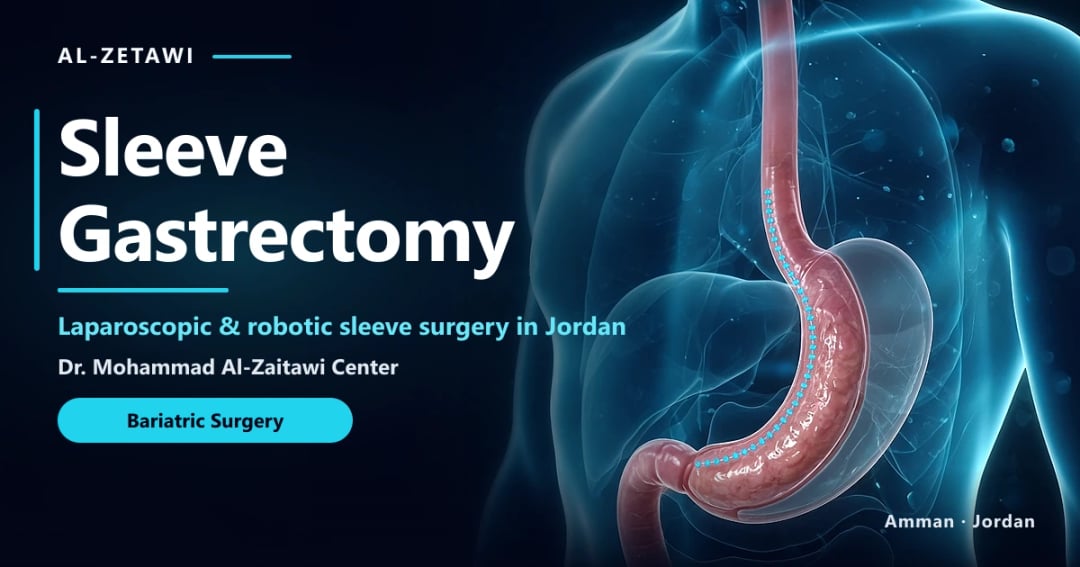
Dr. Mohammad Al-Zaitawi is a bariatric surgeon who operates in a named private hospital in Amman, the capital of Jordan. If you decide you want surgery with this team, the destination is Amman. There is no alternative location, no partner clinic in another country, and no cheaper version of the same package somewhere else. The surgeon you speak to about your file is the surgeon who operates.
We also want to be honest about what we are not claiming. We do not say that Jordan is statistically safer than any other country. We are not aware of any study that compares safety between destinations in a way that would support such a claim, and we will not invent one to win your booking. What we can do is set out a checklist that applies to surgery anywhere, including in the UK, and then explain how care with this team meets each point. You can then hold us, and anyone else you are considering, to the same standard.
Why this matters for your search
Advertising tends to sell a destination and a price. A safe decision is built on a surgeon, a hospital, an operation chosen for your body, and an aftercare plan. If you keep those four things at the centre of your search, the country becomes one factor among several rather than the whole decision, and the advert stops doing your thinking for you.
What Happened to UK Patients Who Needed NHS Care After Surgery Abroad?
The BBC reported on a study of 35 patients who needed urgent care at five London hospitals in 2022 after having weight loss surgery abroad. The complications described were serious: severe malnutrition, vomiting, sepsis, hernias, and haemorrhaging. Five of the patients needed feeding tubes. On average, they stayed in hospital for 22 days, which is a long admission by any measure.
The financial side was reported too. According to the BBC, the cost to the NHS of treating these patients was £560,234, which works out at about £16,006 per patient. The report noted that this was roughly the equivalent of about 110 bariatric operations in the UK. Put plainly, treating complications from surgery done elsewhere used NHS money and beds that could otherwise have funded planned operations for people already waiting.
It is important to read the study for what it is. It describes patients who came to London hospitals with problems. It does not tell you how many people had surgery abroad without complications, and it does not compare countries, clinics, or surgeons. It cannot tell you your personal risk. What it does show clearly is the kind of harm that can follow when surgery, nutrition, and follow-up are not joined up into a single plan.
What these complications have in common
Look at the list again. Malnutrition and repeated vomiting are often problems of the weeks and months after surgery, not of the operating day. Sepsis and bleeding may begin early but can show themselves after a patient has already travelled. Hernias may develop later still. Several of these are exactly the kind of problem that planned follow-up, regular blood tests, and a clear route back to the surgical team are designed to catch before they become emergencies.
That is why the checklist later in this guide puts so much weight on what happens after you fly home. A well-performed operation followed by no monitoring can still end in a hospital bed in Britain. The safer plan is one where you know, before you travel, who will check your bloods, who you can message with a worry, and what your GP will be told about the operation.
Why Is Weight Loss Surgery Abroad So Much Cheaper Than in the UK?
The same BBC report said that surgery in Turkey can be booked from as little as £2,000, while private surgery in the UK costs £10,000 to £15,000. Those are the BBC's figures, not ours, and we repeat them only so you can see why price-led adverts are so persuasive to people who have been told they face a long wait. We do not endorse any of those prices, and we do not compete with them.
A headline price tells you very little until you know what is inside it. Some packages are built around a single short admission with few tests. Some include airport transfers and a hotel but leave out an endoscopy, a dietitian, or any follow-up once you leave. Some quote one operation in the advert and recommend another once you arrive. Two prices that seem to describe the same surgery can describe very different amounts of care.
Costs also differ between countries for ordinary reasons: wages, property, insurance, and the cost of running a hospital all vary. A lower price is not automatically a sign of poor care, and a higher price is not automatically a sign of good care. The useful question is not why something is cheap, but what exactly you are getting and what is missing from the offer.
Questions to ask about any low price
- Which surgeon will operate, and can I see that name in writing before I pay?
- Which hospital, by name, and does it have intensive care on site?
- Which operation does this price cover, and what happens to the price if a different one is recommended?
- How many hospital nights are included?
- Are pre-operative tests, such as blood tests or an endoscopy, included or extra?
- What vitamin and follow-up plan comes with the price, and for how long?
- What happens, and who pays, if there is a complication before I leave the country?
If a provider cannot answer these in writing, the price is not yet a total. It is a starting point for a negotiation you may not realise you are in, and the missing lines are usually where the surprises sit.
Can Weight Loss Surgery Abroad Cause Nerve Damage or Vision Problems?
A neurologist at Sandwell and West Birmingham NHS Trust, Dr David Nicholl, has described seeing three patients in a single month with serious neurological complications after bariatric surgery in Turkey. The problems included painful nerve damage, double vision, unsteadiness, and Wernicke's encephalopathy, a serious brain condition linked to a lack of vitamin B1, also called thiamine. He attributed these cases to stomachs that had been made too small and to very rapid weight loss, and he warned about unregulated advertising on social media.
These are not the complications most people imagine when they think about surgical risk. People tend to picture a problem on the operating table. Nerve and brain complications are usually nutritional. They develop when someone cannot eat or keep food down, loses weight very quickly, and does not receive the right supplements or the blood tests that would reveal a deficiency. Repeated vomiting in particular can drain the body's thiamine faster than many patients realise.
The lesson is not that weight loss surgery always causes these problems. It is that the operation must be matched to the person, the remaining stomach must be shaped appropriately, and vitamins must be taken and checked. Vomiting that keeps going, numbness or tingling in the hands or feet, double vision, confusion, or new unsteadiness after bariatric surgery are reasons to seek urgent medical help, not to wait for a routine appointment or a reply on a messaging app.
What to ask before surgery
Ask the surgical team what vitamin plan they will give you, in writing, and how long they expect you to stay on it. Ask who will review your blood results and how those results reach them. Ask what you should do if you cannot keep fluids down for a day. A team that answers these questions carefully is thinking about the months after the operation, not just the day itself. The page on vitamins after weight loss surgery explains why supplements are a lifelong commitment rather than a short course you finish.
Weight Loss Surgery Abroad Checklist: What to Check Before You Book
The checks below apply whether you are considering a hospital in London, Leeds, Glasgow, or anywhere overseas. They are not a guarantee of a good outcome, because no checklist can promise that, but they close many of the gaps that leave patients without help when something goes wrong. Use the table as a script when you speak to any provider, and write down the answers.
| Check | Why it matters | What a good answer looks like |
|---|---|---|
| Named surgeon | You need to know who is responsible for your operation and who to contact afterwards | The surgeon's full name in writing before any payment |
| Named hospital | The facility decides the theatre, the nursing, and the emergency support on site | The hospital's name on your quote, not a phrase such as partner hospital |
| Operation chosen for you | Reflux, diabetes, medicines, and past surgery change which operation fits | A written reason for the recommended operation after your records are reviewed |
| Written price | Adverts often leave out tests, extra nights, or treatment of complications | A quote listing what is included and what would change the total |
| Vitamin plan | Bariatric surgery changes how you absorb nutrients for life | A written supplement plan and a list of blood tests to repeat |
| Operative summary | Doctors at home need to know exactly what was done if you become unwell | A document naming the operation, the date, the hospital, and the surgeon |
| GP plan | The NHS generally does not provide routine follow-up after private surgery | A letter for your GP and a clear route back to the surgical team |
| Realistic travel dates | Flying before you are ready adds risk on top of a fresh operation | A return date set when you are medically cleared, not promised in advance |
If any line is blank, ask again. If it stays blank, treat that silence as information about the service you would receive.
Notice what is not on this list: the country, the headline price, the hotel, the airport transfer, the before-and-after photographs. Those things can matter for comfort and budget, but none of them makes surgery safer by itself. The sections that follow look more closely at the checks people most often skip.
Should I Know My Surgeon and Hospital Before I Pay a Deposit?
Yes. You should know both names before any money leaves your account, including a so-called booking deposit. Some packages sell a destination and a date, and only assign a surgeon or a hospital later. In that arrangement you may meet the person who operates on you for the first time on the morning of surgery, with little chance to ask questions and no real chance to walk away without losing money.
A name gives you something to check. You can look up a surgeon's training and the operations they perform. You can look up a hospital and find out whether it has an intensive care unit, round-the-clock doctors, and the ability to take a patient back to theatre at night. Without names, all you have is the reputation of a sales team, which tells you nothing about the operating room.
The surgeon's name also matters after the operation. If you develop a problem at home, your GP or an A&E doctor may want to speak to the person who did the surgery. If the only contact you have is a coordinator's phone number, that conversation may never happen, and the doctor treating you has to guess.
Questions about the surgical team
- Who will perform my operation, and will that person review my records before I travel?
- Who looks after me in hospital if the surgeon is not on site overnight?
- If I need a second operation during the same stay, who performs it and where?
- After I go home, can I or my GP contact the surgeon directly, and how?
A provider that welcomes these questions is showing you how it will behave if something goes wrong. A provider that treats them as an obstacle to booking is showing you something too, and it is better to learn it now than after you have landed.
Who Decides Whether I Have a Gastric Sleeve or a Bypass Abroad?
The operation should be decided by a surgeon who has read your medical history, together with you, not by the product in the advert you clicked. On the NHS, the bariatric team chooses with the patient through shared decision-making. Private surgery abroad should follow the same principle. If the operation is fixed before anyone has seen your records, the choice has been made for marketing reasons rather than medical ones.
A gastric sleeve removes a large part of the stomach and leaves a long, narrow tube. NHS inform describes it as removing about 70 percent of the stomach, and many surgical sources say about 80 percent. It does not reroute the intestine, and it cannot be reversed. A gastric bypass creates a small stomach pouch and connects it directly to the small intestine. A mini gastric bypass is a different operation with a single join, which brings a trade-off involving bile reflux; it is not simply a nickname for the classic bypass.
Reflux changes the answer
A sleeve can make existing heartburn worse. If you have long-standing reflux, and especially if an endoscopy has shown Barrett's oesophagus or severe oesophagitis, the recommendation usually points towards a bypass. A provider that offers a sleeve to everyone regardless of reflux history is not tailoring the operation to you. An endoscopy report, if you already have one from the NHS, is one of the most useful documents you can send.
Diabetes matters too
In the STAMPEDE trial, five years after treatment, an HbA1c of 6 percent or less was reached by 5 percent of patients on medical therapy alone, 29 percent after gastric bypass, and 23 percent after sleeve gastrectomy. That does not decide your operation, but it shows why your diabetes history belongs in the conversation and why a team should ask about it before quoting anything.
What Should a Written Quote for Surgery Abroad Include?
A written quote should tell you what you are paying for, what is not included, and what would make the figure change. A verbal promise or a social media message saying everything is included is not a quote. You want a document you can keep, compare, and show to someone else if there is a dispute later.
Start with the operation. The quote should name it, not just say weight loss surgery. If the surgeon later recommends a different operation after reviewing your tests, you need to know in advance whether the price changes and by how much. Then look at the hospital: its name, the number of nights included, and what happens if you need to stay longer because you are not yet drinking well or your observations are not settled.
Next, look at tests. Blood tests, an endoscopy if needed, and any assessment by an anaesthetist may be inside the price or charged separately. Ask which. Then look at complications. If you need treatment for a problem during the same admission, is that covered, and for how many days? Finally, look at what happens after discharge: the vitamin plan, any follow-up consultations, and how you contact the team.
- The named operation and the named hospital
- The number of hospital nights included
- Tests included, listed individually
- What is covered if a complication occurs during the admission
- The currency of the quote and when payment is due
- The deposit terms, including whether and when it is refundable
- What follow-up is included after you leave
Remember that flights, hotel nights after discharge, a companion's travel, and supplements at home are usually outside a surgical quote. Add them yourself before comparing totals, because two quotes are only comparable when they describe the same things.
Will the NHS Help Me After Private Weight Loss Surgery Abroad?
The NHS will still provide emergency care and treatment for symptoms if you become unwell after surgery abroad. What it generally will not provide is routine bariatric follow-up. NHS patient leaflets on privately funded bariatric surgery explain that if you have surgery privately, you generally cannot access NHS routine follow-up or dietary supplements, because that care is not routinely commissioned unless the surgery was done on the NHS.
This catches many people out. They assume their GP or a local bariatric clinic will pick up where the overseas team left off. In practice, the dietetic reviews, the regular specialist appointments, and in some areas the prescribed supplements that NHS bariatric patients receive are tied to the NHS pathway. If you leave that pathway to pay privately, you need to replace those services yourself, either through the private provider or by paying separately at home.
NHS inform, the health information service for Scotland, does not recommend paying to travel abroad for surgery as a packaged holiday. That advice reflects the concerns in this guide: surgery bundled with travel and leisure can push aftercare to the bottom of the list. If you still choose to go abroad, the responsibility for making aftercare happen falls more heavily on you and on the team you choose.
What the NHS leaflets say a private centre should do
The same NHS leaflets say a private centre should provide medical, nutritional, psychological, and surgical assessment. They also note that if you are put on a low-calorie diet before surgery to shrink the liver, you may need a multivitamin, which you would arrange privately. Use these points as a benchmark. If a provider abroad offers none of those assessments, it is offering less than the NHS expects a private centre to offer. The page on gastric sleeve on the NHS explains the NHS route in more detail.
Who Will Check My Vitamins and Blood Tests When I Get Home?
You need an answer to this question before you book, not after you land. Bariatric surgery changes how much food you eat and, after a bypass, how you absorb certain nutrients. Deficiencies can build slowly and quietly, and some of them, such as low B12 or low thiamine, can damage nerves if they are missed. Supplements and blood tests are how those problems are prevented and caught.
Because NHS routine follow-up is generally not available after private surgery, you have three practical options. You can ask your GP whether they are willing to arrange blood tests, understanding that practices vary and they are not obliged to provide specialist bariatric follow-up. You can pay for blood tests privately in the UK. Or you can combine either route with a surgical team abroad that reviews your results remotely. Whichever you choose, decide before you travel.
Blood tests worth asking about
- Full blood count
- Iron studies
- Vitamin B12
- Folate
- Vitamin D
- Calcium
- Kidney function
This guide does not give vitamin doses, because the right supplements depend on your operation, your results, and your other medicines. Your surgical team should give you a written plan, and that plan should say which blood tests to repeat and how to send the results back. After a bypass, iron, B12, calcium, and vitamin D usually need closer monitoring than after a sleeve, so your plan should reflect the operation you actually had.
Keep your results in one place, such as a folder or a phone note, with the dates. If you ever see a new doctor, a clear record of your bloods since surgery is far more useful than trying to remember what someone said months ago.
How Long Do I Need to Stay Abroad After Bariatric Surgery?
For a straightforward gastric sleeve, the hospital stay is often one or two nights. That is a common pattern, not a promise. Nausea, difficulty drinking, pain, blood pressure, or blood sugar can keep a patient in longer, and a bypass or a revision operation may be planned with a longer stay from the outset.
The time in hospital is not the same as the time you should spend in the country. Many international patients plan to stay about a week in total. That week covers any tests that were not done before travel, the operation itself, the nights in hospital, a period of recovery in a hotel or apartment, and a review by the surgical team before a long journey home. It gives a margin if anything needs attention.
The most important principle is that you should fly when you are medically cleared, not on a day that was promised when you booked. Packages that fix the return flight before surgery can put pressure on patients and teams alike to discharge on schedule. Booking a flexible ticket, or at least knowing the cost of changing it, takes that pressure away.
Planning the journey home
- Ask the surgical team what they need to see before they clear you to fly
- Ask about measures to reduce the risk of blood clots during the flight
- Carry your operative summary and medicines list in your hand luggage
- Travel with a companion if you can, especially on a long journey
- Keep sipping fluids as advised and walk in the aisle when it is safe to do so
Think about the days after you land too. Arrange time off work, someone to help at home, and suitable fluids and soft foods ready in the fridge. The guide on what to eat after a gastric sleeve explains the staged diet in more detail.
Warning Signs After Weight Loss Surgery Abroad That Need Urgent Care
Some symptoms after bariatric surgery should never wait for an email reply or a video call with a clinic abroad. If you have persistent vomiting, a fever, a fast heart rate that stays high, sudden breathlessness, chest pain, black stools, or a swollen calf, get emergency care first. In the UK that means calling 999 or going to A&E for anything that feels severe, or calling NHS 111 if you are unsure.
These signs can point to problems such as a leak from the staple line, bleeding, infection, or a blood clot in the leg or lung. They can develop after you have flown home, which is exactly why you need to recognise them yourself. The NHS will treat you in an emergency regardless of where the operation was done. Delaying because you feel embarrassed about having had surgery abroad, or because you want to ask the overseas team first, can turn a treatable problem into a dangerous one.
Help the doctors who treat you
An A&E doctor seeing you at night will not have your overseas hospital notes. That is why the operative summary on the checklist matters so much. It should say which operation you had, the date, the hospital, the surgeon's name, and anything unusual that happened. Keep it on your phone and on paper, and make sure a family member knows where to find it.
- The name of the operation, written exactly
- The date and the hospital where it was performed
- The surgeon's name and a way to contact the team
- Your current medicines and supplements
- Any allergies or problems during the hospital stay
Once you are safe, let the surgical team know what happened. They may be able to share information with the doctors treating you, and they need to know about complications in their own patients. But the order matters: emergency care in the UK comes before any message abroad.
How Surgery With This Team in Amman Meets the Same Checklist
We have asked you to judge every provider by the same checklist, so it is fair to show how this team answers it. This is not a claim that Amman is safer than anywhere else. It is a description of how the process works, so you can compare it point by point with any other option, including private care in the UK.
The surgeon is named from the beginning: Dr. Mohammad Al-Zaitawi reviews your file and performs the operation. The hospital is a private hospital in Amman, and it is named to you before you book or pay. The operation is chosen after your records are read, with reflux and diabetes at the centre of that decision. If your history points to a bypass rather than a sleeve, or to a revision if you have had surgery before, you will be told so and why.
The price is written. The published reference average for a sleeve gastrectomy is about USD 2,500, and the cost and packages page explains it. The binding figure is the written quote you receive after your file is reviewed, and the operation, the hospital, and the length of stay can change it. You will see that figure before you commit.
Aftercare and the journey home
A straightforward sleeve often means one or two nights in hospital, and many international patients plan to stay in Amman for about a week. You fly when you are cleared, not on a promised day. Before you leave, you receive a written vitamin plan, an operative summary to take home, and a plan for your GP that sets out which blood tests to request and how to send results back for review. The international patients page explains travel and arrival in more detail.
We are not an NHS provider, and we cannot make the NHS offer routine follow-up after private surgery. What we can do is make sure you leave with the documents and contacts that make aftercare at home possible.
Booking a Consultation With the Clinic in Amman
If you have worked through the checklist and want this team to review your file, the next step is a consultation rather than a booking. You can share your weight history, medicines, previous operations, reflux symptoms, diabetes results, and any endoscopy or blood test reports you already have from the NHS or a private provider. The more complete the file, the more specific the recommendation and the written quote can be.
The clinic is in Amman, in the Shmeisani area, on Hanin Bin Ishaq Street, in Al-Husseini Medical Complex 1, opposite Specialty Hospital. Consultations and file reviews take place through the clinic. Surgery itself is performed in a private hospital in Amman, which is named to you before you book, so you know exactly where your operation will happen before any payment is made.
You can contact the team on WhatsApp at +962 7 9570 2800, or start through the consultation page. If you would like to read more before getting in touch, the weight loss surgery overview explains the operations offered, and the page on acid reflux after a gastric sleeve covers one of the most important factors in choosing between them.
Whatever you decide, and wherever you decide to have surgery, keep the checklist. Ask for names before payment, an operation chosen from your history, a written price, a vitamin plan, an operative summary, and a plan for your GP. Those questions protect you in any country.
Questions patients ask
These answers are general. Your file, your medicines, and your endoscopy can change them.
Why does this page mention Turkey at all?
Is Jordan automatically safer than Turkey?
Will you match a Turkish advertisement price?
What if I already paid a deposit in Turkey?
Medical note from Dr. Mohammad Al-Zaitawi
If you found us while comparing Turkey, you are in the right kind of article only if you leave with a hospital name and a follow-up plan. I operate in Amman. I do not broker a trip to Turkey.
Scientific references and guidance
These sources support the medical information on this page. If you want this guidance applied to your own case, send us your details for an initial review.
Reviewed by Dr. Mohammad Al-Zaitawi
Prefer a quicker route? Try the free case review or see bariatric surgery costs in Jordan.