
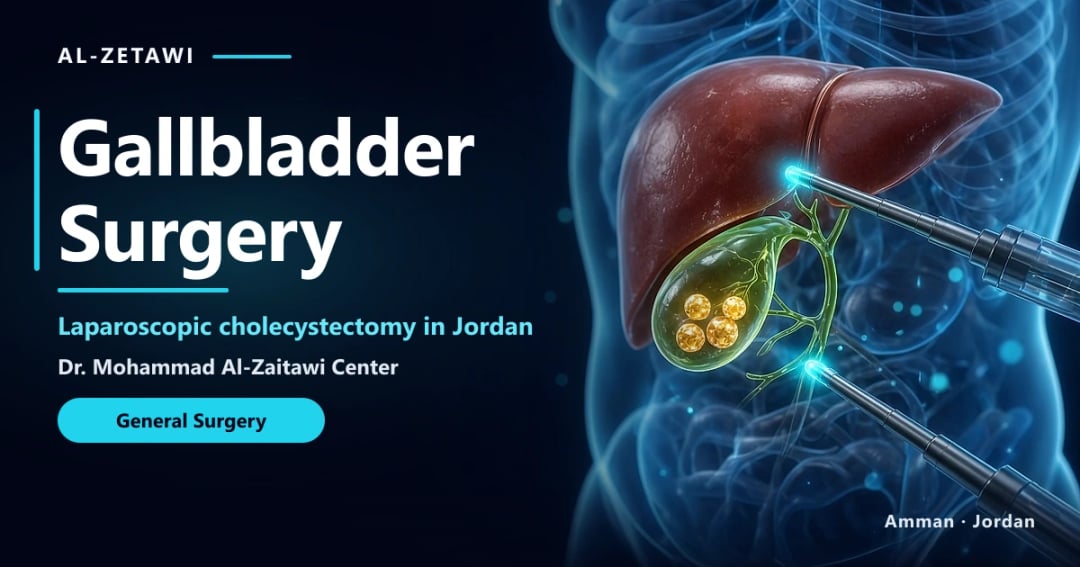
What Is Gallbladder Surgery?
Gallbladder surgery, known medically as cholecystectomy, is the removal of the gallbladder. Today almost all planned gallbladder operations are performed as a laparoscopic cholecystectomy: the surgeon works through three or four small keyhole incisions using a camera and fine instruments, rather than a long cut under the ribs. It is one of the most frequently performed abdominal operations in the world, and international guidelines regard it as the standard treatment for gallstones that cause symptoms or complications.
The gallbladder is a small, pear-shaped pouch that sits under the liver on the right side of the upper abdomen. The liver produces bile continuously, and the gallbladder stores and concentrates it between meals. When you eat, particularly fatty food, the gallbladder squeezes and releases bile into the small intestine through the bile ducts, where it helps to digest fats and absorb fat-soluble vitamins.
Why can you live normally without it?
The liver, not the gallbladder, makes bile. After cholecystectomy, bile simply flows from the liver into the intestine in a steadier stream instead of being stored and released in bursts. Most people digest food normally and do not need a special diet in the long term. A minority notice looser stools after fatty meals for a few weeks or months, which usually settles and can be treated if it persists.
What this guide covers
This guide brings together the recommendations of the Tokyo Guidelines 2018 for acute cholecystitis, the World Society of Emergency Surgery (WSES), the European Association for the Study of the Liver (EASL), the UK National Institute for Health and Care Excellence (NICE) and the SAGES Safe Cholecystectomy programme. It explains when surgery is needed, how a safe operation is performed, what recovery looks like and what international patients should plan before travelling to Amman. It is written by the team at Dr. Mohammad Al-Zaitawi's center and reviewed against current international evidence, but it does not replace a personal medical assessment.
Gallstones: Causes and Risk Factors
The most common reason for gallbladder surgery is gallstones (cholelithiasis). Gallstones are hard deposits that form inside the gallbladder when bile contains more cholesterol or bilirubin than it can keep dissolved, or when the gallbladder does not empty well. They can be as small as a grain of sand or as large as a golf ball, and a person may have one stone or hundreds.
Gallstones are very common. Large population studies in Europe and North America suggest that around 10 to 20 percent of adults have gallstones, and the figure rises with age. Most people with stones never develop symptoms, which is why finding a stone by chance on a scan does not automatically mean an operation is needed.
Types of gallstones
- Cholesterol stones: the most common type in Western and Middle Eastern populations, linked to diet, weight and metabolism.
- Pigment stones: smaller, darker stones made mainly of bilirubin, more common in people with blood disorders that break down red cells, liver cirrhosis or bile infections.
- Mixed stones: a combination of cholesterol, pigment and calcium salts.
Who is more likely to develop gallstones?
- Women, especially during the reproductive years, because oestrogen increases cholesterol in bile
- Pregnancy and the use of oestrogen-containing medicines
- Age over 40
- Obesity, insulin resistance and type 2 diabetes
- Rapid weight loss, including after bariatric surgery or very low calorie diets
- A family history of gallstones
- Diets high in refined carbohydrates and low in fibre
- Long periods of fasting, which reduce gallbladder emptying
- Certain conditions such as Crohn's disease affecting the terminal ileum, haemolytic anaemias and cirrhosis
The link with weight is important for many of our patients. Excess weight increases cholesterol secretion into bile, while rapid weight loss mobilises cholesterol from fat stores and slows gallbladder emptying. This is why gallstones are a recognised issue after sleeve gastrectomy and gastric bypass, and why prevention is discussed later in this guide.
Symptoms of Gallbladder Disease
Gallstones cause trouble when a stone blocks the outlet of the gallbladder or moves into the bile ducts. The classic symptom is biliary colic, a misleading name because the pain is usually steady rather than coming in waves.
Typical biliary pain
- Severe, constant pain in the upper middle or upper right abdomen
- Pain that may spread to the right shoulder blade or the back
- Episodes lasting from 30 minutes to several hours, often in the evening or at night
- Attacks frequently follow a large or fatty meal, although they can occur at any time
- Nausea and sometimes vomiting during the attack
Between attacks, people often feel completely well. Vague symptoms such as bloating, burping or general indigestion are common in the population and are less reliably caused by gallstones. This matters because removing the gallbladder relieves true biliary pain in the large majority of patients, but is less likely to cure non-specific indigestion. A careful history helps the surgeon judge whether your symptoms are likely to improve.
Symptoms that need urgent assessment
Some gallstone complications are emergencies. Seek urgent medical care if you have:
- Pain lasting more than six hours, especially with fever or shivering, which may indicate acute cholecystitis (inflammation of the gallbladder)
- Yellowing of the skin or eyes (jaundice), dark urine or pale stools, which suggest a stone blocking the common bile duct
- Fever, jaundice and abdominal pain together, which can signal cholangitis, a serious bile duct infection
- Severe upper abdominal pain spreading to the back with repeated vomiting, which may indicate gallstone pancreatitis
- Confusion, low blood pressure or a racing heart with abdominal pain
These conditions are treated in hospital, often with antibiotics, fluids and procedures to clear the bile duct, followed by gallbladder removal at the right time.
Diagnosis: Tests Before Gallbladder Surgery
Diagnosis begins with your story and an examination. Tenderness under the right ribs, especially when you breathe in while the doctor presses (Murphy's sign), suggests an inflamed gallbladder. The following tests confirm the diagnosis and look for complications.
| Test | What it shows | When it is used |
|---|---|---|
| Abdominal ultrasound | Stones, gallbladder wall thickening, fluid around the gallbladder, dilated bile ducts, polyps | First-line test for almost everyone with suspected gallbladder disease |
| Blood tests (full blood count, liver tests, amylase or lipase, CRP) | Infection, inflammation, bile duct blockage, pancreatitis | All patients with significant pain, before surgery |
| MRCP (magnetic resonance cholangiopancreatography) | Stones in the common bile duct and the anatomy of the bile ducts | Abnormal liver tests or dilated ducts on ultrasound |
| Endoscopic ultrasound (EUS) | Very small duct stones and sludge | When MRCP is unclear or not possible |
| CT scan | Complications such as perforation, abscess or pancreatitis; other causes of pain | Severe or atypical presentations |
| HIDA scan | How well the gallbladder fills and empties | Typical pain without stones, to look for gallbladder dysfunction |
NICE guidance recommends ultrasound and liver function tests for people with suspected gallstone disease, followed by MRCP if ultrasound has not detected common bile duct stones but the duct is dilated or liver tests are abnormal. If stones are found in the common bile duct, they are usually cleared before or during gallbladder surgery, most often with ERCP (an endoscopic procedure through the mouth) or by exploring the duct laparoscopically in experienced centres.
Preparing your records for a remote review
International patients can speed up planning by sending their ultrasound or MRI reports and images, recent blood tests, a list of medicines and details of previous operations. This allows the team to identify complex cases, such as stones in the bile duct or previous upper abdominal surgery, before you book travel.
When Is Gallbladder Removal Recommended?
The decision depends on symptoms and complications, not simply on the presence of stones. International guidelines broadly agree on the following indications.
Symptomatic gallstones
If gallstones have caused biliary pain, the chance of further attacks is high, and a proportion of patients go on to develop complications such as cholecystitis, bile duct stones or pancreatitis. Laparoscopic cholecystectomy is therefore recommended for most people with symptomatic gallstones who are fit for surgery. NICE advises offering laparoscopic cholecystectomy to people with symptomatic gallbladder stones.
Acute cholecystitis
For acute inflammation of the gallbladder, both the Tokyo Guidelines 2018 and the WSES 2020 guidelines favour early laparoscopic cholecystectomy in suitable patients, ideally during the same hospital admission and as soon as possible, preferably within 72 hours and generally no later than 7 to 10 days from the start of symptoms. Early surgery shortens total hospital time, prevents repeated attacks and is as safe as delayed surgery in experienced hands. Very frail or high-risk patients may instead be treated with antibiotics and, if needed, a drainage tube through the skin (percutaneous cholecystostomy).
Gallstone pancreatitis
After mild gallstone pancreatitis, the PONCHO randomised trial published in The Lancet in 2015 showed that removing the gallbladder during the same admission reduced readmissions for recurrent gallstone complications compared with waiting several weeks. After severe pancreatitis with fluid collections, surgery is usually delayed until the inflammation settles.
Other indications
- Stones in the common bile duct, after the duct has been cleared
- Gallbladder polyps of 10 mm or larger, or smaller polyps that grow or occur with risk factors, according to the 2022 joint European guidelines on gallbladder polyps
- Porcelain gallbladder or a gallbladder that does not empty properly with typical symptoms
- Selected asymptomatic stones, for example very large stones or patients in whom future emergency care would be unusually difficult
When surgery is usually not needed
Gallstones found by chance, without symptoms, are usually managed by watchful waiting. EASL guidelines state that most asymptomatic patients do not need prophylactic cholecystectomy, because the yearly risk of developing symptoms is low. Your surgeon will explain whether any personal factors change this balance.
Are There Alternatives to Surgery?
Patients often ask whether gallstones can be dissolved or flushed out without an operation. The honest answer is that non-surgical options exist but have important limitations.
| Option | How it works | Main limitations |
|---|---|---|
| Watchful waiting | Monitoring without treatment | Suitable for asymptomatic stones; once symptoms start, attacks usually recur |
| Ursodeoxycholic acid tablets | Slowly dissolves small cholesterol stones | Works only for small, non-calcified stones in a functioning gallbladder; takes months; stones often return when treatment stops |
| Dietary change | Lower-fat meals may reduce attack triggers | Does not remove stones or prevent complications |
| ERCP | Clears stones from the bile duct through an endoscope | Does not treat stones still in the gallbladder; usually followed by cholecystectomy |
| Percutaneous cholecystostomy | A drain placed through the skin into an infected gallbladder | A bridge for very high-risk patients; not a definitive cure |
| Shock wave lithotripsy | Breaks stones with sound waves | Rarely used today because of high recurrence |
So-called gallbladder flushes with olive oil and juice do not dissolve gallstones. The soft lumps that some people pass afterwards are usually formed from the oil itself. More importantly, these remedies can delay proper treatment of a complication.
For people with recurrent symptoms, laparoscopic cholecystectomy is the only treatment that reliably prevents further attacks, because the gallbladder in which stones form is removed. Stones rarely re-form afterwards, although small stones can occasionally form later in the bile ducts.
How Laparoscopic Cholecystectomy Is Performed
Laparoscopic cholecystectomy is performed under general anaesthesia. A routine operation typically takes 45 to 90 minutes, depending on the degree of inflammation and the anatomy. The key steps are:
- Three or four small incisions are made, usually one at the navel and others in the upper abdomen, ranging from 5 to 12 mm.
- The abdomen is gently inflated with carbon dioxide to create space, and a high-definition camera is introduced.
- The gallbladder is lifted to expose the area where its duct (the cystic duct) and artery (the cystic artery) enter, known as Calot's triangle.
- The surgeon carefully dissects this area until the critical view of safety is achieved.
- The cystic duct and cystic artery are secured with clips and divided.
- The gallbladder is separated from the liver bed using electrosurgery, and the liver bed is checked for bleeding and bile leakage.
- The gallbladder is placed in a retrieval bag and removed through one of the incisions.
- The incisions are closed, often with dissolvable stitches and skin glue.
The critical view of safety
The most feared complication of gallbladder surgery is injury to the main bile duct. Since the 1990s, surgeons have used a technique described by Strasberg and colleagues called the critical view of safety: before anything is clipped or cut, the surgeon must clearly see that only two structures, the cystic duct and the cystic artery, enter the gallbladder, and that the lower part of the gallbladder has been freed from the liver. The SAGES Safe Cholecystectomy programme recommends documenting this view in every operation, and many surgeons take a photograph of it for the record.
Imaging during surgery
Some surgeons use intraoperative cholangiography, an X-ray dye study of the bile ducts, or near-infrared fluorescence imaging with indocyanine green to highlight the bile ducts. These tools can clarify the anatomy in difficult cases and help detect unexpected duct stones.
When the operation is difficult
Severe inflammation can make anatomy dangerous to dissect. Modern guidelines encourage bail-out strategies rather than pressing on: a subtotal cholecystectomy, in which part of the gallbladder is left to avoid the danger zone, or conversion to open surgery. Converting is not a failure; it is a safety decision. In planned operations, conversion rates are generally low, but they are higher in acute cholecystitis, previous upper abdominal surgery and severe obesity.
Robotic and Single-Incision Gallbladder Surgery
Patients increasingly ask about robotic surgery and about operations through a single incision at the navel. Both are established techniques, but it is important to understand what they add and what they do not.
Robotic cholecystectomy
In robotic surgery, the surgeon controls instruments from a console, with a magnified three-dimensional view and wristed instruments that move with more freedom than standard laparoscopic tools. For straightforward gallbladder removal, large studies have not shown clear benefits for patients over expert laparoscopy, while costs and operating time are often higher. The robotic platform can be helpful in selected complex situations, for example when gallbladder surgery is combined with other procedures or in patients with challenging anatomy. Dr. Mohammad Al-Zaitawi performs laparoscopic and robotic surgery and recommends the approach that offers the best balance of safety and benefit for each patient.
Single-incision laparoscopic surgery
Single-incision surgery places all instruments through one small cut in the navel, leaving an almost hidden scar. Randomised trials and reviews have found better cosmetic satisfaction in some patients, but also slightly longer operating times and a higher risk of hernia at the navel compared with standard laparoscopy. For most patients, the standard approach with three or four tiny incisions offers an excellent cosmetic result with a well-established safety record.
| Approach | Incisions | Main advantages | Considerations |
|---|---|---|---|
| Standard laparoscopic | 3 to 4 small incisions | Gold standard, extensive safety data, fast recovery | Small visible scars that fade over time |
| Robotic-assisted | 4 to 5 small incisions | 3D view and wristed instruments for complex anatomy | Higher cost, no proven advantage in routine cases |
| Single-incision | 1 incision at the navel | Nearly hidden scar | Higher risk of umbilical hernia, technically demanding |
| Open cholecystectomy | One larger incision under the ribs | Used when keyhole surgery is unsafe | More pain and longer recovery |
Gallbladder Surgery and Weight Loss Surgery
Because obesity and rapid weight loss both increase the risk of gallstones, the gallbladder is a frequent topic for patients considering or recovering from bariatric surgery.
Gallstones after bariatric surgery
Studies have reported that a significant proportion of patients develop new gallstones within the first one to two years after sleeve gastrectomy or gastric bypass, when weight loss is fastest. Most of these stones never cause symptoms, but some patients develop biliary pain or complications and need cholecystectomy.
Preventive medication
Ursodeoxycholic acid reduces cholesterol saturation of bile. The UPGRADE trial, a multicentre randomised placebo-controlled study published in The Lancet Gastroenterology and Hepatology in 2021, found that six months of ursodeoxycholic acid after bariatric surgery reduced the development of symptomatic gallstone disease. Many bariatric programmes now prescribe it during the period of rapid weight loss, and your team will advise whether it suits you.
Should the gallbladder be removed during bariatric surgery?
Routine removal of a healthy gallbladder during weight loss surgery is not generally recommended, because it adds operating time and risk for a problem that many patients will never develop. However, if you already have symptomatic gallstones, removing the gallbladder at the same operation is often reasonable, and this is decided individually.
Why it matters after gastric bypass
After Roux-en-Y gastric bypass or mini gastric bypass, the usual endoscopic route to the bile ducts is altered, so standard ERCP to clear a duct stone becomes much more difficult. This is one reason why symptomatic gallstones are taken seriously in patients planning a bypass, and why preventive measures are emphasised after surgery.
Preparing for Gallbladder Surgery
Good preparation reduces risk and makes recovery smoother. Most planned laparoscopic cholecystectomies follow an enhanced recovery pathway, which focuses on keeping you well nourished, mobile and comfortable.
Medical assessment
- A review of your symptoms, scans and blood tests by the surgeon
- An anaesthetic assessment, including heart and lung health, sleep apnoea and previous reactions to anaesthesia
- Blood tests such as full blood count, clotting, kidney and liver function
- An ECG for older patients or those with heart conditions
- Additional imaging such as MRCP if a bile duct stone is suspected
Medicines
Tell the team about all medicines and supplements. Blood thinners such as warfarin, apixaban, rivaroxaban and clopidogrel usually need to be paused or adjusted under medical guidance. Diabetes medicines may need dose changes around fasting. Some weight loss injections that slow stomach emptying, such as GLP-1 receptor agonists, may require specific instructions before anaesthesia, so mention them clearly.
Before the day
- Stop smoking as early as possible; even a few weeks helps wound healing and lung function
- Follow the fasting instructions given by the anaesthetist, usually no food for about six hours and clear fluids until about two hours before surgery
- Arrange for someone to accompany you and stay with you for the first night if you go home the same day
- Bring loose, comfortable clothing and a list of your medicines
For international patients, the team can review your records before you travel, so that you arrive with a clear plan and avoid unnecessary repeated tests.
Risks and Complications
Laparoscopic cholecystectomy is a safe and common operation, but every surgery carries risks. Knowing them helps you make an informed decision and recognise problems early.
| Complication | What it means | How it is managed |
|---|---|---|
| Bile duct injury | Damage to the main bile duct; uncommon, reported in roughly 0.3 to 0.5 percent of laparoscopic operations in large series | Prevented by the critical view of safety; treated endoscopically or surgically by hepatobiliary specialists if it occurs |
| Bile leak | Leakage from the cystic duct stump or small ducts in the liver bed | Often treated with ERCP and a temporary stent |
| Bleeding | From the liver bed or a blood vessel | Usually minor; rarely needs transfusion or further surgery |
| Retained bile duct stones | Stones that pass into the duct before or after surgery | Removed by ERCP |
| Wound infection | Redness or discharge from an incision, most often at the navel | Wound care and sometimes antibiotics |
| Port-site hernia | A bulge at an incision site, more common at the navel | Surgical repair if symptomatic |
| Blood clots | Deep vein thrombosis or pulmonary embolism | Early walking, stockings and blood-thinning injections when indicated |
Post-cholecystectomy symptoms
A small proportion of patients continue to have abdominal discomfort after surgery, sometimes called post-cholecystectomy syndrome. Causes include a retained duct stone, a condition of the sphincter at the end of the bile duct, or symptoms that were not caused by the gallbladder in the first place, such as reflux, ulcers or irritable bowel syndrome. Persistent symptoms should be investigated rather than accepted.
Who has higher risk?
Risks are higher with acute or long-standing inflammation, previous upper abdominal surgery, severe obesity, liver cirrhosis and significant heart or lung disease. In these situations, careful planning, an experienced surgeon and a hospital with endoscopy and intensive care support are particularly important.
Recovery Timeline After Gallbladder Removal
Recovery after laparoscopic cholecystectomy is usually quick. Many patients go home on the same day or the next morning. Typical milestones are shown below, but your own plan will depend on your health, the operation and your job.
| Time after surgery | What to expect |
|---|---|
| First hours | Drowsiness from anaesthesia, mild pain at the incisions, sometimes shoulder-tip pain from the gas; walking is encouraged |
| Day 1 | Eating and drinking normally, simple pain relief, discharge for most patients |
| Days 2 to 7 | Gradually increasing activity, showering, short walks several times a day |
| 1 to 2 weeks | Return to desk-based or light work for most people; driving once you can do an emergency stop without pain |
| 2 to 4 weeks | Return to most normal activities and light exercise |
| 4 to 6 weeks | Heavy lifting, intense core exercise and manual work, as advised by your surgeon |
Managing pain
Pain is usually controlled with regular paracetamol and, if suitable, an anti-inflammatory medicine for a few days. Shoulder-tip pain from residual carbon dioxide is common in the first 24 to 48 hours and is eased by walking. Strong opioid medicines are rarely needed after discharge.
Wound care
Keep the dressings clean and dry for the first two days. Showering is usually allowed after 24 to 48 hours, while swimming and baths should wait until the wounds have fully healed, typically about two weeks. Mild bruising is normal; increasing redness, warmth or discharge should be reported.
Flying home
International patients usually stay in Amman for about three to five days after a planned operation, allowing a review before flying. Walking during the flight, staying hydrated and wearing compression stockings reduce the risk of clots. Your team will confirm when you are fit to fly, which may be later after complicated or emergency surgery.
Diet and Digestion After Gallbladder Removal
One of the most common questions is what you can eat after the gallbladder is removed. The good news is that most people return to a normal, varied diet. There is no single strict diet that everyone must follow, but some sensible steps help the digestive system adjust.
The first weeks
- Eat smaller meals more often instead of large heavy meals
- Start with lighter foods and reduce very fatty, fried or greasy foods for the first few weeks
- Increase fibre gradually with vegetables, fruit, oats and wholegrains
- Drink plenty of water, especially if you are taking pain relief that can cause constipation
- Reintroduce foods one at a time, so you can identify any that cause discomfort
Changes in bowel habits
Some patients notice loose or more frequent stools after fatty meals. This happens because bile flows continuously into the intestine, and some bile acids reach the colon, where they draw in water. In most people this improves over weeks to months. If diarrhoea persists, bile acid malabsorption can be treated with medicines that bind bile acids, so mention it at follow-up.
Long term
In the long term, a balanced diet with plenty of vegetables, lean protein, healthy fats such as olive oil and fish, and limited processed food supports digestion, heart health and weight. If you are overweight, gradual and sustained weight loss improves overall health without the rapid changes that originally promote gallstones.
Is there a need for supplements?
Most people do not need supplements purely because the gallbladder has been removed. Patients who have also had bariatric surgery continue their usual bariatric vitamin and mineral programme.
Warning Signs After Surgery
Most recoveries are uneventful, but it is important to know which symptoms need prompt attention. Contact the surgical team or seek urgent care if you notice:
- Fever above 38°C or shivering
- Abdominal pain that becomes worse instead of better, especially after the second or third day
- Swelling of the abdomen, or pain that prevents walking
- Yellowing of the skin or eyes, dark urine or pale stools
- Persistent nausea or vomiting, or inability to keep fluids down
- Redness, warmth, pus or a foul smell from an incision
- Shortness of breath, chest pain, or painful swelling of one leg
- Dizziness, fainting or a fast heartbeat
These symptoms can indicate a bile leak, a retained stone, an infection, bleeding or a blood clot. Early assessment, often with blood tests and an ultrasound or scan, allows most problems to be treated simply. International patients receive an English operation note and discharge summary, and should carry them when travelling so that any local doctor can understand exactly what was done.
Follow-up
A routine review is usually arranged one to two weeks after surgery, in person or remotely. The pathology report of the removed gallbladder is checked, because occasionally it reveals unexpected findings that need further advice. Unexpected gallbladder cancer is rare, but checking the report is part of safe practice.
Special Situations: Pregnancy, Older Age, Diabetes and Polyps
Gallstones during pregnancy
Pregnancy increases the risk of gallstones because of hormonal changes in bile and slower gallbladder emptying. Mild biliary pain is often managed conservatively with diet and pain relief. When surgery is needed for recurrent attacks or cholecystitis, laparoscopic cholecystectomy can be performed safely during pregnancy, ideally in the second trimester, by a team experienced in operating on pregnant patients and in coordination with the obstetrician. SAGES guidance supports laparoscopy as a safe approach in pregnancy when surgery is indicated.
Older patients
Age alone is not a reason to avoid surgery. Older adults are more likely to present with complications such as cholecystitis or bile duct stones, and these complications carry higher risk than a planned operation. A careful assessment of heart, lung and kidney health, medicines and frailty helps decide between early surgery, delayed surgery or, in very high-risk patients, drainage procedures.
Diabetes
People with diabetes can develop more severe gallbladder infections and sometimes have fewer warning symptoms. Good blood sugar control before and after surgery reduces wound infection and supports healing. Diabetes medicines, including insulin and SGLT2 inhibitors, often need temporary adjustment around fasting, so a clear plan is agreed in advance.
Gallbladder polyps
Polyps are growths on the inner lining of the gallbladder, most often harmless cholesterol deposits. The 2022 joint European guidelines recommend cholecystectomy for polyps of 10 mm or larger and for polyps that cause symptoms. Polyps of 6 to 9 mm are considered for surgery when risk factors are present, such as age over 50, primary sclerosing cholangitis, Asian ethnicity or a sessile shape, and otherwise monitored with ultrasound. Polyps of 5 mm or less without risk factors usually need no follow-up. A polyp that grows by 2 mm or more within two years is generally an indication to remove the gallbladder.
Gallbladder Surgery in Jordan for International Patients
Patients travel to Amman from the Gulf, the United Kingdom, Europe and North America for planned laparoscopic surgery. Jordan offers experienced surgeons trained to international standards, modern private hospitals and a well-established system for international patients, without long waiting lists.
A typical plan
- Send your scans, blood tests and medical history for a remote review.
- Receive a written plan explaining whether surgery is advised, the expected approach and the length of stay.
- Arrive in Amman for an in-person consultation, any remaining tests and the anaesthetic assessment.
- Have the operation, usually with one night or a same-day discharge.
- Attend a review before flying home, typically three to five days after surgery.
- Continue remote follow-up and share the pathology report with your local doctor.
When travelling is not appropriate
If you have acute cholecystitis, jaundice, cholangitis or pancreatitis, you need treatment where you are. Travelling with an active complication is not safe. Once you have recovered and the inflammation has settled, planned surgery can be arranged.
Costs
The cost of gallbladder surgery depends on the hospital, whether the operation is planned or urgent, the need for additional procedures such as ERCP or MRCP, and the length of stay. A personal quote is provided after your records are reviewed. Ask for a written list of what is included, such as surgeon and anaesthesia fees, hospital stay, medicines and follow-up, so you can compare options on the same basis.
The international patient service helps with appointments, airport transfers and accommodation near the hospital.
Choosing a Gallbladder Surgeon
Gallbladder surgery is common, but safety depends heavily on surgical judgement and technique. When choosing a surgeon, consider:
- Board certification in general surgery and extensive experience in advanced laparoscopy
- A consistent approach to the critical view of safety and willingness to use bail-out strategies
- Access to ERCP, MRCP and intensive care in the hospital where surgery takes place
- Experience with complex cases, such as acute cholecystitis, bile duct stones and patients with previous bariatric surgery
- Clear communication and a written follow-up plan
About Dr. Mohammad Al-Zaitawi
Dr. Mohammad Al-Zaitawi is a consultant surgeon in Amman with the Jordanian Board in General Surgery and a subspecialty in bariatric surgery. He is a Fellow of the American College of Surgeons and a Fellow of the International College of Surgeons, and holds a diploma in laparoscopic and bariatric surgery from Strasbourg, France. His practice covers advanced laparoscopic, robotic, gastrointestinal and bariatric surgery. You can review his profile and credentials, read patient stories and see patient reviews.
Questions to ask at your consultation
- Are my symptoms likely to be caused by the gallstones?
- Do I need any further tests, such as MRCP, before surgery?
- Will the operation be laparoscopic, and what is the chance of conversion?
- How do you confirm the anatomy before clipping the ducts?
- Will I go home the same day or stay overnight?
- When can I return to work, exercise and travel?
- Who should I contact if I develop symptoms after returning home?
Frequently Asked Questions
Can I live a normal life without a gallbladder?
Do all gallstones need surgery?
How long does laparoscopic gallbladder surgery take?
Will I stay in hospital?
How soon should surgery be done for acute cholecystitis?
What is the critical view of safety?
Can gallstones be dissolved with medicine?
Is robotic gallbladder surgery better?
When can I return to work?
What should I eat after gallbladder removal?
Do gallstones come back after cholecystectomy?
Will I get gallstones after bariatric surgery?
When can I fly after gallbladder surgery?
Is a gallbladder polyp a reason for surgery?
Conclusion
Laparoscopic cholecystectomy is the standard and most reliable treatment for gallstones that cause pain or complications. In experienced hands, it is a safe operation with a short hospital stay and a quick return to normal life. The keys to a good outcome are a correct diagnosis, timely surgery when complications occur, a meticulous technique built around the critical view of safety, and clear aftercare.
At Dr. Mohammad Al-Zaitawi's center in Shmeisani, Amman, every gallbladder operation starts with a careful review of your symptoms and scans, an honest discussion of whether surgery is the right choice, and a written plan for recovery and follow-up.
Your next steps
- Gather your ultrasound or MRI reports, blood tests and medicine list.
- Request a free consultation for a remote review.
- Receive a personalised plan, including the recommended approach and expected stay.
- Explore related guides on hernia surgery and gastrointestinal surgery.
This guide is for general information and does not replace individual medical advice. Treatment decisions are made only after a personal assessment by your surgeon.
Medical note from Dr. Mohammad Al-Zaitawi
The correct procedure should be selected by medical assessment, not by name alone. Safety, anatomy, medical history and long-term follow-up are essential.
What international patients say
Selected patient feedback connected to this procedure.
International Patient
The coordination before travel and the follow-up after surgery were clear and professional.
Related articles and success stories
Helpful links for patients comparing treatment options and planning their journey.
Scientific references and guidance
These sources support the medical information on this page. If you want this guidance applied to your own case, send us your details for an initial review.
Reviewed by Dr. Mohammad Al-Zaitawi
Prefer a quicker route? Try the free case review or see bariatric surgery costs in Jordan.