
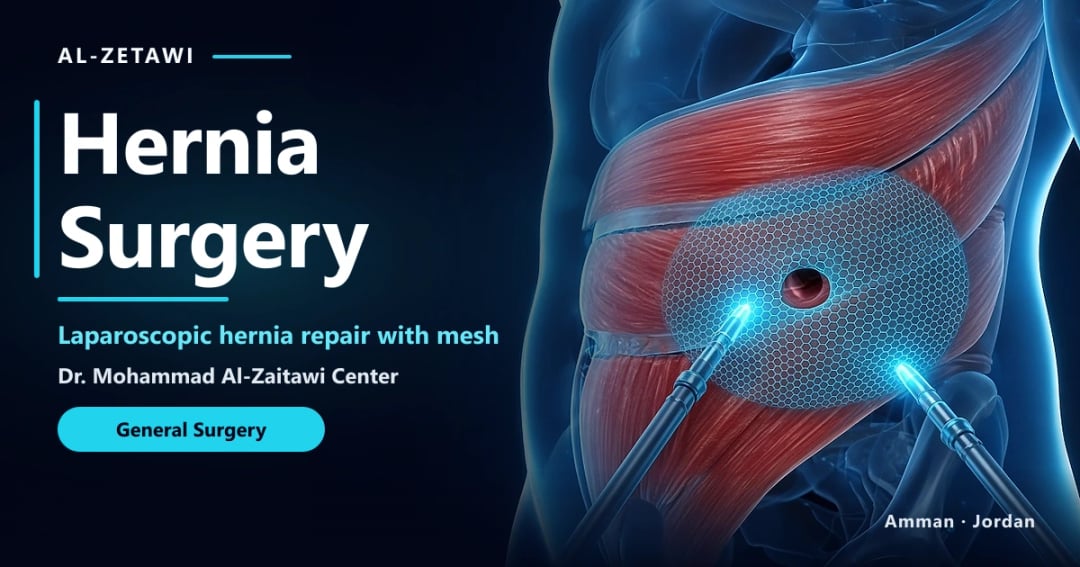
What Is Hernia Surgery?
A hernia happens when tissue, usually fat or a loop of intestine, pushes through a weak spot or opening in the muscle wall that normally holds it in place. The result is a bulge that often appears when you stand, cough or lift and disappears when you lie down. Hernia surgery repairs that weak spot, returns the contents to their normal position and, in most adults, reinforces the area with a surgical mesh so that the hernia is less likely to come back.
Hernias are among the most common surgical conditions in the world. More than 20 million groin hernia repairs are performed every year, and the international HerniaSurge guidelines estimate that the lifetime risk of developing a groin hernia is about 27 to 43 percent in men and 3 to 6 percent in women. Hernias can also appear at the navel, in the upper abdomen, through old surgical scars and at the opening of the diaphragm.
Why hernias do not heal on their own
A hernia is a mechanical defect. The pressure inside the abdomen keeps pushing on the weak area every time you cough, strain or lift, so most hernias slowly enlarge over time. Supports and belts may make a bulge feel more comfortable, but they do not close the opening. Surgery is the only treatment that repairs it, although not every hernia needs an operation immediately, as explained later in this guide.
What this guide covers
This guide is based on the HerniaSurge international guidelines for groin hernia management, the European and Americas Hernia Societies' guidelines for umbilical and epigastric hernias, the International Endohernia Society (IEHS) guidelines on laparoscopic repair, the SAGES guidelines on hiatal hernia and long-term randomised trials of watchful waiting. It explains the different hernia types, when repair is advised, how open, laparoscopic and robotic repairs compare, how mesh is used and what recovery looks like, written by the team at Dr. Mohammad Al-Zaitawi's center.
Types of Hernia
The type of hernia determines how urgent the repair is, which technique is best and whether mesh is needed. The main types are:
| Hernia type | Where it appears | Key points |
|---|---|---|
| Indirect inguinal | Groin, may extend into the scrotum | Most common type in men of all ages; follows the natural canal of the spermatic cord |
| Direct inguinal | Groin, closer to the midline | Due to weakness of the back wall of the inguinal canal; more common with age |
| Femoral | Just below the groin crease, at the top of the thigh | More common in women; high risk of strangulation, so it should be repaired promptly |
| Umbilical | At or around the navel | Common after pregnancy and with obesity; common in infants, where many close on their own |
| Epigastric | Midline between the navel and the breastbone | Usually small fat-containing hernias through the linea alba |
| Incisional | Through a previous surgical scar | Can be large and complex; risk factors include obesity, smoking and wound infection |
| Hiatal | At the opening of the diaphragm into the chest | Part of the stomach moves upwards; often linked with reflux |
| Parastomal | Around a stoma | A specific type of incisional hernia |
Conditions that are often confused with hernias
- Diastasis recti: widening of the gap between the two vertical abdominal muscles, common after pregnancy. It causes a ridge but not a true defect with a hernia sac, and it does not strangulate.
- Sportsman's groin (inguinal disruption): groin pain in athletes caused by strain of the muscles and tendons around the groin, usually without a true hernia.
- Enlarged lymph nodes, lipomas and hydroceles: lumps in the groin or scrotum that can mimic a hernia and are distinguished by examination and ultrasound.
Hiatal hernias are a special group managed differently from abdominal wall hernias, often together with reflux treatment. They are discussed briefly in this guide and in more detail in our guide to gastrointestinal surgery.
Symptoms and Emergency Warning Signs
Common symptoms
- A soft bulge that appears on standing, coughing or straining and disappears when lying down
- A dragging, heavy or aching feeling, often worse at the end of the day
- Burning or sharp pain in the groin that may spread to the scrotum or the inner thigh
- Discomfort when lifting, bending or exercising
- In some people, no symptoms at all apart from the visible lump
Reducible, incarcerated and strangulated hernias
A hernia is reducible when its contents can slip back into the abdomen, either on their own or with gentle pressure. It becomes incarcerated when the contents are trapped and cannot be pushed back. It is strangulated when the trapped tissue loses its blood supply. Strangulation is a surgical emergency, because the trapped intestine can die within hours.
Seek emergency care immediately if:
- A hernia that used to go back suddenly becomes hard, tense and painful and will not go back
- The skin over the bulge turns red, purple or dark
- You have increasing abdominal pain, nausea or vomiting
- You cannot pass wind or open your bowels and your abdomen is swelling
- You have a fever or feel generally very unwell with a painful hernia
Femoral hernias deserve special attention. HerniaSurge notes that a large proportion of femoral hernias first present as emergencies, and that emergency repair carries a higher risk of needing part of the bowel removed. For this reason, every femoral hernia should be repaired soon after diagnosis, even if it causes few symptoms.
How a Hernia Is Diagnosed
Most hernias are diagnosed by a surgeon's examination. You will be examined lying down and standing, and asked to cough or strain while the surgeon feels for an impulse. The examination also helps distinguish an inguinal from a femoral hernia and checks the other side, because hernias are sometimes present on both sides.
| Test | When it helps |
|---|---|
| Ultrasound | Uncertain lumps, small or hidden hernias, distinguishing a hernia from a lymph node, lipoma or hydrocele |
| CT scan | Large incisional hernias, complex abdominal wall hernias, emergencies, and planning complex repairs |
| MRI | Groin pain in athletes or when ultrasound is inconclusive and an occult hernia is suspected |
| Upper endoscopy and barium swallow | Hiatal hernias and reflux symptoms |
| Oesophageal manometry and pH study | Before anti-reflux surgery for hiatal hernia, to assess oesophageal function and confirm reflux |
HerniaSurge advises that imaging is not routinely needed when a groin hernia is clearly found on examination. It is helpful when the diagnosis is uncertain, when symptoms are present without a visible lump, or before complex surgery. For incisional hernias, a CT scan is very useful to measure the width of the defect, the size of the hernia sac and the relationship between the hernia and the abdominal cavity, all of which guide the choice of technique.
What to send for a remote review
International patients can share photos of the bulge while standing, scan reports and images, details of any previous hernia repairs or abdominal surgery, a list of medicines and their weight and height. This helps the surgeon estimate the complexity of the repair and the length of stay before you travel.
Does Every Hernia Need Surgery?
Not always. The decision depends on the hernia type, symptoms, size, risk of complications and your general health.
Inguinal hernias in men with few symptoms
A large randomised trial published in JAMA in 2006 compared watchful waiting with surgery in men with minimally symptomatic inguinal hernias and found that waiting was a safe option in the short term, with a low rate of acute complications. However, long-term follow-up showed that most men eventually chose surgery because symptoms increased; in the long-term report, about two thirds of men had crossed over to surgery by around 10 years. HerniaSurge therefore considers watchful waiting acceptable for men with minimal or no symptoms after an informed discussion, while recognising that most will need repair eventually.
Hernias that should be repaired
- Groin hernias that cause pain or limit daily activities
- All femoral hernias, because of their high risk of strangulation
- Groin hernias in women, as many turn out to be femoral at surgery; HerniaSurge recommends laparoscopic repair in women when expertise is available
- Hernias that have previously become stuck, even if they later went back
- Umbilical and epigastric hernias that cause symptoms or are enlarging
- Incisional hernias that cause symptoms, after optimisation of risk factors
When surgery may be delayed
For incisional and large ventral hernias in people with obesity, active smoking or uncontrolled diabetes, surgeons often recommend preparing first, because these factors greatly increase wound complications and recurrence. In patients with very high surgical risk and a small asymptomatic hernia, observation may be the safest choice. In every case, you should know the warning signs of strangulation and seek help immediately if they appear.
The Role of Mesh in Hernia Repair
A surgical mesh is a flexible, sterile sheet, usually made of polypropylene or polyester, that is placed over or behind the weak area. Over a few weeks, the body's own tissue grows into the mesh, creating a strong, tension-free reinforcement.
Why mesh is used
Before mesh became standard, hernias were closed by stitching the edges of muscle together under tension, and recurrence rates were high. Large trials and registries have shown that mesh repair significantly reduces recurrence for inguinal hernias in adults. The European and Americas Hernia Societies recommend mesh for umbilical and epigastric hernias with a defect of 1 cm or more, because it lowers recurrence compared with simple suture repair. Mesh is also the standard for almost all incisional hernias.
Is mesh safe?
Patients sometimes worry about mesh because of publicity around transvaginal mesh used for pelvic organ prolapse and urinary incontinence. Hernia mesh is a different product, used in a different area and in a different way, with decades of evidence supporting its use. Like any implant, it can rarely become infected, cause scarring that contributes to chronic pain, or move. These risks are minimised by correct patient selection, sterile technique, appropriate mesh choice and placement in the right layer of the abdominal wall.
Where the mesh is placed
| Position | Description | Common use |
|---|---|---|
| Onlay | On top of the muscle layer, under the skin | Selected open ventral repairs |
| Inlay | Bridging the defect without closing it | Generally avoided because of higher recurrence |
| Sublay / retromuscular | Behind the rectus muscles, in front of the posterior sheath | Preferred position for many open, endoscopic and robotic ventral repairs |
| Preperitoneal | Between the muscles and the peritoneum | Laparoscopic groin repair (TEP and TAPP) and some ventral repairs |
| Intraperitoneal (IPOM) | Inside the abdomen, against the inner wall | Laparoscopic ventral repair using special coated meshes |
In children and in some small hernias, a stitch repair without mesh is appropriate. Your surgeon will explain whether mesh is recommended and why.
Open, Laparoscopic and Robotic Inguinal Hernia Repair
There are three main approaches to groin hernia repair. All can achieve excellent results in experienced hands; the best choice depends on your hernia, your health and the surgeon's expertise.
| Approach | How it is done | Main strengths | Considerations |
|---|---|---|---|
| Open Lichtenstein repair | One incision of about 5 to 7 cm in the groin; mesh placed over the back wall of the canal | Can be done under local anaesthesia; effective and widely available | Slightly more chronic pain than laparoscopic repair in some studies |
| Laparoscopic TEP (totally extraperitoneal) | Three small incisions; mesh placed behind the muscles without entering the abdominal cavity | Less chronic pain, faster return to activity, both sides repaired through the same incisions | Requires general anaesthesia and specific expertise |
| Laparoscopic TAPP (transabdominal preperitoneal) | Three small incisions; the camera enters the abdomen and the mesh is placed behind the peritoneum | Clear view of both groins, useful for recurrent and complex hernias | Requires general anaesthesia and specific expertise |
| Robotic TAPP | Similar to TAPP using a robotic platform | 3D view and wristed instruments, helpful in complex or recurrent cases | Higher cost; no proven advantage over expert laparoscopy in routine cases |
What HerniaSurge recommends
- Mesh repair is recommended for adult groin hernias, using either the Lichtenstein technique or a laparoscopic technique (TEP or TAPP).
- Laparoscopic repair is favoured for bilateral hernias, because both sides can be repaired through the same small incisions.
- For a recurrence after an open repair, a laparoscopic approach is recommended; after a laparoscopic repair, an open approach is recommended, so the surgeon operates in fresh tissue.
- For women, laparoscopic repair is suggested, partly because it allows femoral hernias to be identified and repaired at the same time.
- Laparoscopic repair is associated with less chronic postoperative pain and a faster return to normal activities than open repair when performed by experienced surgeons.
Dr. Mohammad Al-Zaitawi performs open, laparoscopic and robotic hernia repair and recommends the approach after examining you and reviewing your history.
Umbilical and Epigastric Hernia Repair
Umbilical hernias appear at or near the navel, and epigastric hernias appear in the midline above it. In adults, they are often linked to pregnancy, obesity, chronic cough, heavy lifting or a weak midline. In infants, most umbilical hernias close by themselves within the first few years of life and are usually only repaired if they persist beyond about four to five years of age or are very large.
Recommended techniques
The 2020 guidelines of the European Hernia Society and the Americas Hernia Society recommend mesh repair for umbilical and epigastric hernias with a defect of 1 cm or more, and suggest that the mesh is preferably placed in the preperitoneal or retromuscular space. Very small defects may be closed with stitches alone. Open repair through a small incision near the navel is suitable for most small and medium hernias, while a laparoscopic or robotic approach may be advantageous for larger defects, multiple defects, recurrent hernias and patients with significant obesity.
Umbilical hernia and diastasis recti
Many women develop both an umbilical hernia and diastasis recti after pregnancy. The European Hernia Society guidance on rectus diastasis notes that diastasis is not a true hernia and that physiotherapy is a reasonable first step. When there is a symptomatic hernia together with a significant diastasis, the surgeon may discuss techniques that repair the hernia and narrow the gap in the same operation, sometimes in combination with abdominoplasty after weight loss.
Umbilical hernia and pregnancy plans
Pregnancy increases pressure on the abdominal wall, which can stretch a repair. If a woman has a small hernia with few symptoms and plans further pregnancies, the surgeon may suggest delaying repair until the family is complete. If the hernia is painful or enlarging, repair before pregnancy is reasonable after an individual discussion.
Recovery
Most patients go home on the same day or after one night, return to light activities within days and to desk work within one to two weeks.
Incisional and Ventral Hernia Repair
An incisional hernia develops through the scar of a previous abdominal operation. Studies suggest that a significant minority of patients develop an incisional hernia after a midline laparotomy. Risk factors include wound infection, obesity, smoking, diabetes, chronic lung disease, steroid medicines and emergency surgery.
Preparing for a complex repair
Incisional hernias are more likely to recur than groin hernias, and the patient's own health is one of the strongest predictors of success. Before planned repair, surgeons commonly recommend:
- Stopping smoking for at least four to six weeks before surgery
- Improving blood sugar control in people with diabetes
- Weight loss for patients with significant obesity, sometimes through bariatric surgery first
- Treating skin infections and chest problems
- Physiotherapy and walking to improve fitness (prehabilitation)
Techniques
| Technique | Key features |
|---|---|
| Laparoscopic IPOM | Mesh placed inside the abdomen through small incisions; suitable for selected small to medium defects |
| Open retromuscular (Rives-Stoppa) repair | Mesh placed behind the rectus muscles; durable and widely used for larger hernias |
| Endoscopic and robotic retromuscular repair (eTEP, robotic TAR) | Places mesh in the retromuscular plane through small incisions, combining minimally invasive access with a well-protected mesh position |
| Component separation (anterior or transversus abdominis release) | Releases muscle layers to close large defects without tension |
The International Endohernia Society guidelines describe laparoscopic and endoscopic repair as effective options with lower wound infection rates than open surgery in suitable patients. Robotic surgery has expanded the use of minimally invasive retromuscular repairs for complex hernias. For very large hernias where much of the bowel lives outside the abdominal cavity, specialised preparation, such as botulinum toxin injections into the side muscles or progressive preoperative pneumoperitoneum, may be used to make closure possible.
Hernia, Obesity and Bariatric Surgery
Excess weight increases pressure inside the abdomen and weakens wound healing, so obesity is a strong risk factor for umbilical and incisional hernias and for recurrence after repair. Repairing a large ventral hernia in a patient with a BMI above about 40 carries a significantly higher risk of wound complications and recurrence.
Which comes first: weight loss or hernia repair?
For patients with severe obesity and a large but non-urgent ventral hernia, a staged approach is often recommended: weight loss first, often with sleeve gastrectomy or gastric bypass, followed by a definitive hernia repair once the weight has stabilised. Small umbilical hernias found during bariatric surgery may be repaired at the same time with a suture or mesh, depending on the size, contamination risk and surgeon's judgement. These decisions are individual and are discussed during the consultation.
Internal hernia after gastric bypass
An internal hernia is a different condition that occurs inside the abdomen after gastric bypass, when loops of bowel slip through spaces created during the operation. It can cause intermittent abdominal pain and, rarely, bowel obstruction. Closing these spaces during bypass reduces the risk. Anyone who has had a gastric bypass and develops severe or recurring abdominal pain should be assessed promptly.
Hiatal hernia and weight loss surgery
Hiatal hernias are common in people with obesity and are closely linked with reflux. When a hiatal hernia is found during sleeve gastrectomy, surgeons commonly repair it at the same time. For patients with significant reflux and obesity, gastric bypass is often the preferred operation because it treats both problems effectively.
Hiatal Hernia: A Brief Overview
A hiatal hernia occurs when part of the stomach moves upwards through the opening in the diaphragm (the hiatus) into the chest. Small sliding hiatal hernias are very common and often cause no symptoms, while larger ones are associated with reflux, heartburn, regurgitation, chest discomfort, difficulty swallowing and sometimes anaemia from slow bleeding.
Types
- Type I (sliding): the junction between the oesophagus and stomach slides upwards; the most common type.
- Types II to IV (paraoesophageal): part of the stomach, and sometimes other organs, moves beside the oesophagus into the chest; these can twist or obstruct.
Treatment
Most small sliding hernias are treated with lifestyle changes and acid-reducing medicines. SAGES guidelines recommend surgery for symptomatic paraoesophageal hernias and for patients with reflux that does not respond to medicines, cannot tolerate them or who have complications. The standard operation is laparoscopic repair of the hiatus with a fundoplication, in which the top of the stomach is wrapped around the lower oesophagus to strengthen the valve. Emergency surgery is needed if a large hernia becomes twisted or obstructed.
For more detail on reflux surgery and fundoplication, see our guide to gastrointestinal surgery.
Hernias in Women
Groin hernias are much less common in women than in men, but they are more likely to be femoral hernias and more likely to present as emergencies. Women also frequently experience groin pain without a visible lump, which can delay diagnosis.
Why repair is recommended
HerniaSurge recommends that groin hernias in women are repaired rather than observed, and suggests a laparoscopic approach when expertise is available. During laparoscopic repair, the surgeon can see the inguinal and femoral openings on both sides and reinforce them with the same mesh, so a hidden femoral hernia is not missed. Studies from national hernia registries have shown that women who undergo open inguinal repair have a higher chance of later presenting with a femoral hernia, which supports this approach.
Pregnancy, caesarean scars and diastasis
Pregnancy can unmask umbilical hernias and diastasis recti, and caesarean section scars can occasionally develop incisional hernias. Planning repair around future pregnancies, choosing the right mesh position and, when needed, combining hernia repair with correction of a diastasis are discussed individually. Women who are planning bariatric surgery may benefit from losing weight first, as described above.
Groin pain without a lump
Groin pain in women may come from a small hernia, but also from hip joint problems, endometriosis, nerve irritation or gynaecological causes. Ultrasound or MRI can help identify an occult hernia, and the surgeon will consider other causes before recommending an operation.
Groin Pain in Athletes
Athletes who play football, rugby, hockey and other sports involving sudden turns and kicks often develop chronic groin pain. Historically called a sports hernia, this condition is now usually described as inguinal-related groin pain or inguinal disruption, because most athletes do not have a true hernia sac.
The Doha agreement on terminology for groin pain in athletes classifies groin pain into adductor-related, iliopsoas-related, inguinal-related and pubic-related causes, and recognises that more than one may coexist. Treatment usually starts with a structured physiotherapy and strengthening programme for several weeks to months. Surgery, which may involve laparoscopic mesh reinforcement of the posterior wall of the groin or release of tight tendons, is considered for athletes with persistent inguinal-related pain who do not improve with rehabilitation. Accurate diagnosis, usually with examination and MRI, is essential before surgery is considered.
Preparing for Hernia Surgery
Careful preparation reduces complications and helps you recover more quickly.
Medical assessment
- Examination and review of any scans
- Anaesthetic assessment, including heart, lung and sleep apnoea review
- Blood tests and an ECG when indicated
- Review of factors that increase pressure on the repair, such as chronic cough, constipation or difficulty passing urine due to an enlarged prostate
Medicines
Blood thinners and antiplatelet medicines usually need adjustment before surgery under medical guidance. Diabetes medicines may need temporary changes around fasting. Tell the team about weight loss injections such as GLP-1 receptor agonists, because they slow stomach emptying and can affect anaesthetic planning.
Before the day
- Stop smoking as early as possible, ideally at least four weeks before surgery
- Treat constipation and avoid straining in the days before the operation
- Follow the fasting instructions provided by the anaesthetist
- Plan help at home for the first few days, especially after larger repairs
- Bring loose clothing and supportive underwear for groin repairs
Anaesthesia options
Laparoscopic and robotic repairs are performed under general anaesthesia. Open groin and small umbilical repairs can often be performed under local anaesthesia with sedation, which may suit patients with significant heart or lung disease. HerniaSurge recommends considering local anaesthesia for open repair of uncomplicated groin hernias in suitable patients.
Risks and Complications
Hernia surgery is very common and generally safe. As with any operation, risks exist, and understanding them helps you weigh the benefits.
| Complication | Details |
|---|---|
| Recurrence | The hernia can return; rates depend on the type of hernia, technique, patient health and surgeon experience; lower with mesh repair |
| Chronic postoperative pain | Pain lasting more than three months after groin repair; HerniaSurge reports clinically significant chronic pain in roughly 10 to 12 percent of patients, with severe pain in a small minority; less common after laparoscopic repair |
| Seroma or haematoma | A collection of fluid or blood at the repair site; usually resolves without treatment |
| Wound infection | Usually superficial and treated with wound care and antibiotics; mesh infection is rare |
| Urinary retention | Temporary difficulty passing urine after groin surgery, more common in older men |
| Testicular complications | Rarely, swelling or reduced blood supply to the testicle after groin repair |
| Injury to bowel, bladder or blood vessels | Rare, but more likely in complex, recurrent or emergency repairs |
| Blood clots | Reduced with early walking and preventive measures where indicated |
Reducing the risk of chronic pain
Chronic pain after groin hernia repair is one of the most important long-term outcomes. Risk factors include severe pain before surgery, young age, female sex and severe pain in the early postoperative period. Careful identification and protection of the groin nerves in open surgery, appropriate mesh fixation and good early pain control all help. Persistent pain should be assessed by the surgeon, because effective treatments are available.
Recovery and Return to Activity
One of the biggest changes in modern hernia surgery is the move away from long periods of rest. HerniaSurge recommends that, after uncomplicated groin hernia repair, patients resume normal activities as soon as they feel comfortable, guided by pain rather than by strict restrictions, because the mesh supports the repair from the start.
| Time after surgery | Groin or small umbilical repair | Large incisional repair |
|---|---|---|
| First day | Walking within hours; most go home the same day | Walking with help; hospital stay of one to several days |
| First week | Light daily activities, short walks, showering | Gentle walking, abdominal binder if advised |
| 1 to 2 weeks | Desk-based work and driving once an emergency stop is pain-free | Light activities at home; desk work may take longer |
| 2 to 4 weeks | Most normal activities, light gym work | Gradual increase in walking and daily activities |
| 4 to 6 weeks | Heavy lifting and full sport, increased gradually | Light exercise; heavy lifting usually delayed to 6 to 8 weeks or longer |
Pain control
Regular paracetamol and, if suitable, an anti-inflammatory medicine usually control pain. Cold packs help groin swelling in the first days. Supportive underwear reduces discomfort after groin repair, and an abdominal binder may be recommended after larger ventral repairs.
Avoiding constipation
Straining puts pressure on the repair and is uncomfortable. Drink plenty of water, eat fibre-rich foods and use a gentle laxative if needed, especially while taking pain relief.
Bruising and swelling
Bruising in the groin, scrotum or around the navel is common and fades over two to three weeks. A firm swelling at the repair site may be a seroma, which usually disappears on its own over weeks.
Long-Term Results and Preventing Recurrence
With modern mesh techniques, most patients have a durable repair. A few habits further reduce the risk of the hernia returning or a new hernia forming:
- Reach and maintain a healthy weight; excess weight is a major risk factor for recurrence of umbilical and incisional hernias
- Stop smoking permanently, as smoking weakens collagen and impairs healing
- Treat chronic cough, constipation and urinary straining
- Build core strength gradually after full recovery, ideally with guidance
- Use correct lifting technique: bend the knees, keep the load close and avoid twisting
- Control diabetes and other long-term conditions
When to see the surgeon again
Contact the team if you notice a new bulge at or near the repair, persistent pain beyond three months, or any of the warning signs listed below. Small recurrences are easier to repair than large ones, and a repeat operation is usually planned using a different approach from the first repair.
Warning signs after surgery
- Fever, spreading redness, warmth or discharge from a wound
- Increasing pain, especially with vomiting or a swollen abdomen
- Inability to pass urine
- Painful swelling of one leg, chest pain or shortness of breath
- A rapidly enlarging, tense swelling at the operation site
Hernia Surgery in Jordan for International Patients
Patients from the Gulf, the United Kingdom, Europe and North America travel to Amman for hernia repair because of experienced surgeons, modern hospitals and short waiting times. Planned hernia surgery is well suited to international care, provided the hernia is not complicated at the time of travel.
A typical plan
- Send photos, scan reports and your medical history for a remote review.
- Receive a written plan with the recommended technique, anaesthesia and expected length of stay.
- Arrive in Amman for an in-person examination and preoperative tests.
- Have surgery, usually as a day case or with a one-night stay for groin and small umbilical repairs.
- Attend a review before flying home, typically three to five days after a simple repair and longer after complex repairs.
- Continue remote follow-up with clear advice on activity and warning signs.
Do not travel with an acute hernia
If your hernia becomes painful, stuck or tense, seek emergency care where you are. Strangulation needs urgent treatment, and travelling would be dangerous.
Costs
The cost depends on the type and size of the hernia, the technique, whether one or both sides are repaired, the type of mesh and the hospital stay. A personalised quote is provided after your review. Ask for a written list of what is included so you can compare options fairly.
Our international patient team assists with appointments, transfers and accommodation in Amman.
Choosing a Hernia Surgeon
Hernia repair is common, but results depend strongly on the surgeon's technique and judgement. Look for:
- Board certification in general surgery and specialist experience in abdominal wall surgery
- Experience with open, laparoscopic and, when appropriate, robotic techniques, so the approach fits your hernia rather than the other way round
- A clear explanation of mesh choice and position
- Honest advice about when to repair, when to wait and when to prepare with weight loss or smoking cessation
- A structured follow-up plan
About Dr. Mohammad Al-Zaitawi
Dr. Mohammad Al-Zaitawi is a consultant surgeon in Amman with the Jordanian Board in General Surgery and a subspecialty in bariatric surgery. He is a Fellow of the American College of Surgeons and a Fellow of the International College of Surgeons, and holds a diploma in laparoscopic and bariatric surgery from Strasbourg, France. He performs open, laparoscopic and robotic hernia repair, including repairs in patients with obesity and after bariatric surgery. You can review his profile and credentials and read patient reviews.
Questions to ask at your consultation
- What type of hernia do I have, and how urgent is the repair?
- Which technique do you recommend for me, and why?
- Will mesh be used, what type and where will it be placed?
- Can both sides be checked or repaired at the same time?
- What is my personal risk of recurrence and chronic pain?
- When can I return to work, sport and travel?
- Should I lose weight or stop smoking before surgery?
Frequently Asked Questions
Can a hernia heal without surgery?
Is hernia surgery urgent?
Is laparoscopic hernia repair better than open repair?
Is hernia mesh safe?
How long does hernia surgery take?
How long is recovery after hernia surgery?
When can I lift heavy objects after hernia repair?
Can a hernia come back after surgery?
Should I lose weight before hernia surgery?
Can both groin hernias be repaired at once?
Is it safe to wait if my inguinal hernia does not hurt?
Can I have hernia surgery and bariatric surgery together?
When can I fly after hernia surgery?
Will I need general anaesthesia?
Conclusion
Hernias are common, mechanical defects that do not heal on their own. Not every hernia needs immediate surgery, but symptomatic hernias, femoral hernias and hernias in women generally should be repaired, and any hernia that becomes stuck and painful is an emergency. Modern repair with mesh, performed openly, laparoscopically or robotically according to the hernia and the patient, provides durable results with a quick return to normal life.
At Dr. Mohammad Al-Zaitawi's center in Shmeisani, Amman, hernia care starts with an accurate diagnosis, an honest discussion of the options and a technique chosen for your individual anatomy and goals, followed by clear recovery advice.
Your next steps
- Take photos of the bulge while standing and gather any scan reports.
- Request a free consultation for a remote review.
- Receive a written plan with the recommended technique and expected stay.
- Read our related guides on gallbladder surgery and gastrointestinal surgery.
This guide is for general information and does not replace individual medical advice. Treatment decisions are made only after a personal assessment by your surgeon.
Medical note from Dr. Mohammad Al-Zaitawi
The correct procedure should be selected by medical assessment, not by name alone. Safety, anatomy, medical history and long-term follow-up are essential.
What international patients say
Selected patient feedback connected to this procedure.
International Patient
The coordination before travel and the follow-up after surgery were clear and professional.
Related articles and success stories
Helpful links for patients comparing treatment options and planning their journey.
Scientific references and guidance
These sources support the medical information on this page. If you want this guidance applied to your own case, send us your details for an initial review.
Reviewed by Dr. Mohammad Al-Zaitawi
Prefer a quicker route? Try the free case review or see bariatric surgery costs in Jordan.